Adobe Stock
Once a year, May 4th rolls around, and along with it comes several ‘May the force be with you’ memes, GIFs and social media posts. Odds are you’ve never seen ‘May the forsythia be with you,’ and would you expect anything less from a horticulture industry magazine?
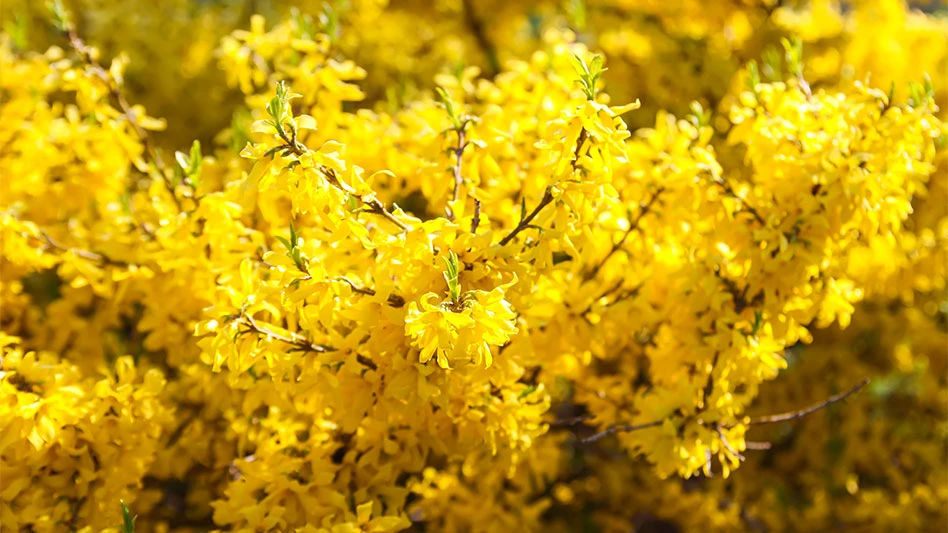
Forsythia (Forsythia spp.) are non-native shrubs grown for their yellow flowers that bloom in early spring. If you look around, you might see its bell-shaped, bright yellow flowers right now because the flowers usually emerge in April or early May.
Forsythia are the Jedi Sentinels of the Lamiales Order. They have no serious disease problems, are Japanese beetle resistant and deer tolerant. Masters of adaptability, forsythia are easy plants to grow. They can grow in sand, loam and clay.
The genus is named after William Forsyth (1737–1804), a Scottish botanist who was a royal head gardener and a founding member of the Royal Horticultural Society.
Forsythia's main season of interest is spring, but some varieties have yellow fall leaf color. They are often used in groupings or to form a screen in the landscape.
This plant produces a lot of stems, so prune regularly after it blooms to maintain an attractive plant shape or before you realize it, this Jedi of a shrub might turn to the dark side.
Description:
- Deciduous shrub
- Native to China and Korea
- Height: 2 to 10 feet
- Width: 2 to 12 feet
- Fast growth rate; width increases gradually as plants sucker slowly
- Mounded, rounded, or upright form
- Bell-shaped, bright yellow flowers emerge in April or early May before leaf out
- Non-ornamental seed capsules change from green to brown as they mature
Growing forsythia:
- Hardiness zone: 3b-8
- Full sun
- Adaptable; sand, loam or clay
- Prefers moist, well-drained soil but is adaptable to other soils
- prune regularly after it blooms to maintain an attractive plant shape
Source: University of Minnesota Extension
Latest from Nursery Management
- Jackson & Perkins expands into Canadian market
- Green & Growin’ 26 brings together North Carolina’s green industry for education, connection and growth
- Marion Ag Service announces return of Doug Grott as chief operating officer
- The Garden Conservancy hosting Open Days 2026
- Registration open for 2026 Perennial Plant Association National Symposium
- Artificial intelligence applications and challenges
- Fred C. Gloeckner Foundation Research Fund calls for 2026 research proposals
- Harrell’s expands horticulture team with addition of Chad Keel