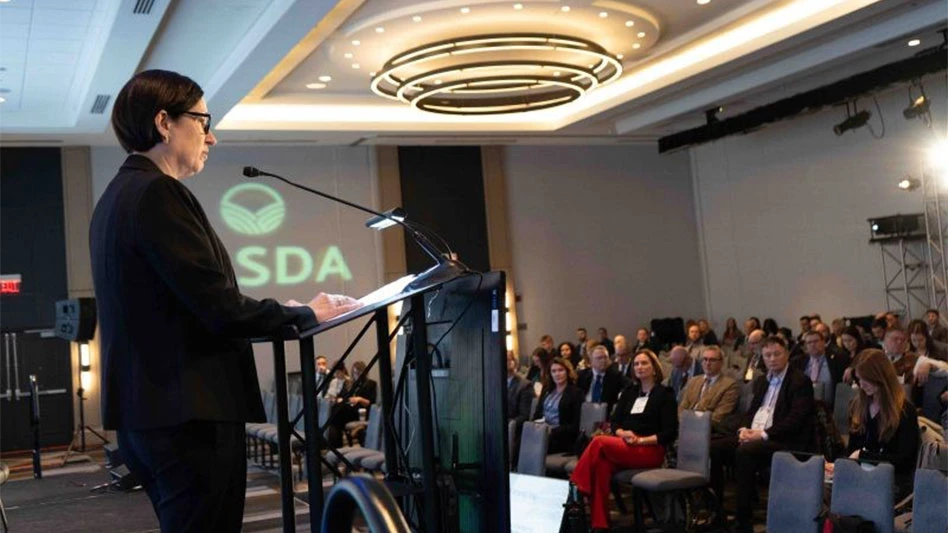
In January I led a discussion with a group of
{sidebar id=51}
We looked at the wholesale value of bedding plants and flowering potted plants and it was quite evident that growth in sales has slowed and we are in the mature stage of the product life cycle. The mature stage is characterized not only by slowing growth, but increased competition, smaller profit margins and more difficult alternatives to make a living.
Consumers who make up a substantial market segment who buy products in this mature stage are price conscious. That means, if they can’t tell a difference between your product and someone else’s, they’ll largely base their decision on price.
Adding value to products
I next discussed a model of customer value presented by Michael E. Treacy and Frederik D. Wiersema in the Jan. 1, 1993, Harvard Business Review. The three main ways in which a business can add or give value to customers are:
* Operational excellence.
* Product leadership.
* Customer intimacy.
Operational excellence
Wal-Mart has operational excellence in providing customers with the most value at the lowest price. This retailer’s strategy is to sell many units at a small markup with little to no difference between its products and someone else’s. If you haven’t visited an Aldi store, you should to see the greatest competition supermarkets face in operational excellence.
Two key growth challenges for wholesale growers are how much to expand the business and how much to depend on box stores. The bigger you grow, the harder it will be to give up business to another grower. The more you sell to box stores, the more dependent you become on them for business. How much do you want to tie your success to theirs? How willing will you continue to be to let them set prices, especially if their prices go below your costs?
Product leadership
In the world of technology, Apple and Sony are among the first to come to mind as product leaders. New and innovative products are mainstays of their business strategy. Nearly always, they are among the first firms to introduce new products consumers are sure to gobble up quickly.
In horticulture, there are several product leaders -- including Proven Winners and Spring Meadow Nursery. Count on those companies to seek out new plants and introduce them.
Can you be a product leader? It may be somewhat easier than operational excellence. Some retailers can achieve product leadership when they have a good understanding of their customer base. In that customer base are consumers who really want the new and improved products you’ll be offering.
Customer intimacy
A third avenue open to businesses of all types is customer intimacy. The first business that comes to mind is Starbucks. This company has built an empire on giving customers a relaxing environment to meet friends, check e-mails and enjoy a customized beverage. It offers numerous hot and cold beverages. But, it’s not about the coffee. It’s about giving people the individualized attention they crave.
In the arena of customer value, most horticultural retailers and wholesalers have an opportunity to get close to customers and give them this customized experience. This value proposition can’t be delivered by the box stores. So here is a key strategy that can work for many retailers.
Who is the real competition?
One of the first questions I received was about profitability, “Are the box stores making money?” Of course they are or they wouldn’t still be such big players. There’s no chance of them exiting the industry any time soon.
Another retailer asked me, “Are the big boxes our real competition?” Weren’t the people in the room the real competition, and why should horticultural retailers even consider any type of similar strategy?
Competition can be as broadly or narrowly defined as management wants. Clearly, the box stores don’t need any assistance in charting a profitable path.
What could horticultural retailers gain from collaboration with the box stores, whether it was a jointly sponsored garden tour or an article highlighting a plant they could jointly promote? Some may have found some potential benefit, but others wanted to take more of an observational role.
Most of the discussion participants left the room with a sense that competition is where you want to find it. Many horticulture companies struggle to remain profitable. Some will migrate to the operational excellence of producing massive quantities for the box stores and retailers who want to focus on high product turnover. Others may find product leadership will keep customers coming back. Longer-term sustainability may come from efforts to create relationships with customers and deliver the products and services that provide them the experiences they really want. That is a strategy the box stores will most likely never adopt. How each company executes the strategy will help them build differentiation.
{sidebar id=1}
- Bridget K. Behe
Latest from Nursery Management
- Jackson & Perkins expands into Canadian market
- Green & Growin’ 26 brings together North Carolina’s green industry for education, connection and growth
- Marion Ag Service announces return of Doug Grott as chief operating officer
- The Garden Conservancy hosting Open Days 2026
- Registration open for 2026 Perennial Plant Association National Symposium
- Artificial intelligence applications and challenges
- Fred C. Gloeckner Foundation Research Fund calls for 2026 research proposals
- Harrell’s expands horticulture team with addition of Chad Keel