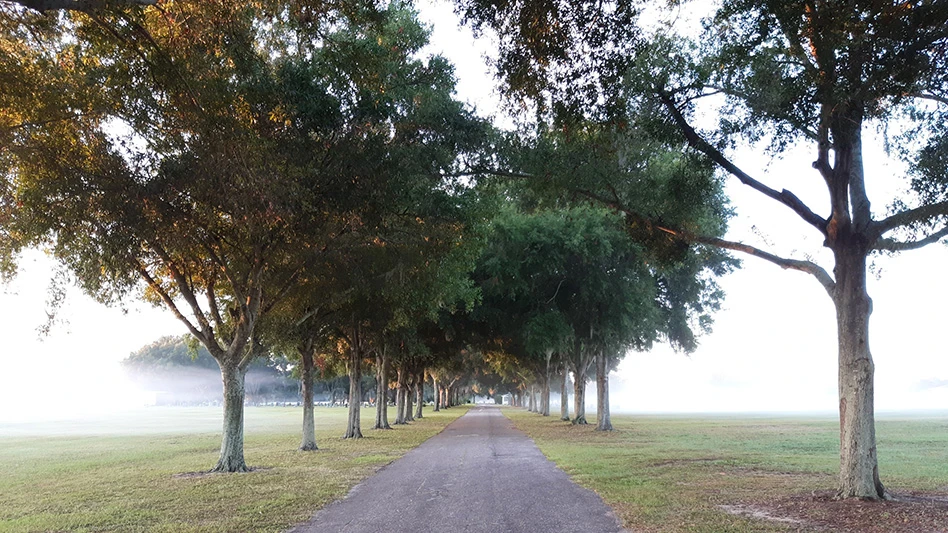
American chestnut trees once blanketed the east coast, with an estimated 4 billion trees spreading in dense canopies from Maine to Mississippi and Florida. These huge and ancient trees, up to 100 feet tall and 9 feet around, were awe-inspiring, the redwoods of the east coast, but with an extra perk — the nuts were edible. Chestnuts were roasted, ground into flour for cakes and bread, and stewed into puddings. The leaves of the trees were boiled down into medicinal treatments by Native Americans. The trees make appearances throughout American literature, like in Thoreau’s journal, where he considered his guilt over pelting them with rocks to shake the nuts loose while he lived in Walden woods, musing that the “old trees are our parents, and our parents’ parents, perchance.” Chestnut trees offered shade in town squares, were the wood of choice for pioneers’ log cabins, and were a mainstay of American woodcraft. In short, chestnuts were part of everyday American life. Until they weren’t.
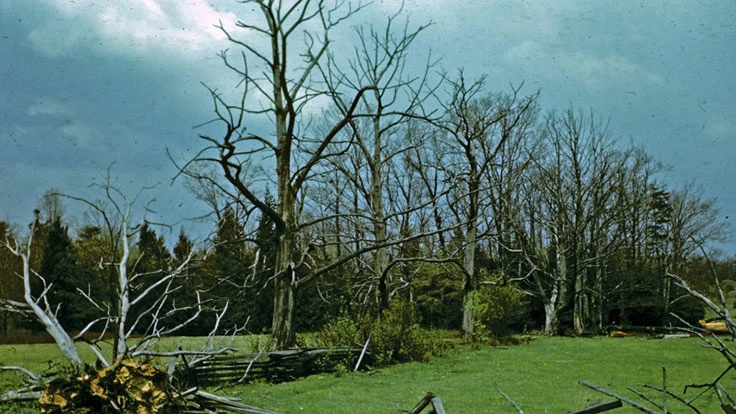
Finding a mature American chestnut in the wild is so rare today that discoveries are reported in the national press. The trees are “technically extinct,” according to The American Chestnut Foundation. The blight that killed them off still lives in the wild and they rarely grow big enough to flower and seed, typically remaining saplings until they die. Essentially, the giant trees were reduced to shrubs by the 1950s.
Read more from Heather Gilligan on Timeline.
Photo: Chestnut blight, 1943. USDA Forest Service, Northeastern Area, Bugwood.org
Latest from Nursery Management
- Jackson & Perkins expands into Canadian market
- Green & Growin’ 26 brings together North Carolina’s green industry for education, connection and growth
- Marion Ag Service announces return of Doug Grott as chief operating officer
- The Garden Conservancy hosting Open Days 2026
- Registration open for 2026 Perennial Plant Association National Symposium
- Artificial intelligence applications and challenges
- Fred C. Gloeckner Foundation Research Fund calls for 2026 research proposals
- Harrell’s expands horticulture team with addition of Chad Keel