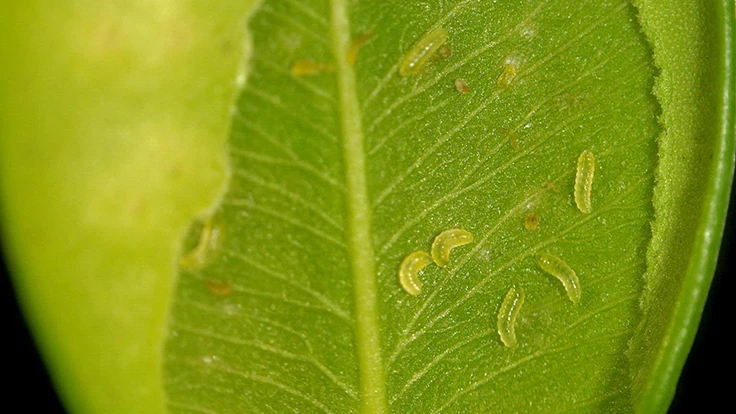
Its larvae have pupated inside the leaves all winter. In May, they emerge as gnat-like adults, ready to fly, mate and lay their eggs in the new leaves. The eggs will hatch in a few weeks and new larvae will feed throughout the summer.
All varieties of boxwood are susceptible, but the slower-growing English varieties are less susceptible than the American cultivars. The leafminer feeds between the upper and lower sides of the leaf. This feeding causes blisters on the underside of the leaf. Leaves infested by this pest become yellow and smaller than a normal leaf. In fact, plants that are severely infested appear completely unhealthy.
Read identification and management tips for boxwood leafminer in our May issue.
Photo: Brian Kunkel, University of Delaware, Bugwood.org
Latest from Nursery Management
- [SNEAK PEAK] Leading Women of Horticulture: Louise Schaefer and Susan Tantsits
- The Growth Industry Episode 10: State of the Horticulture Industry
- Tennessee Green Industry Field Day scheduled for June 11
- UTIA and UT Knoxville research teams will develop automated compost monitoring system
- Ken and Deena Altman receive American Floral Endowment Ambassador Award
- [SNEAK PEEK] Leading Women of Horticulture: Becky Thomas
- [SNEAK PEEK] Leading Women of Horticulture: Angela Burke
- [SNEAK PEEK] Leading Women of Horticulture: Alexa Patti