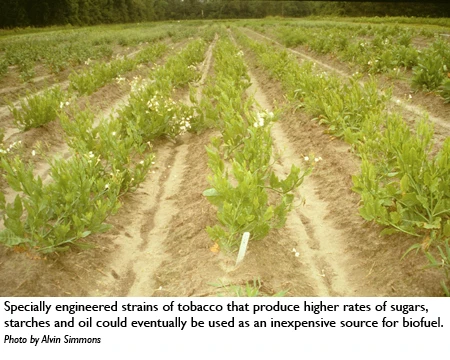
Scientists in the Biotechnology Foundation Laboratories at Thomas Jefferson Univ. in Philadelphia have been investigating alternative means of producing biofuels, as inexpensively, quickly and energy-efficiently as possible. They are conducting research to develop specially engineered strains of tobacco plants to generate a large amount of biomass from the plants’ leaves and stems.
The scientists believe the rapid growth of these tobacco strains can result in more efficient biofuel production than other traditional agricultural crops used for biofuel. Tobacco plants are naturally rich in sugars, starch and low-lignin cellulose that can be converted into ethanol, yielding up to 1,100 gallons of bio-ethanol per acre. Additionally, tobacco seeds are naturally rich in oils suitable for conversion to biodiesel. The scientists reported their findings in a Plant Biotechnology Journal Special Issue on Biofuels.
The scientists have been able to adjust the plant metabolism to significantly increase the oil accumulation in tobacco leaves and stems. They expect that to be able to at least double the amount of biodiesel produced per acre of crops in comparison to the amount produced from soybeans. Using tobacco as a model, the scientists also believe that the application of this technology can be applied to other agricultural crops such as alfalfa, soybeans or even weeds.
Latest from Nursery Management
- [SNEAK PEAK] Leading Women of Horticulture: Louise Schaefer and Susan Tantsits
- The Growth Industry Episode 10: State of the Horticulture Industry
- Tennessee Green Industry Field Day scheduled for June 11
- UTIA and UT Knoxville research teams will develop automated compost monitoring system
- Ken and Deena Altman receive American Floral Endowment Ambassador Award
- [SNEAK PEEK] Leading Women of Horticulture: Becky Thomas
- [SNEAK PEEK] Leading Women of Horticulture: Angela Burke
- [SNEAK PEEK] Leading Women of Horticulture: Alexa Patti