Lights? Check. Dance music? Check. Hydrangeas, hornbeams and hibiscus? Check.
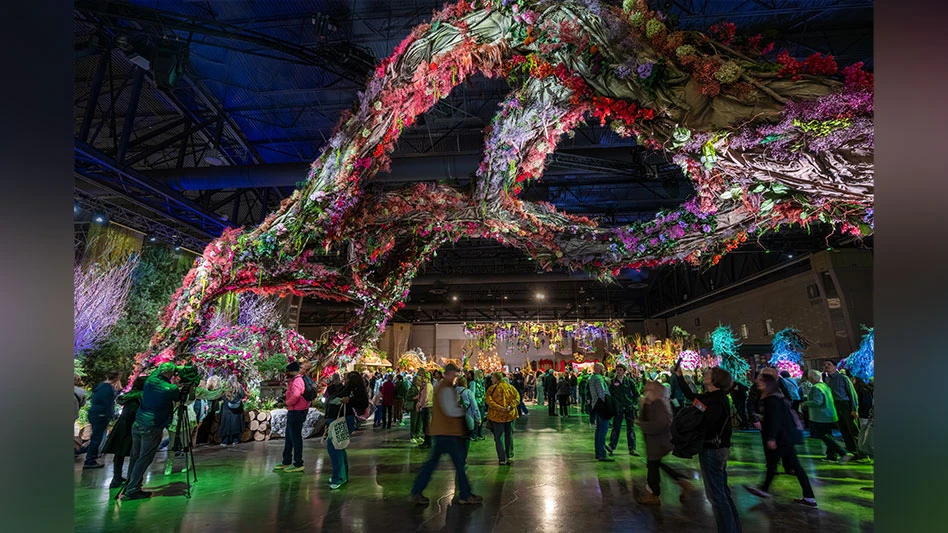
The Sweet Melissa Fashion Show at the National Green Center had the makings of a New York Fashion Week show. Pouty models carrying plants down the runway made for quite a spectacle. The show featured nearly 50 new plants. It was a fun and funky way to introduce the industry to some of the best selections for 2011.
People were smiling, clapping, taking pictures, shooting video and jotting down notes. I even saw some chair dancing.
If you want to see the plants that made it down the runway, click here.
National Green Centre buzz
Shop talk at last year’s shows consisted mainly of cautious optimism. The mood on the floor of the National Green Centre was much more upbeat. Growers talked about writing orders (even on the trade show floor), including having more orders to date that all of last year. Now that is encouraging. Growers talked about the good lessons they learned in 2010 – primarily how to do more with less. There was a little talk about seeing more shuttered nurseries in 2011, but the buzz about growth overshadowed the negative.
Differentiate in 2011
I had the privilege of speaking with my cohorts Yale Youngblood (publisher of Garden Center) and Chuck Bowen (associate publisher of Lawn & Landscape) at the show.
I focused on adding value to product. Some highlights:
Brands add value (there’s tons of research to back that up), but it’s not always economically feasible for growers to be part of a brand or start their own brand. There are some lower-budget solutions to adding value to plants.
* Improved tags and POP material. Send consumers to a website for information such as companion plants; landscape plans; container recipes, photos of the plant at different seasons and of course care information.
* Use a mobile (or QR) tag. If you don’t know what I’m talking about, Google it. With the proliferation of smart phones, these are THE way to communicate with consumers.
* Consider low water use plants. These are quite valuable to communities that are faced with water shortages each year. It allows them to still have a beautiful yard while conserving a precious resource.
* Do your plants support wildlife? Butterfly, hummingbird and other birds that flock (no pun intended) to your plants are a huge draw for many consumers. You may pick up some new customers with these plants, including municipalities.
* Educate the consumer.
~ Trees and plants sequester carbon.
~ Rain gardens and bioswales filter water before it goes back into the municipal water system.
* Talk to the consumers’ pocketbooks. Essentially put money back in their wallets.
~ Landscapes and trees add value to homes.
~ Properly placed shade trees decrease cooling bills in summer.
Latest from Nursery Management
- [SNEAK PEAK] Leading Women of Horticulture: Louise Schaefer and Susan Tantsits
- The Growth Industry Episode 10: State of the Horticulture Industry
- Tennessee Green Industry Field Day scheduled for June 11
- UTIA and UT Knoxville research teams will develop automated compost monitoring system
- Ken and Deena Altman receive American Floral Endowment Ambassador Award
- [SNEAK PEEK] Leading Women of Horticulture: Becky Thomas
- [SNEAK PEEK] Leading Women of Horticulture: Angela Burke
- [SNEAK PEEK] Leading Women of Horticulture: Alexa Patti