In its September issue, Nursery Management spoke with seven growers who found success on their own terms. Read all of the "Success stories" here.
Whether it’s a meticulous liner selection process or a precise pruning technique during production, Harmony Hill Nursery maintains a set of strict requirements for its landscape-size natives.
Christopher Uhland, CEO of Harmony Hill sees an opportunity for growth in growing and sourcing quality native plant material.
“During the last couple of years, some businesses have faulted to be the cheapest. I have sourced some of the finest liners to grow and finish quality material, whether it is a native hornbeam or Limelight hydrangea, pushing forward in quality, properly grown material that is hardy for the Northeastern market,” Uhland says.
And while it’s easy to tell customers about quality, it’s difficult to actually provide it. But Uhland has several practices in place that help him stand behind the term. His plants are pruned annually at the proper time to encourage new growth without allowing “bad structure development,” he says. The trunks are protected from damage both from nature and mechanization. And when initially lined out in the fields, trees and shrubs are planted at the proper depths to prevent the root flare from being buried below grade, he explains. His quality standards start with selecting the best liners.
“First and foremost, I look at root development. I am looking for fibrous root systems that are well balanced, whether in a bag or container system or bare root. From that point, the body has to be produced true to industry standards and the heads pruned in order for my crew to continue proper pruning techniques.”
The nursery’s pruning techniques are part of its formula for success.
“We have an orchard machine that gets the crew up into the tree canopy for proper pruning while allowing them to do it safely. We take pride in having clean, tight canopies in our trees,” he says.
Besides strict production techniques, the nursery also banks on natives for its success. “There is a hole in the market for quality landscape-size material, while there is plenty for environmental restoration-grade material,” he says. “We want to supply native plants for the architects and designers.”
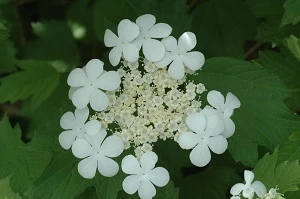
Some of Uhland’s favorite underused natives include the American cranberrybush (Viburnum trilobum) for its “wonderful red fruit in the late summer through the end of fall. The foliage can be as red and vibrant as the exotic and invasive burning bush,” he says.
He also cites the Eastern red cedar (Juniperus virginiana) as one of his favorites. “There are several cultivars of this species, and the regionally indigenous varieties can offer different winter color. This plant offers cover for many creatures with its dense foliage surrounding its strong skeletal branching, and it can handle a variety of environmental conditions.”
Uhland’s passion for the industry shows not only in his product, but in his attitude, as well.
“I love supplying plant material. Plants not only make the world a better place, but can build morale, heal the unhealthy, rebuild the soul, put a smile on someone’s face —I like being a part of that,” he says.
For more: www.hhnurseryllc.com
Click here to read more success stories from our September issue.