Interest by the public in small ornamental landscape trees has increased markedly over the past 25 years. Small (15- to 28-foot) flowering trees tend to fit well in residential lots with limited space and one-story ranch-style homes. Smaller trees can also be grown satisfactorily under utility lines. In addition, large trees block much of the potential sunlight available to a residential lot, which reduces the success of growing quality turf, gardens and flowers due to excess shade and the probability of increased disease problems.
Flowering crabapples have been a very popular small tree choice for decades. As woody plant evaluations have proceeded at
This article will cover promising pears, while July will focus on cherry and plum cultivars.
The hardiest pear species
Ussurian pear (Pyrus ussuriensis) is rated as the hardiest pear species. It is winter-hardy in USDA Hardiness Zone 3 and is native to northeastern
Prairie Gem (Pyrus ussuriensis ‘MorDak’). A seedling selection of the Ussurian pear introduced at NDSU. The superior qualities of this cultivar are very distinct when grafted plants are grown near seedling Ussurian pear rootstock. Prairie Gem produces a more coarsely twigged tree with very dense branching. It has a distinctly oval growth habit, becoming globose with age. Foliage is clean, bright emerald-green and semi-glossy. The thick, leather-textured leaves are of excellent quality throughout the growing season, turning yellow in autumn. It has excellent fireblight resistance. White flowers blanket the tree in spring. Trees do not fruit unless a different pollinator pear is nearby. This is advantageous, since the 1- to 1¼-inch rounded yellow fruits are not of culinary value. It is winter hardy in Zone 3. The dense, rounded growth habit of Prairie Gem results in an attractive, tailored small tree to 25 feet for shade and use as a residential and park landscape specimen. It is propagated by budding and/or grafting.
Mountain Frost (Pyrus ussuriensis ‘Bailfrost’). A seedling selection of the Ussurian pear introduced by Bailey Nurseries, this selection has good vigor and a narrower, more upright growth habit. Attractive white flowers cover the tree in spring, and its semi-glossy foliage is fairly leathery and dark green. The 1-inch yellow pomes are not produced unless a different pollinator pear is nearby. Its mature width is approximately 5-6 feet narrower than Prairie Gem and it is also winter hardy in Zone 3.
Many superior Callery pears available
Callery pear, Pyrus calleryana, is a dark-green, lustrous-leaved pear native to
Callery pear, represented by numerous superior landscape cultivars, has been a very popular ornamental small tree in much of the eastern half of the
Pyrus callerayana ‘Autumn Blaze’ is reputed to be the hardiest Callery pear cultivar. It has been evaluated for seven years in NDSU trials with no winter injury to date, even at minus-30°F to minus-35°F several winters. It is upright, rounded in growth habit and has glossy reddish-tinged young leaves maturing to dark green. Expected mature height is 25-30 feet by 20-25 feet wide. It has strong lateral branch attachments. One authority rates it as susceptible to fireblight, which will need further evaluation in the Northern Plains. In NDSU trials, it produces brilliant red autumn color in mid to late October.
Winter-hardy Pyrus fauriei
Pyrus fauriei is a smaller-statured pear species native to
The cultivar ‘Westwood’ was received in 1998 and planted in NDSU trials. After 10 years, trees average 13-plus feet tall by 8-plus feet wide. Expected height is 14-18 feet, a very small tree. Flowers are white and the ½-inch fruits are not messy and russet-dotted, like those on Callery pear. Plant form is informally rounded and leaves are medium-green and fine textured.
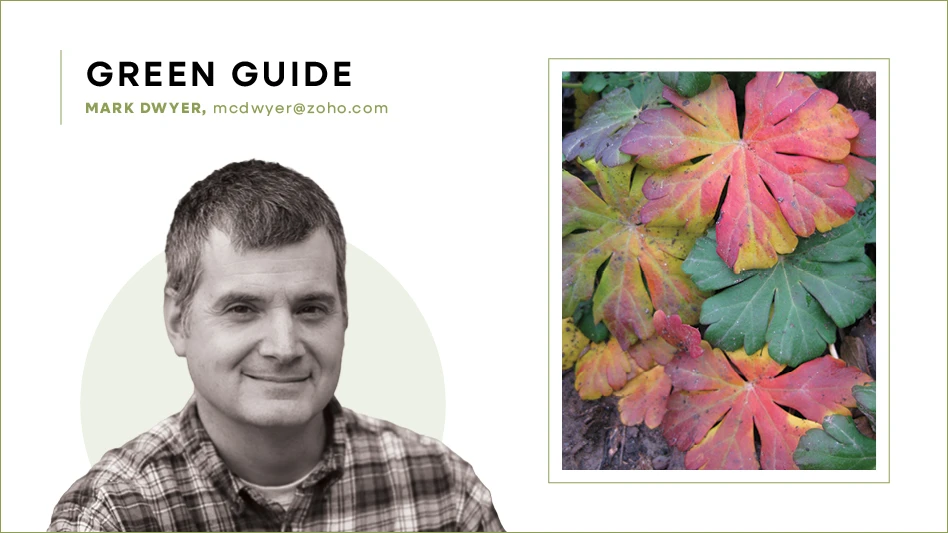
The most exciting facets of this pear are winter hardiness in Zone 3 in a 10-year trial and its outstanding autumn coloration, a fluorescent red with bright-pink to orange hues depending on the year.
{sidebar id=2}
- Dale Herman
June 2008
Latest from Nursery Management
- Jackson & Perkins expands into Canadian market
- Green & Growin’ 26 brings together North Carolina’s green industry for education, connection and growth
- Marion Ag Service announces return of Doug Grott as chief operating officer
- The Garden Conservancy hosting Open Days 2026
- Registration open for 2026 Perennial Plant Association National Symposium
- Artificial intelligence applications and challenges
- Fred C. Gloeckner Foundation Research Fund calls for 2026 research proposals
- Harrell’s expands horticulture team with addition of Chad Keel