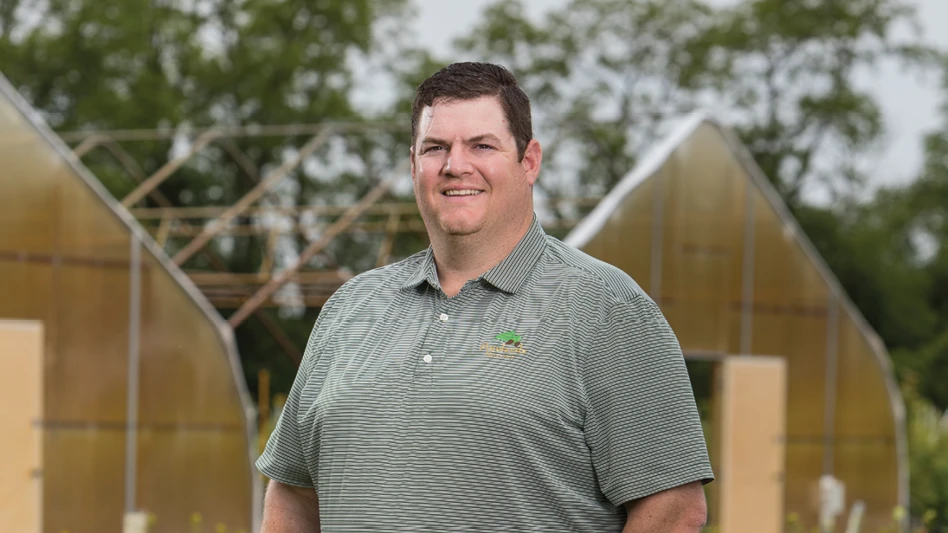
Representatives from U.S. Senator Kirsten Gillibrand’s office visited and toured BioWorks Inc., a New York-based biopesticide company, March 14. Sarah Clark, Deputy State Director, and Mariana Pugliese, Rochester/Finger Lakes Regional Assistant, met with Bill Foster, President and Chief Executive Officer of BioWorks and other BioWorks employees on Wednesday, to learn more about the New York-based company.
Foster, also a board member of the Biopesticide Industry Alliance, gave a brief overview of BioWorks’ history in manufacturing and marketing biopesticides to the professional horticulture industry, and the advantages of their expanded use to commercial greenhouse growers, farmers, their workers, and the environment. “Biopesticides make up 3-5% of the global pesticide industry, and the biopesticide segment is growing approximately 15% per year,” according to Foster.
Biopesticides, which are pest management tools derived from natural materials such as animals, plants, bacteria, and certain minerals, have a 63-year history of use, and there are currently more than 200 registered biopesticides active ingredients and 780 products in the United States, according to the Environmental Protection Agency’s website (www.epa.gov).
“Biopesticides are advantageous to growers because they work in tandem to conventional pesticides, are usually inherently less toxic than conventional forms of pest control, generally affect only the target pest and closely related organisms and are effective in very small quantities”, stated Foster. “This saves growers money and protects their workers, consumers, and the environment.”
Foster also shared some of the recent challenges faced in the process of getting new biopesticides registered with the EPA. “The registration process for new products takes anywhere from 16 to 24 months – significantly more than they used to,” commented Foster. “This hinders the available options to growers who are actively seeking alternatives to synthetic chemicals on their crops.”
Latest from Nursery Management
- [SNEAK PEAK] Leading Women of Horticulture: Louise Schaefer and Susan Tantsits
- The Growth Industry Episode 10: State of the Horticulture Industry
- Tennessee Green Industry Field Day scheduled for June 11
- UTIA and UT Knoxville research teams will develop automated compost monitoring system
- Ken and Deena Altman receive American Floral Endowment Ambassador Award
- [SNEAK PEEK] Leading Women of Horticulture: Becky Thomas
- [SNEAK PEEK] Leading Women of Horticulture: Angela Burke
- [SNEAK PEEK] Leading Women of Horticulture: Alexa Patti