Nurseries in three Florida counties -- Gadsden, Alachua and Levy -- have been confirmed with rose rosette disease (RRD).
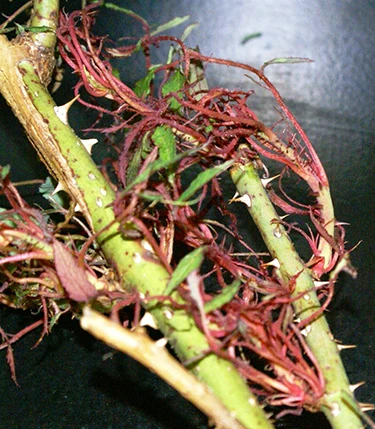
RRD causes a variety of odd-looking symptoms including peculiar red growth, excessive thorniness, elongated shoots, deformed blooms, pliable canes and often leads to the eventual death of the plant. The disease was first recognized in the 1940s but was never fully characterized. Based on some similarities to other better defined pathogens it's believed to be caused by a virus or plant specialized bacterium called a phytoplasma and spread by an eriophyid mite (Phyllocoptes fructiphylus). The disease is likely endemic to the continental U.S. and causes no visible symptoms in some native species of Rosa, such as R. setigera and R. palustris. Rosa multiflora is particularly susceptible to RRD.
In the Florida cases, the disease was found in production roses, as well as on a planted rose in a display garden, according to DPI officials. Inspectors have yet to find the mite vector anywhere in the state. That has led DPI officials to believe the disease spread to Florida on propagation material shipped in from other states. All of the infected plants in Florida belonged to the Knock Out series.
For more information on RRD, visit this page.
Latest from Nursery Management
- Jackson & Perkins expands into Canadian market
- Green & Growin’ 26 brings together North Carolina’s green industry for education, connection and growth
- Marion Ag Service announces return of Doug Grott as chief operating officer
- The Garden Conservancy hosting Open Days 2026
- Registration open for 2026 Perennial Plant Association National Symposium
- Artificial intelligence applications and challenges
- Fred C. Gloeckner Foundation Research Fund calls for 2026 research proposals
- Harrell’s expands horticulture team with addition of Chad Keel