Rainwater harvesting isn’t just for gardeners anymore. Growers are putting large-scale, commercial systems in place to ensure their water resources stay plentiful, without having to deal with all the red tape that inevitably comes with water restrictions from local municipalities and states.
Rainwater harvesting (RWH) is a method of collecting rainwater from the roofs of buildings or other catchment surfaces and sending it to storage for future use. Because rainwater is as yet a free resource and typically one of high quality and nutrition, growers are seeing benefits to installing harvesting systems.
Installing a system
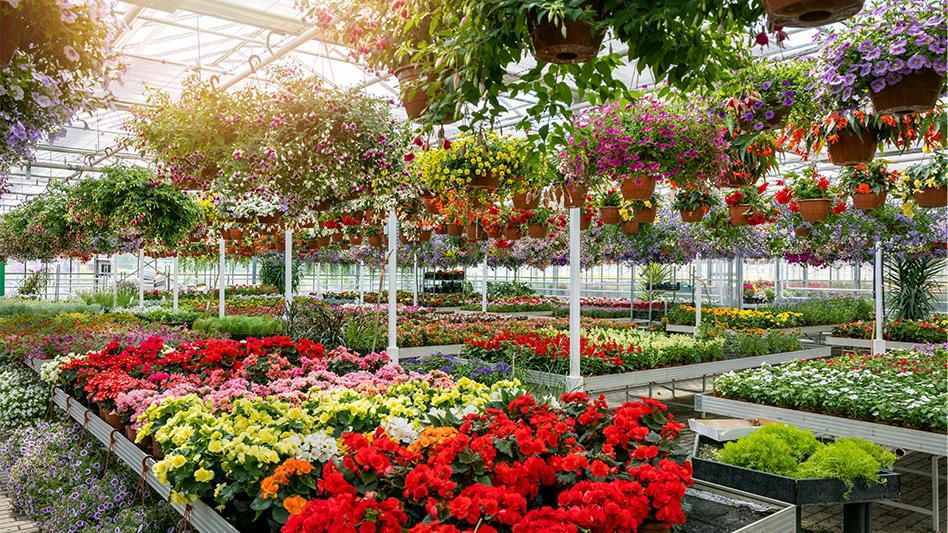
What’s a better structure for collecting rainwater than a commercial greenhouse? With high, angled roofs and gutter systems already in place, not to mention existing retention ponds at many locations and irrigation systems at the ready to use this high-quality water source, rainwater harvesting makes perfect sense for commercial horticulture.
Rainwater collection systems vary, depending on the site, but they typically involve using a gutter system from building roofs to collect in above- or below-ground storage barrels or cisterns. From there, growers can use an infrastructure of pumps and pipes to deliver water to irrigation systems.
Storage volume is a balance between local site environmental conditions, project budget and overall water supply goals. Properly balancing demand with collection potential will offer longer term success with your rainwater system.
In selecting a cistern, growers should consider the following:
Required or desired storage capacity.
Type of cistern: above or below ground, wood, steel, PE, concrete.
Preferred diameter and height. Are there restrictions to size? Measure the area available for tank installation.
Specific project or delivery location information and instructions.
Desired schedule for delivery or completion.
Pipe sizes. Inlet, outlet, overflow drain and location.
Accessories. It’s more cost effective to purchase accessories at the same time as ordering the tank. Consider tank access and ladders, water level indicators and controls.
Snow loading or special wind conditions.
Rainwater is essentially purified water from the sky in the form of condensed water vapor, making it a very high-quality water source. But once it hits the catchment surface and flows into the drainage pipes, it can become contaminated with biological, chemical and physical properties. Reducing these contaminants through screening, filtering and water treatment is key to maintaining good water quality for use as greenhouse irrigation water.
Read the rest here: http://www.nurserymanagementonline.com/nm0612-rainwater-harvesting-benefits.aspx
Latest from Nursery Management
- [SNEAK PEEK] Leading Women of Horticulture: Becky Thomas
- [SNEAK PEEK] Leading Women of Horticulture: Angela Burke
- [SNEAK PEEK] Leading Women of Horticulture: Alexa Patti
- Get to know Hailey Clark
- Get to know Brian Kemble
- Proven Winners partners with Pure Line Seeds to offer vegetable plants
- [WATCH] Taking root: The green industry’s guide to successful internships
- Award winners announced for 2026 PHS Philadelphia Flower Show