Thanks for taking the time to talk to us today. Can you give us a little bit of information about yourself and how long have you been in our industry?
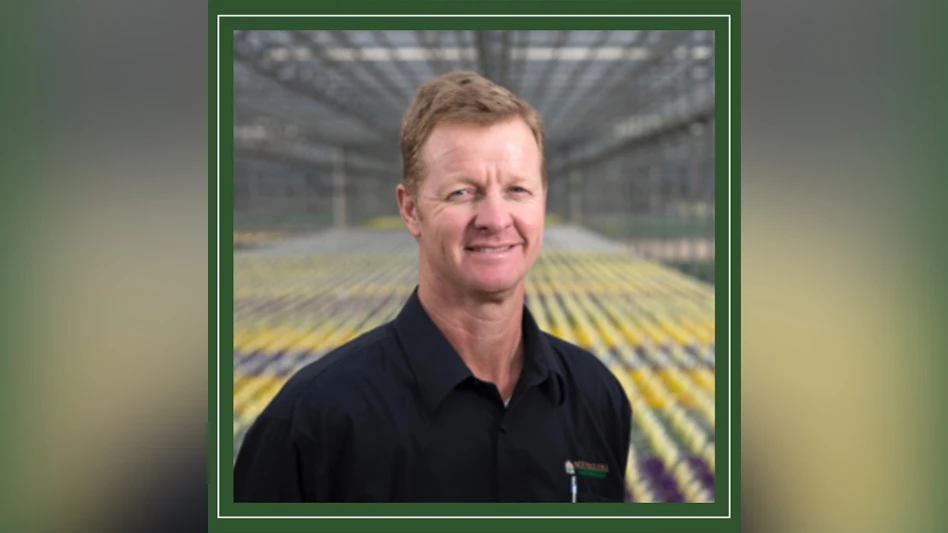
After graduating from Kansas State University, I started working in the industry on April 1, 1975. Since that day I’ve worked for numerous ornamental nurseries and have been very active in several trade organizations, such as IPPS, Southern California Ground Cover Association, and I’ve also served on the Board of Directors of the California Association of Nurseries and Garden Centers, as well as the Nursery Growers Association.
What’s your earliest memory of horticulture?
My earliest memory of horticulture is way back as far as I can pretty much remember! I grew up on a wheat farm in Kansas, so horticulture and agriculture really are in my blood.
What do you think is the most important development in propagation technology in the last few years?
That’s an interesting question – so much has changed and improved in the industry in 40 years. In the last few years, I will have to go with the introduction of stabilized media, such as things like the Ellepot. They just make super great plants, make the plants so easy to work with, they’re machine friendly and save so much time. Just ticks so many boxes in one very simple solution.
What do you think are the most important issues affecting growers right now?
Every industry expert seems like a stuck-record at the moment – talking about labor, labor and labor. I have to agree with them – availability of labor is getting a real worry and any labor we can find is getting more and more expensive. Businesses across the industry from propagation to harvest and distribution are being affected and unfortunately companies are going to go under if they don’t listen to what’s being said.
What do you think is going to be important for the next five years? Is it all doom and gloom?
I don’t think it’s all bad news – we have some clever people in this country and most of the solution is already there. For the next 5 years we really need to push mechanization and automation. Where I am set up in California, we traditionally have never needed things like expensive greenhouses and equipment because of the great weather, plenty of space and seemingly an endless source of inexpensive labor. That really isn’t the case anymore and, unfortunately, is only going to get worse - we are 20-30 years behind Europe and something needs to be done. Those businesses that want to survive really have to do something now – or in 5 years they may not be around. The tech exists, you just need to customize it for your own set up.
What things do you think growers could be doing right now to help in the short term?
The great thing about getting in shape for growing over the next few years, is that you don’t have to go crazy – start simple. Standardization is going to be key. Start now by looking at your whole system before rushing in and making big decisions. People need to think about where they want to be in 5 or 10 years to plan in stages to make best use of capital. Before spending hundreds of thousands on smart machinery - simply switching containers and investing in a few pieces of simple equipment could be all you need to vastly improve your cost effectiveness.
Latest from Nursery Management
- [SNEAK PEEK] Leading Women of Horticulture: Becky Thomas
- [SNEAK PEEK] Leading Women of Horticulture: Angela Burke
- [SNEAK PEEK] Leading Women of Horticulture: Alexa Patti
- Get to know Hailey Clark
- Get to know Brian Kemble
- Proven Winners partners with Pure Line Seeds to offer vegetable plants
- [WATCH] Taking root: The green industry’s guide to successful internships
- Award winners announced for 2026 PHS Philadelphia Flower Show