Windmill Nursery is taking a new approach to insect and disease control. By strengthening their plants’ nutrition, they’ve diminished the amount of insects and diseases they face.
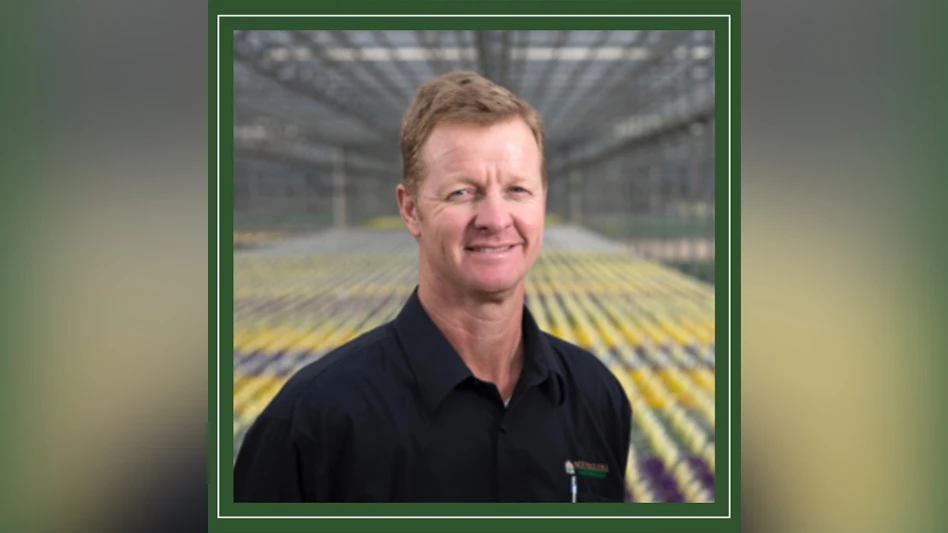
Michael Roe, vice president of production with Windmill Nursery, a Louisiana-based wholesale grower, is a believer in the system. As part of his focus on plant nutrition above all else, Roe has phased out neonicotinoid products on his 490-acre operation, which includes 178 acres under irrigation and 180 greenhouses and shade houses.
“To be honest, our primary concern is plant nutrition,” Roe says. “If you get the nutrition right, you don’t have insects or disease.”
Roe and his team started heading down this road years ago, but the negative public perception of neonics as dangerous to pollinators hastened the timeline.
“We said, ‘Let’s phase these out now and get ahead of the curve,’” he says. “We’ve been fine with it. In hindsight, it was nothing more than a crutch. Just a blanket spray and it kills everything.”
We spoke with Roe about how he handles disease control at the nursery.
How did you change your product mix?
Different things here and there. It was getting the fertility right in the soil, to then get it right in the plant. We had already been working on that, so phasing out the neonics wasn’t even a speed bump.
What about disease control -- is root rot a problem?
Our only foliar problem fungus is occasionally Cercospora on the roses, and downy mildew. We still haven’t figured that one out.
Do you use a custom spray program for individual diseases?
No, just the downy mildew, that’s when we use the chemicals. That’s pretty specific to downy.
When you started changing your chemical mix, how long did it take to notice a difference?
First, we didn’t. We had to back up to square one, then we fine-tuned it with foliars. But once we fine-tuned it with foliar sprays and foliar fertilizers, it was instantaneous.
Once the foliar sprays and fertilizers started to do their work, what did you notice?
That insects would leave the plant alone. That in a lot of cases, we can get rid of insects with a nutritional spray.

What products do you use for disease control?
We use a lot of Cuproxat, a copper fungicide. That’s our primary source of copper. And Alude, that’s a phosphoric aphid fungicide labeled for nutritional and phosphorus and potassium.
How does focusing on plant nutrition affect the types of diseases and insects you get?
Once you get the nutrition right, you have neither one. Once you get the brix levels, the sugar content of the plant, all that disappears as well.
When you think about this, it makes perfect logical sense. Bacteria, fungus -- these things are nature’s garbage collectors. They attack stuff that’s not meant to be; it’s not properly built or constructed. If you get everything right, all that disappears.
Of course, proper irrigation is huge. It gets out of control when the irrigation gets out of control.
How do you make sure irrigation is set up properly to avoid water molds?
Monitor it. Check relative humidity, rainfall. Downy mildew, for instance, has a pretty narrow window. There is a temperature range in there, greater than 85 percent relative humidity. We try not to irrigate during those times to help mitigate it.
Besides the fertilizer we incorporate in the soil, we do a lot of foliar fertilization. That’s probably the biggest thing. We test. Sap test, crush the leaves get the juice out, test pH, EC, potassium levels, brix levels, the sugar. And that dictates our foliar spray.
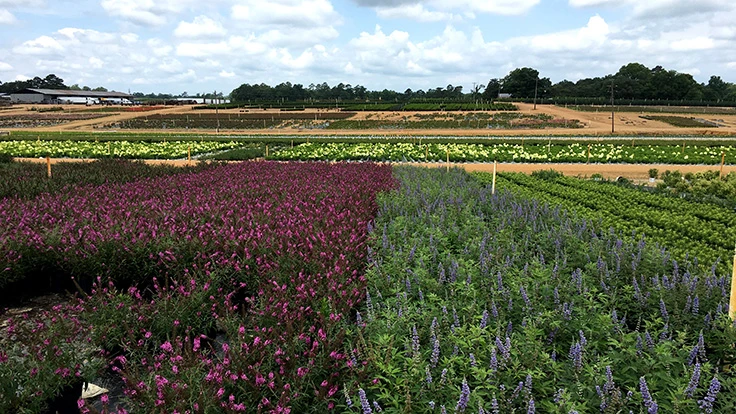
Photo: Michael Roe says Windmill Nursery has become a beneficial bird and insect sanctuary since eliminating neonics from its spray program.
For more: www.windmillnurseryllc.com
Latest from Nursery Management
- [SNEAK PEEK] Leading Women of Horticulture: Becky Thomas
- [SNEAK PEEK] Leading Women of Horticulture: Angela Burke
- [SNEAK PEEK] Leading Women of Horticulture: Alexa Patti
- Get to know Hailey Clark
- Get to know Brian Kemble
- Proven Winners partners with Pure Line Seeds to offer vegetable plants
- [WATCH] Taking root: The green industry’s guide to successful internships
- Award winners announced for 2026 PHS Philadelphia Flower Show