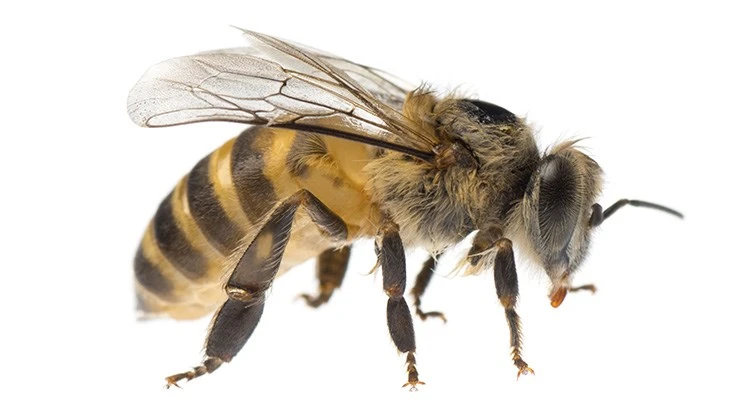
Keeping honeybees healthy has become a challenge for beekeepers. One main reason is a threat that has been wiping out bees since the late 1980s: the varroa mite.
"It's a parasitic mite that feeds on the blood of adult bees and on the brood. It also transmits virus, and it suppresses the immune system of the bees," explains Penn State honeybee expert Maryann Frazier.
It's basically like having a 6-pound house cat attached to your side, sucking the life out of you. These mites wiped out colonies across the world. And treatments were, and still are, pretty limited. In fact, the way most beekeepers treat bees for mites sounds a little crazy: They actually spray bees — which are, of course, insects — with low-dose insecticides. The hope is they'll kill the mites, but not the bees.
"But you can imagine how difficult it is to control a mite on a bee with a pesticide," Frazier says. Still, the strategy has worked well enough to at least give colonies a fighting chance.
But a co-op of about 100 beekeepers stretching from Michigan to Tennessee is trying a different approach. On his farm near Slippery Rock in Western Pennsylvania, beekeeper Jeff Berta lights a smoker to check on one of his all-star queen bees. This queen, he says, could be the future of honeybees in Pennsylvania.
Photo: Thinkstock
Latest from Nursery Management
- [SNEAK PEAK] Leading Women of Horticulture: Louise Schaefer and Susan Tantsits
- The Growth Industry Episode 10: State of the Horticulture Industry
- Tennessee Green Industry Field Day scheduled for June 11
- UTIA and UT Knoxville research teams will develop automated compost monitoring system
- Ken and Deena Altman receive American Floral Endowment Ambassador Award
- [SNEAK PEEK] Leading Women of Horticulture: Becky Thomas
- [SNEAK PEEK] Leading Women of Horticulture: Angela Burke
- [SNEAK PEEK] Leading Women of Horticulture: Alexa Patti