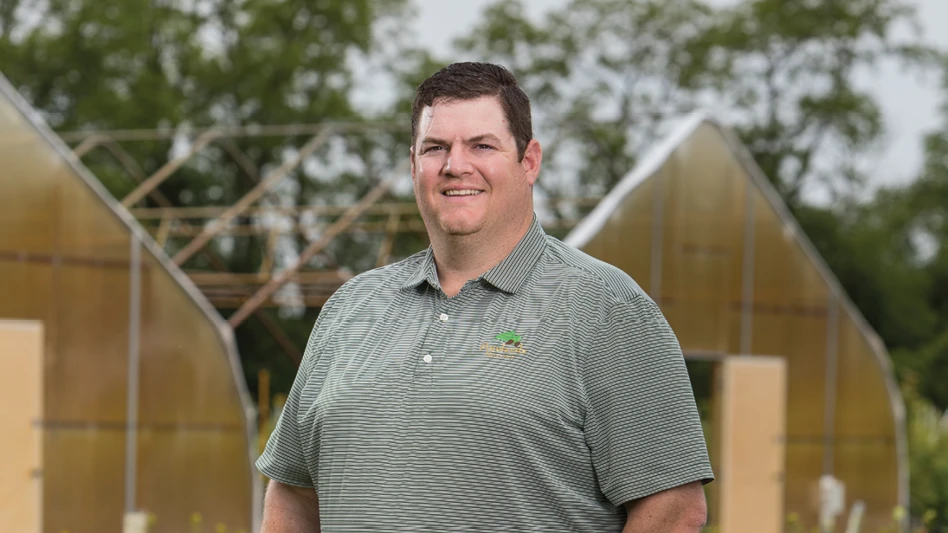
Todd DavisLet me start by saying we are the greenest industry in the world. Our products solve the world’s problems.
They remove carbon dioxide from the air and replace it with oxygen. They reduce utility bills and energy use. They stop storm runoff and prevent erosion.
And let’s face it, without us there would be millions upon millions of homeless squirrels, and that would be a tragedy.
Still, the naysayers state, “Yeah you grow trees, which is nice, but nursery growers are also terrible polluters.” These naysayers are idiots.
They must assume we purposely buy twice as much fertilizer as we need and, at the end of the month, go dump the surplus in the nearest trout stream. They must also assume we purposefully chose the most dangerous toxins with which to spray our crops (whether they need it or not) because we like putting our families, co-workers and neighbors at risk.
Common sense
The nursery industry uses green practices because, quite frankly, they’re typically the most economical options. We buy only the fertilizers and pesticides we need, and apply them only when and where needed. It’s the dollar-wise thing to do.
 Sure, there are plenty of ways nurseries and distribution centers can be more environmentally friendly. But let me say this: Please take the bottom line into consideration before you embark on these green crusades.
Put a pencil and paper to it. If it will save you money to run your fleet on BioWillie or used cooking oil from the diner down the road, then go for it.
If you want to recycle office paper and you pretty much break even in the process, then why not?
Just don’t go broke by going green. If your business fails, then you’ve done nobody any favors – not your family, not your employees and not the squirrels.
A few ideas
If having a more environmentally friendly company is a personal goal, that’s great. But let me offer some advice.
A great place to start is your water. There’s always a way to improve an irrigation system. Check out the new technology. It’s usually worth the investment.
Next, buy local. Yes, we’re going to keep buying Japanese maples from the West Coast. But that doesn’t mean we can’t buy more from vendors in the same area code.
I’m all for reduced freight charges. And when we improve our relationships with local vendors, they’ll spend less time trying to sell direct to our customers.
A plastic pot recycling program sounds great, but it can become a nightmare. Do you have a plan on where to put all those containers (which you’ll have to wash) as well as all the other trash your customers will dump on you?
I don’t know too many distributors that have succeeded with pot-recycling programs, but I know a bunch that discontinued them. Just saying.
Here’s a better idea if you have the money and space: Buy a tub grinder and get into the green-waste recycling business. I know one distributor in California that had extra acreage and started accepting customers’ tree trimmings.
He still charged them to drop off the waste (though less than the city), and he sold the mulch after it had aged. Even better, after these customers had dumped their trimmings, they suddenly had an empty trailer at the nursery.
Latest from Nursery Management
- [SNEAK PEAK] Leading Women of Horticulture: Louise Schaefer and Susan Tantsits
- The Growth Industry Episode 10: State of the Horticulture Industry
- Tennessee Green Industry Field Day scheduled for June 11
- UTIA and UT Knoxville research teams will develop automated compost monitoring system
- Ken and Deena Altman receive American Floral Endowment Ambassador Award
- [SNEAK PEEK] Leading Women of Horticulture: Becky Thomas
- [SNEAK PEEK] Leading Women of Horticulture: Angela Burke
- [SNEAK PEEK] Leading Women of Horticulture: Alexa Patti