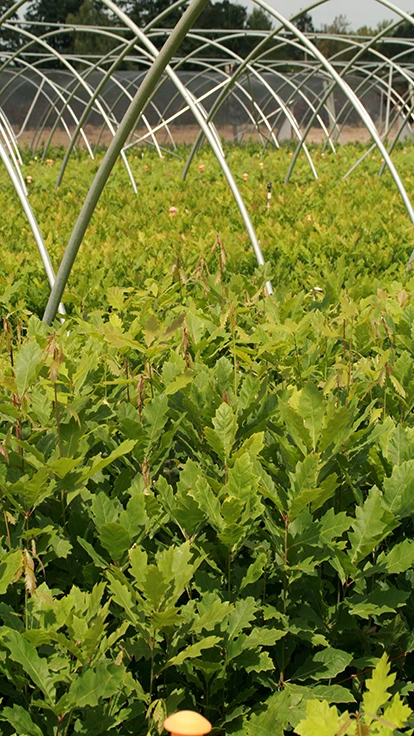
JLPN has been in the business of perfecting tree seedlings and rooted cutting liners for over 50 years, with the sole purpose of creating profit-making trees for our customers. The standards and production guidelines we have in place translate through the lifecycle of the tree, as well as for our customers. The key to creating bigger profits with less effort is starting with the strongest, healthiest, and most vigorous tree liner money can buy, at a reasonable price.
Whether you are dealing with bare root seedlings, container seedlings, or rooted cuttings to line out in the field, you are only going to finish with quality as good as you start with. That’s why investing in a top-quality liner is so critical. Below are some common issues based on feedback from many of our customers. These are critical guidelines you need to consider when trying to decide if the product you are purchasing is as profitable as it should be.
Grade Out
On receipt of your liner order, how much of your product are you having to re-grade? The answer should be zero, but we find from many growers who purchase from other liner providers, that’s not always the case. You shouldn’t be paying for a tree just to add costly labor and overhead by re-grading and ultimately tossing the product. That instantly creates negative impact on your margins. When you purchase seedlings from JLPN, you will find they are strictly graded by height or caliper for field-growing standards. There is no need for re-grade, thus saving time and money.
Loss on Transplant
When you line out an acre of plants, they are going to require the same amount of labor to plant, water, fertilize and care for, whether you have a 50, 75, or a 100% stand. You have to manage a block of trees as a whole, so the most profit is going to be made when you have the least skips, or dead plants. An 85% stand is decent, but a stand with a 95% transplant success or better will drastically increase profits for the same effort and cost. That extra 10% is all profit margin, for the same effort. The culture and care put into products at JLPN, from the time a seed is planted to the time a seedling is shipped, all contribute to better transplant success and bigger margins for the grower.
Cultural
How much extra time are you having to put into a tree to get it to a sellable size? You can’t put lipstick on a pig any more than you can grow a perfect specimen tree from a B- or C-grade plant. Starting with a large seedling or cutting that is healthy and vigorous will result in better bud and/or graft takes, stronger growth rate and branching, with less culls upon grading. This ultimately creates a higher percentage of larger trees to sell at a higher price and bigger profit. All of the work put into a plant chips away at profit. By eliminating the frequency a tree needs tended to, you can create more profit with less effort.
Do the Numbers
In the days of cheap labor, cheap materials and never ending sales, the need for penciling out the true cost and profit of growing trees wasn’t as critical as it is today. It pays off dramatically when you can assign a cost to the material and processes in your production relative to the monetary return, i.e. the profit margin. Ask yourself, “How many trees did I buy vs. how many were plantable? How many did I plant vs. how many survived? How many did I grow vs. how many were ultimately sellable?” Doing the numbers will help realize if you are putting in too much effort and how much profit you are getting in return.
Why buy JLPN? Some might say, “It’s not an argument of my tree is better than your tree?” But that is exactly the argument we strive to win for our customers at JLPN. Our goal is to supply products that provide our customers with the best trees, with the best profit margins, so their customers benefit from the downstream results. If continual improvement and customer success wasn’t our goal, there would be no purpose in what we are doing, and no reason for growers to stick with us after 3 generations. Whether you are new to the industry, or a long-standing organization, JLPN can provide plants and service that will contribute to bigger profits with less effort.
For more: jlpnliners.com
Latest from Nursery Management
- [SNEAK PEAK] Leading Women of Horticulture: Louise Schaefer and Susan Tantsits
- The Growth Industry Episode 10: State of the Horticulture Industry
- Tennessee Green Industry Field Day scheduled for June 11
- UTIA and UT Knoxville research teams will develop automated compost monitoring system
- Ken and Deena Altman receive American Floral Endowment Ambassador Award
- [SNEAK PEEK] Leading Women of Horticulture: Becky Thomas
- [SNEAK PEEK] Leading Women of Horticulture: Angela Burke
- [SNEAK PEEK] Leading Women of Horticulture: Alexa Patti