From The University of Missouri Extension:
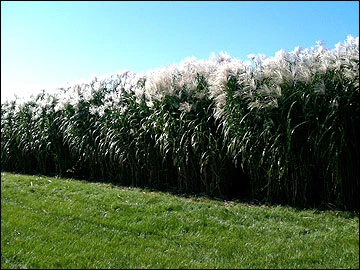
Cellulosic biomass is among the most promising renewable energy sources being researched and considered in Missouri. Two crops, switchgrass and miscanthus, could partially supply the cellulosic material to make the renewable energy. The purpose of this guide is to help Missouri producers understand the financial rewards and risks of the decision to plant one of these grasses. A producer also needs to weigh growing these perennial grasses against the opportunity of growing other crops or using the land as pasture.
Both switchgrass and miscanthus are C4 warm-season perennial grasses. They grow in Missouri's climate and soils, offer ecosystem benefits associated with growing a perennial crop, have similar cellular structures and require similar amounts of inputs. When these grasses are grown for bioenergy, management practices and necessary equipment are also quite similar.
Both crops require minimal inputs compared to annual row crops. Suggested fertilizer rates for both miscanthus and switchgrass are similar. Herbicides may be required during establishment years; after that, an established stand should outcompete any weeds. Soil amendments like potassium, phosphorus and lime may be required before planting, depending on field conditions.
Making a sound financial decision will require understanding the differences between the two grasses.
Click here to read more.
Latest from Nursery Management
- [SNEAK PEAK] Leading Women of Horticulture: Louise Schaefer and Susan Tantsits
- The Growth Industry Episode 10: State of the Horticulture Industry
- Tennessee Green Industry Field Day scheduled for June 11
- UTIA and UT Knoxville research teams will develop automated compost monitoring system
- Ken and Deena Altman receive American Floral Endowment Ambassador Award
- [SNEAK PEEK] Leading Women of Horticulture: Becky Thomas
- [SNEAK PEEK] Leading Women of Horticulture: Angela Burke
- [SNEAK PEEK] Leading Women of Horticulture: Alexa Patti