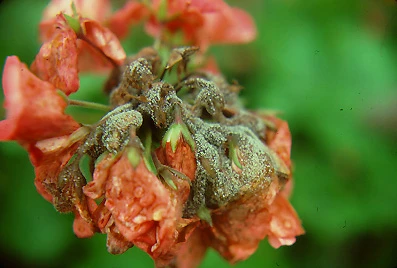
A grower who was having trouble controlling Botrytis (gray mold) submitted infected plant samples to the Pa. St. Plant Disease Clinic in late 2010. Pa. St. Univ. plant pathologist Gary Moorman compared the effect of fenhexamid on the Botrytis from the infected plants and to Botrytis that had never been exposed to the fungicide. In culture the grower’s Botrytis grew even when exposed to high concentrations of fenhexamid. The Botrytis, which had never been exposed to fenhexamid, was controlled in culture.
Moorman also inoculated fenhexamid-treated (at the label rate) and non-treated plants with the two different Botrytis. Both fenhexamid-treated and non-treated plants died when they were inoculated with the grower’s Botryis. The old Botrytis did not kill the fenhexamid-treated plants, but did kill the non-treated plants.
Univ. of Mass. extension floriculture specialist Tina Smith and Univ. of Conn. extension horticulture and greenhouse IPM specialist Leanne Pundt advise growers to follow label directions when applying fenhexamid, which is a group 17 fungicide, to reduce the risk of Botrytis developing resistance.
Pictured: Pa. St. Univ. plant pathologist Gary Moorman has identified Botrytis from infected plant samples submitted by a grower that is resistant to fenhexamid.
Photo by Gary Moorman, Pa. St. Univ.
Latest from Nursery Management
- [SNEAK PEAK] Leading Women of Horticulture: Louise Schaefer and Susan Tantsits
- The Growth Industry Episode 10: State of the Horticulture Industry
- Tennessee Green Industry Field Day scheduled for June 11
- UTIA and UT Knoxville research teams will develop automated compost monitoring system
- Ken and Deena Altman receive American Floral Endowment Ambassador Award
- [SNEAK PEEK] Leading Women of Horticulture: Becky Thomas
- [SNEAK PEEK] Leading Women of Horticulture: Angela Burke
- [SNEAK PEEK] Leading Women of Horticulture: Alexa Patti