The Ozark Chinquapin Foundation
Steve Bost will show you some Ozark chinquapin trees. “But I’d have to blindfold you before you get in the car,” he jokes.
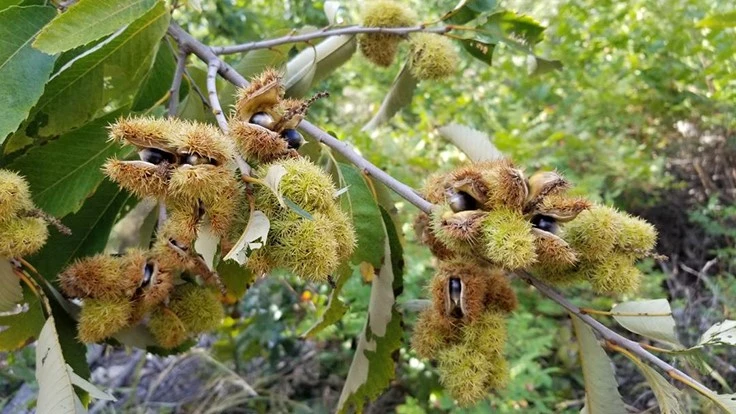
Deep in the rolling southeast Missouri Ozarks, Bost gets out of his car at the end of a remote dirt road. Somewhere nearby, carefully hidden from the public, is the Ozark chinquapin tree, once a keystone Ozark forest species. Decimated by chestnut blight in the mid-1900s, any viable trees were thought to be long gone—that is, until Bost found a few healthy hangers-on in the 2000s. Now he’s trying to bring the tree back from the edge of blight in a non-traditional way. And he’s succeeding.
Bost wipes his face with spicebush leaves, a natural repellent for a cloud of gnats. A short hike through the woods takes us to a rocky, sunbaked slope ringed by drought-killed trees. On this ridgetop is a test plot that Bost began nine years ago, home to 117 baby and adolescent Ozark chinquapins, some up to 30 feet tall, half the height of a full-grown tree. It’s Bost’s greatest secret and triumph: the genetic future of the Ozark chinquapin.
Read the rest of this National Geographic story here.
Latest from Nursery Management
- Jackson & Perkins expands into Canadian market
- Green & Growin’ 26 brings together North Carolina’s green industry for education, connection and growth
- Marion Ag Service announces return of Doug Grott as chief operating officer
- The Garden Conservancy hosting Open Days 2026
- Registration open for 2026 Perennial Plant Association National Symposium
- Artificial intelligence applications and challenges
- Fred C. Gloeckner Foundation Research Fund calls for 2026 research proposals
- Harrell’s expands horticulture team with addition of Chad Keel