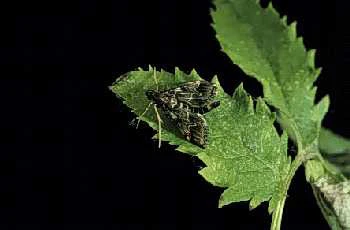
Duponchelia fovealis Zeller was found in San Diego County, Calif., in a pheromone trap on July 1. This moth is native to southern Europe and North Africa, and feeds on a wide range of commercially-grown host plants, including azalea, begonia, cyclamen, geranium, gerbera, poinsettia, rose, pepper, pomegranate and corn. Larval feeding results in reduction in yield and quality of host plants.

The larvae can cause considerable damage by feeding on leaves, crowns and stems, and also by boring into the stems of some plants. In vegetables such as peppers, they can also bore into the fruit. In some crops such as roses however, a large population can survive on plant debris without causing significant crop damage.
Delimiting surveys have been initiated to define the current distribution of this pest in the United States.
Pictured: An adult Duponchelia fovealis Zeller moth was captured in a pheromone trap in San Diego County, Calif., on July 1. The larvae feed on leaves, crowns and stems.
Photos courtesy of Central Science Laboratory, United Kingdom
Latest from Nursery Management
- [SNEAK PEEK] Leading Women of Horticulture: Angela Burke
- Get to know Hailey Clark
- Get to know Brian Kemble
- Proven Winners partners with Pure Line Seeds to offer vegetable plants
- Award winners announced for 2026 PHS Philadelphia Flower Show
- Kansas City botanical garden Powell Gardens acquires IGC Colonial Gardens
- [SNEAK PEEK] Leading Women of Horticulture: Delilah Onofrey and Krystal Snyder
- [SNEAK PEEK] Leading Women of Horticulture: Alexa Patti