When city or community budgets are tight, money for urban forestry—planting and maintenance—tends to be hit first and sometimes hardest. The same goes for regular community members thinking of upgrading their landscape. That’s why it’s important to convince community stakeholders that the trees in your community have economic and environmental value.
Well, city and community planners understand money. And so does any regular Joe or Jane who is in charge of their family’s finances. So you need to show them why they should make room in their budget for tree planting and maintenance.
Carbon sequestration, storm water remediation, energy savings, the Green Cities Initiative, and the dangers of invasive species: these are all hot buzzwords, and they can be excellent examples of why trees matter.
“We know trees are worth energy savings, and that’s a big deal right now,” said Pamela Bennett, Ohio State University Extension Master Gardener Volunteer Coordinator. “Green Cities and LEED certification, becoming more sustainable. Your community is probably very focused on storm water remediation; it may have even been mandated to take care of your storm water. Invasive species is another key topic we need to address. This package of tools has the ability to take the data you gathered the inventory and measurements of trees and turn it into dollars and cents benefits of these trees.”
Bennett uses a software suite called i-Tree and the National Tree Benefit Calculator to quantify the value of these hard-to-measure categories. The i-Tree suite of tools was developed by the USDA National Forest Service and several collaborators. Since its initial release in 2006, numerous communities, non-profit organizations, consultants, volunteers and students have used i-Tree to create detailed reports on individual trees or full forest assessments. The i-Tree software is free, and available for download from its website (www.itreetools.org).
The National Tree Benefit Calculator (treebenefits.com/calculator) was co-developed by Davey Tree Expert Company and Casey Trees. It is designed to be a simple, accessible tool to estimate the environmental and economic value trees provide on an annual basis. Just enter your zip code and it will provide tree values in your area.
Value-added
As an example, the overall benefits of a 36 inch pin oak tree in Washington, D.C. are $265 every year. If you use the i-Tree model, it will break down the benefits by category. For this tree, stormwater runoff reductions and property value increases account for the largest proportion of total benefits for this region. Stormwater runoff reductions were valued at $144.19 and the property value increase was set at $70.45.
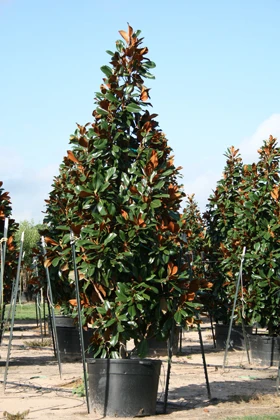
Trees are especially important in urban areas because of their effect on stormwater runoff, Bennett said. Because of overworked sewer systems that can’t handle the load of a large storm and large expanses of paved roads, parking lots and other impervious surfaces, rainfall washes quickly into streams and rivers, carrying silt downstream. Large shade trees act as mini-reservoirs, controlling runoff at the source, reducing and sometimes eliminating those problems. Trees intercept rain on leaves, branches and bark, and infiltration is improved through the tree’s root system. The pin oak used in our example will eliminate 14,565 gallons of stormwater runoff this year.
Read the rest of the story here.
Latest from Nursery Management
- [SNEAK PEAK] Leading Women of Horticulture: Louise Schaefer and Susan Tantsits
- The Growth Industry Episode 10: State of the Horticulture Industry
- Tennessee Green Industry Field Day scheduled for June 11
- UTIA and UT Knoxville research teams will develop automated compost monitoring system
- Ken and Deena Altman receive American Floral Endowment Ambassador Award
- [SNEAK PEEK] Leading Women of Horticulture: Becky Thomas
- [SNEAK PEEK] Leading Women of Horticulture: Angela Burke
- [SNEAK PEEK] Leading Women of Horticulture: Alexa Patti