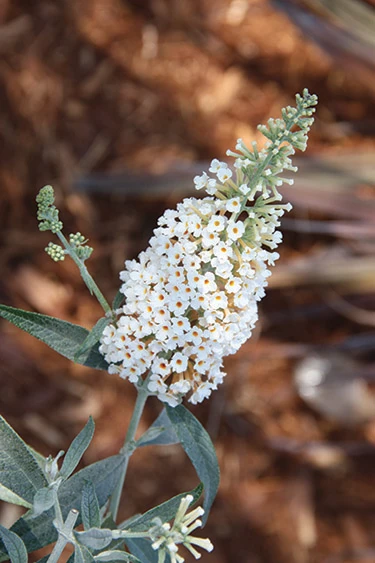
In 2010, the Connecticut Invasive Plant Council’s task got tougher. The agency develops and maintains a list of invasive and potentially invasive plants, then recommends whether they are allowed to be sold or banned outright in the state. But in 2010, the council was given enforcement authority over invasive plant laws. Bill Hyatt, the Department of Energy and Environmental Protection’s bureau chief of natural resources and the chairman of the Connecticut IPC, says this led to a tricky situation. The council had the ability to enforce these laws, but with an unresolved question regarding cultivars. Should they be treated differently than the base species?
So Hyatt asked for a ruling from DEEP’s legal counsel. The report he received said that if a plant species is prohibited, then all cultivars of that species are prohibited as well.Dave Goodwin, general manager of Planters’ Choice Nursery and a member of Connecticut’s IPC, believes cultivars should be judged on their own merits.
“They have been selected or bred for certain attributes,” he says. “As such, they exhibit different characteristics from the straight genus and species.”
This issue is far from finished. The IPC is working with the academic community to determine how cultivars fit in from a scientific standpoint and provide input on how they should be regulated.
Berberis thunbergii (Japanese barberry) and Euonymus alata (burning bush) are two valuable landscape shrubs that represent millions of dollars annually through the sale of cultivars. In Connecticut, Japanese barberry is not banned, but members of the Connecticut Nursery and Landscape Association voluntarily agreed to stop growing and selling it last year. Both burning bush and Japanese barberry are on the state’s invasive plant list as “potentially invasive,” with asterisks noting that while the species is known to be invasive, it has cultivars that have not been evaluated for invasive characteristics.
Mark Brand, a professor of horticulture at the University of Connecticut’s Department of Plant Science, is testing the invasive potential of these cultivars to determine if they pose a similar threat as the parent species and working to create sterile forms of each species.
Goodwin says there are major differences between barberry cultivars.
Read the rest of the story here.
Latest from Nursery Management
- [SNEAK PEAK] Leading Women of Horticulture: Louise Schaefer and Susan Tantsits
- The Growth Industry Episode 10: State of the Horticulture Industry
- Tennessee Green Industry Field Day scheduled for June 11
- UTIA and UT Knoxville research teams will develop automated compost monitoring system
- Ken and Deena Altman receive American Floral Endowment Ambassador Award
- [SNEAK PEEK] Leading Women of Horticulture: Becky Thomas
- [SNEAK PEEK] Leading Women of Horticulture: Angela Burke
- [SNEAK PEEK] Leading Women of Horticulture: Alexa Patti