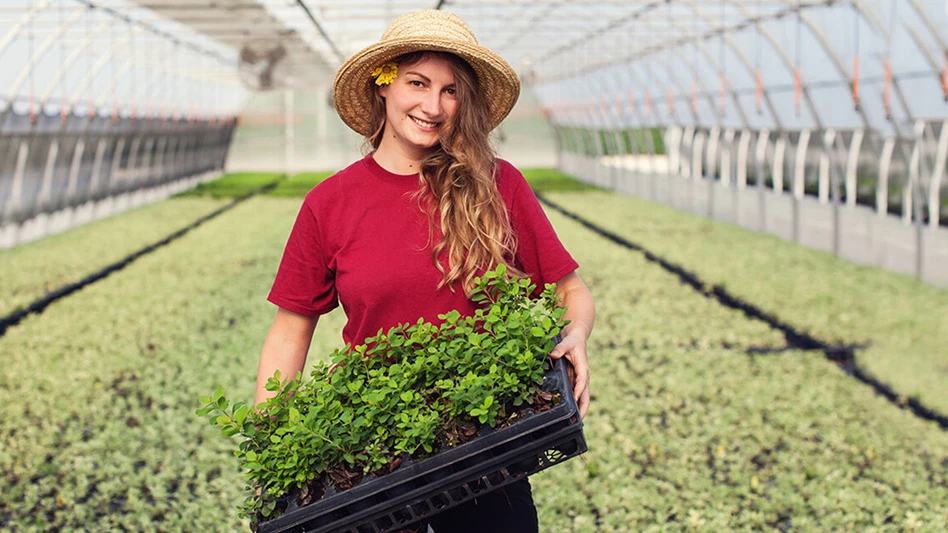
Imperial Nurseries in
{sidebar id=47}
The European elm flea weevil (Orchestes alni) was spotted for the first time in
The Palm Beach Chapter of the Florida Nursery, Growers & Landscape Association (FNGLA) won a Telly Award for its GrowSmart! public awareness campaign. The campaign consists of five, 30-second spots promoting water-wise landscaping and encouraging the public to follow simple guidelines focusing on sensible irrigation, money-saving gardening principles and other useful lawn and plant tips. The Tellys honor outstanding TV commercials, programs, and video and film productions. For more: www.fngla.org.
University of Nebraska-Lincoln Department of Agronomy and Horticulture partnered with PR firm Swanson Russell Associates to create a green-industry career awareness campaign. Go Green is featured on posters, T-shirts, bags, buttons and brochures and will appear at college fairs and through informational mailings. The department, faced with declining enrollment and lack of exposure, needed a brand to showcase its strong faculty leadership and high-quality academic facilities. For more: www.agronomy.unl.edu.
Postcards
University of California-Davis has taken on the challenging task of training sheep. I’m guessing that’s about as hard as herding cats, but my knowledge of sheep comes from the movie “Babe.” Thanks to an Ipecac-type formula, researchers found a way to get sheep to graze on weeds in vineyards, but pass on the grape leaves. First the sheep are allowed to eat their fill of grape leaves, but they get a chaser of a nausea-inducing medicine. They leave the crop alone next time they’re released. … The U.S. Census Bureau reported the fastest-growing U.S. cities are mostly in the South and West, with the exception of New York, which grew by 206,000 during 2000-2006. Rounding out the top 5:
Quotable:
“If we can convert even 1 million acres of this land to organic management by 2010, it will have a very significant impact on the soil, the water, the air and our own health and the health of generations to come. We are asking American consumers, as well as public and private institutions, to help us meet this Million Acre Challenge.”
-
{sidebar id=2}
- Kelli Rodda
Latest from Nursery Management
- [SNEAK PEAK] Leading Women of Horticulture: Louise Schaefer and Susan Tantsits
- The Growth Industry Episode 10: State of the Horticulture Industry
- Tennessee Green Industry Field Day scheduled for June 11
- UTIA and UT Knoxville research teams will develop automated compost monitoring system
- Ken and Deena Altman receive American Floral Endowment Ambassador Award
- [SNEAK PEEK] Leading Women of Horticulture: Becky Thomas
- [SNEAK PEEK] Leading Women of Horticulture: Angela Burke
- [SNEAK PEEK] Leading Women of Horticulture: Alexa Patti