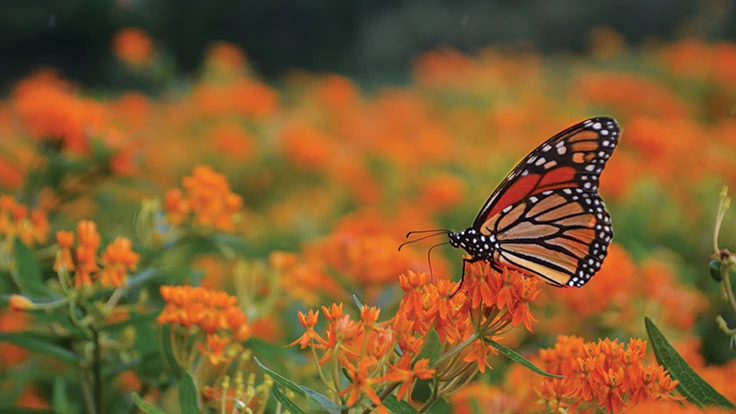
If you’re late to the butterfly party, it’s time to add Asclepias tuberosa to your production schedule. And if you’re already growing it, it may be time to consider boosting your numbers. Butterflies are frequently in the news, and the Perennial Plant Association named A. tuberosa it’s 2017 Perennial of the Year. Get ready for your retail and landscape customers to be beating down the doors for this crop.
Walters Gardens calls butterfly weed a “virtually hassle-free, very long lived perennial, offering three months of tangerine orange blooms (occasionally red or yellow)... The flowers, which are heavily laden with nectar and pollen, are particularly attractive to hummingbirds, monarch butterflies, bees, and other beneficial insects.”
Besides monarchs, it’s also an important host plant for the caterpillars of grey hairstreak and queen butterflies.
After it flowers, green fruits develop which rupture to reveal seeds with long, silvery-white, silky hairs reminiscent of its cousin, common milkweed.
This species is unusual among milkweeds because its leaves are alternate and it lacks the typical milky sap. It grows 2-3 feet tall, and blooms from mid-summer through early fall.
For more on why you should grow Asclepias tuberosa, and production tips, check out our November 2016 issue.
Latest from Nursery Management
- [SNEAK PEAK] Leading Women of Horticulture: Louise Schaefer and Susan Tantsits
- The Growth Industry Episode 10: State of the Horticulture Industry
- Tennessee Green Industry Field Day scheduled for June 11
- UTIA and UT Knoxville research teams will develop automated compost monitoring system
- Ken and Deena Altman receive American Floral Endowment Ambassador Award
- [SNEAK PEEK] Leading Women of Horticulture: Becky Thomas
- [SNEAK PEEK] Leading Women of Horticulture: Angela Burke
- [SNEAK PEEK] Leading Women of Horticulture: Alexa Patti