Workplace safety is about preventing injury and illness to employees in the workplace. Therefore, it’s about protecting your most valuable asset: your workers. By protecting your employees’ well-being, you reduce the amount of money paid out in health insurance benefits, workers’ compensation benefits and the cost of wages for temporary help. Factor in the cost of lost-work hours (days away from work or restricted hours or job transfer), time spent training temporary help. Also consider the programs and services that may suffer due to fewer employees, as well as the stress on those employees who are picking up the absent workers’ share, or in a worse case scenario, having to suspend or shut down a program due to lack of personnel.
The first step to making your workplace safer is to acknowledge which potential health and safety hazards are present. Or determine where and what and how a worker is likely to become injured or ill. It starts with analyzing individual workstations and worksites for hazards—the potential for harm.
The way to determine where those potential hazards are hiding is to perform a job hazard analysis. OSHA describes a job hazard analysis as a technique that focuses on job tasks to identify hazards before they occur. The Nonprofit Risk Management Center thinks of it as looking at the parts to strengthen the whole. From either view, the analysis examines the relationship between the worker, the task, the tools and the work environment.
Depending on the nature of the company, senior management may have to help workers manage specific hazards associated with their tasks:
- chemical (toxic, flammable, corrosive, explosive)
- electrical (shock/short circuit, fire, static, loss of power)
- ergonomics (strain, human error)
- excavation (collapse)
- explosion (chemical reaction, over pressurization)
- fall (condition results in slip/trip from heights or on walking surfaces—poor housekeeping, uneven surfaces, exposed ledges)
- fire/heat (burns to skin and other organs)
- mechanical (vibration, chaffing, material fatigue, failure, body part exposed to damage)
- noise (hearing damage, inability to communicate, stress)
- radiation (X-rays, microwave ovens, microwave towers for radio or TV stations or wireless technology)
- struck by (falling objects and projectiles injure body)
- struck against (injury to body part when action causes contact with a surface, as when screwdriver slips)
- temperature extreme (heat stress, exhaustion, hypothermia)
- visibility (lack of lighting or obstructed vision that results in error or injury)
- weather phenomena (snow, rain, wind, ice that increases or creates a hazard)
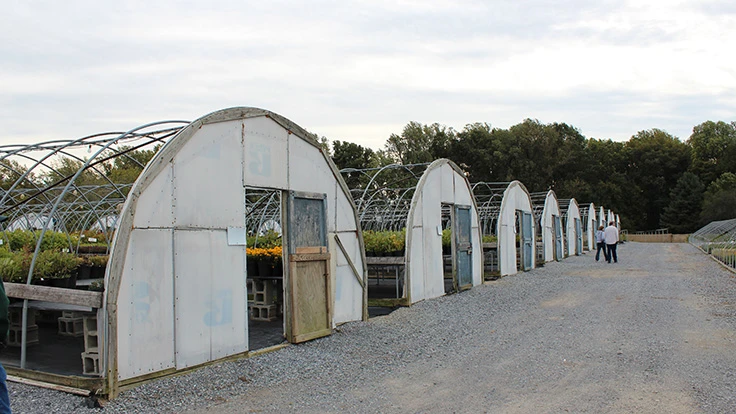
For the nursery industry, pay particular attention to ergonomics, mechanical, fall, and temperature extremes. And refer to a tool safety checklist to make sure your tools are up to the task.
For more: www.nonprofitrisk.org
Latest from Nursery Management
- Jackson & Perkins expands into Canadian market
- Green & Growin’ 26 brings together North Carolina’s green industry for education, connection and growth
- Marion Ag Service announces return of Doug Grott as chief operating officer
- The Garden Conservancy hosting Open Days 2026
- Registration open for 2026 Perennial Plant Association National Symposium
- Artificial intelligence applications and challenges
- Fred C. Gloeckner Foundation Research Fund calls for 2026 research proposals
- Harrell’s expands horticulture team with addition of Chad Keel