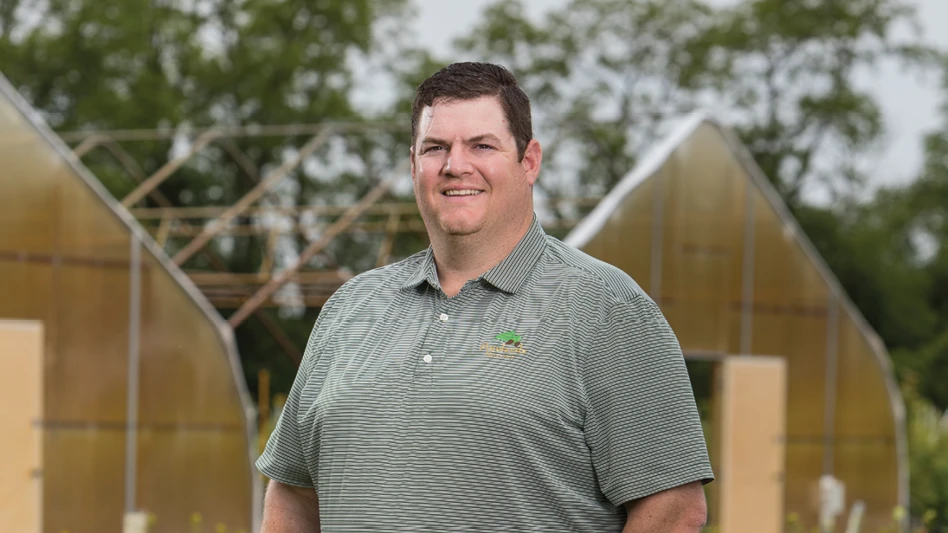
From the road heading east, the apple trees of Beekman Orchards unfold in waves, rising and falling on a sea of verdant grass. Behind them, basking in the June sunlight, are row upon row of pinot noir, riesling, and traminette grapes. It’s for the vineyard that I’ve driven to this 170-acre estate in Berks County, an hour and a half northwest of Philadelphia. Beekman Orchards is a fourth-generation family enterprise, now carefully stewarded by Calvin Beekman, a large 59-year-old man with a calm voice and meat-hook hands.
On this day, several rows of vines in the middle of the patch are a lush green, close to the fruit-set stage. Mid-June is usually when clusters of grapes bloom, growing until harvest begins in mid-September. In the rows farther out, though, no clusters are visible, and the grape-shoot trunks are blackened, dead. Beekman gestures toward a set of riesling vines that went in just last year. “This row contains 140 plants,” he says. “I don’t think you can find 1 percent that’s viable.”
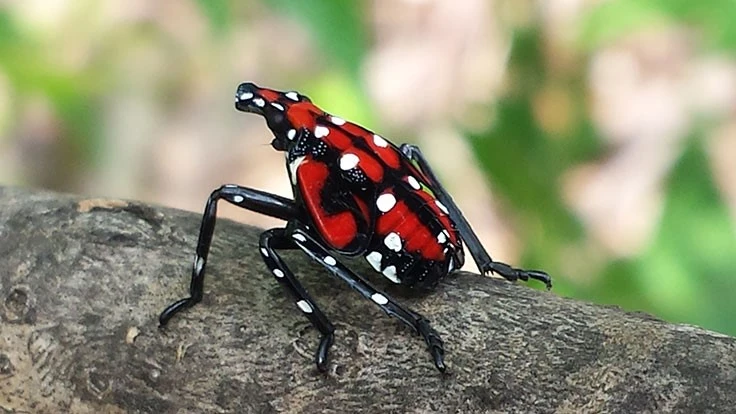
He points to the woodlands surrounding his farm and utters a word that’s been unnerving farmers, foresters, public officials, and entomologists alike: “lanternflies.”
Click here to read more from Bloomberg Businessweek.
Top photo courtesy Pennsylvania Department of Agriculture.
Latest from Nursery Management
- [SNEAK PEAK] Leading Women of Horticulture: Louise Schaefer and Susan Tantsits
- The Growth Industry Episode 10: State of the Horticulture Industry
- Tennessee Green Industry Field Day scheduled for June 11
- UTIA and UT Knoxville research teams will develop automated compost monitoring system
- Ken and Deena Altman receive American Floral Endowment Ambassador Award
- [SNEAK PEEK] Leading Women of Horticulture: Becky Thomas
- [SNEAK PEEK] Leading Women of Horticulture: Angela Burke
- [SNEAK PEEK] Leading Women of Horticulture: Alexa Patti