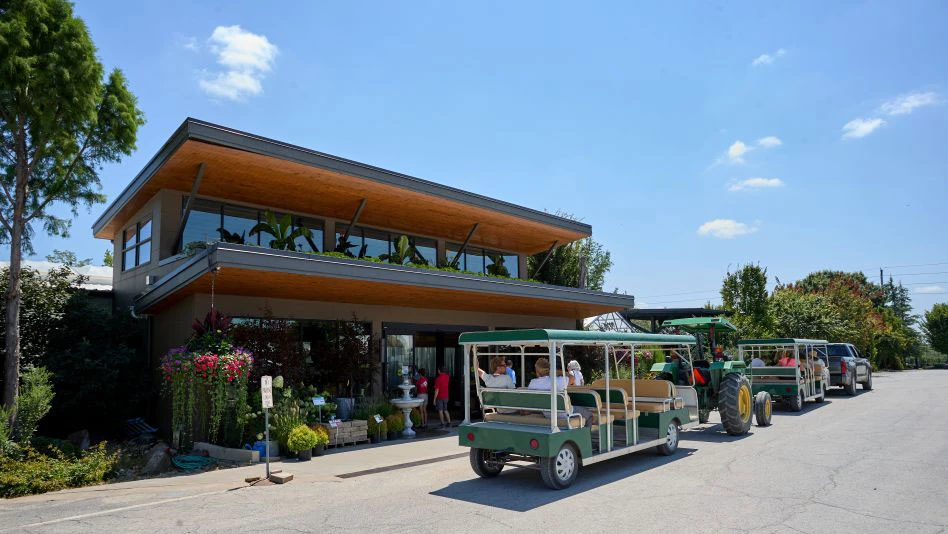
“Buy local” has become a popular catchphrase recently. It’s usually associated with the green movement and consumers’ desire to buy food produced nearby. But lately the definition has broadened as retailers of all kinds band together to battle big boxes and keep money in the local economy.
{sidebar id=45}
“We’re seeing the beginning of a shift in people’s shopping choices, particularly in places where ‘buy local’ campaigns have brought this to the forefront of public consciousness,” said Stacy Mitchell, author of “Big-Box Swindle” and senior researcher for the Institute for Local Self-Reliance. “Locally owned is following in the footsteps of ‘organic’ as people look for ways to support a more sustainable economy and revitalize communities.”
Beneficial alliance
“Buy local” groups are as varied as the communities that they serve. They usually get their start based on a single voice.
“More often than not it’s one person learning more about independent business alliances,” said Jeff Milchen, co-founder of American Independent Business Alliance, a nonprofit that helps organize and support “buy local” groups. “Typically it’s a business owner, but sometimes it’s a concerned citizen. The launching step is hosting a workshop in the community; seeing there are ways to counter trends.”
Milchen said the work of independent business alliances covers three areas:
1. Informing citizens of the importance of community-based businesses and their contributions to the local economy, culture and social fabric. Part of this involves educating consumers that “value and cheapness are not the same,” Milchen said.
2. Group branding, promotion and advertising to elevate the collective profile of community-based businesses and help level the playing field.
3. Creating strong relationships with local government and the media to give a voice to locally owned businesses and promote policy that supports community-rooted enterprise.
Communities have found innovative ways to meet these goals. Buy Local First Utah, a group based in
Dane County Buy Local, a business alliance in
The gift cards were Visa gift cards that worked anywhere Visa is accepted. They were branded with Dane County Buy Local’s name and came in a sleeve with a list of member businesses.
Local impact
Clever strategies like these have increased the visibility of local businesses. And it appears consumers are responding. A national survey conducted soon after last year’s holiday shopping season found that the desire to support locally owned businesses emerged as a factor in people’s shopping choices.
The survey, conducted by the Independent Business Forum, found that independent retailers in cities with active “buy local” campaigns reported larger increases in holiday sales on average than those in cities without such campaigns. Businesses in these cities reported an average gain in sales of about 2 percent over the 2006 holiday season. Retailers in cities without “buy local” campaigns saw an increase of less than 0.5 percent.
“The ‘buy local’ message really resonates with people right now, but it’s up to independent retailers to tap into it,” Mitchell said.
Emphasizing the contributions local retailers make in the community helps get people on board.
“Studies have found that a dollar spent at locally owned stores generates about three times as much benefit for the local economy as a dollar spent at a chain,” Mitchell said. “This is because local retailers spend more on local payroll (per unit of sales) and buy more goods and services from other local businesses. Chains instead tend to siphon money out of the community.”
{sidebar id=3}
For more: Institute for Local Self-Reliance, (207) 774-6792; www.ilsr.org. American Independent Business Alliance, (406) 582-1255; www.amiba.net.
- Sarah Martinez
May 2008
Latest from Nursery Management
- The Growth Industry Episode 10: State of the Horticulture Industry
- Tennessee Green Industry Field Day scheduled for June 11
- UTIA and UT Knoxville research teams will develop automated compost monitoring system
- Ken and Deena Altman receive American Floral Endowment Ambassador Award
- [SNEAK PEEK] Leading Women of Horticulture: Becky Thomas
- [SNEAK PEEK] Leading Women of Horticulture: Angela Burke
- [SNEAK PEEK] Leading Women of Horticulture: Alexa Patti
- Native before it was cool