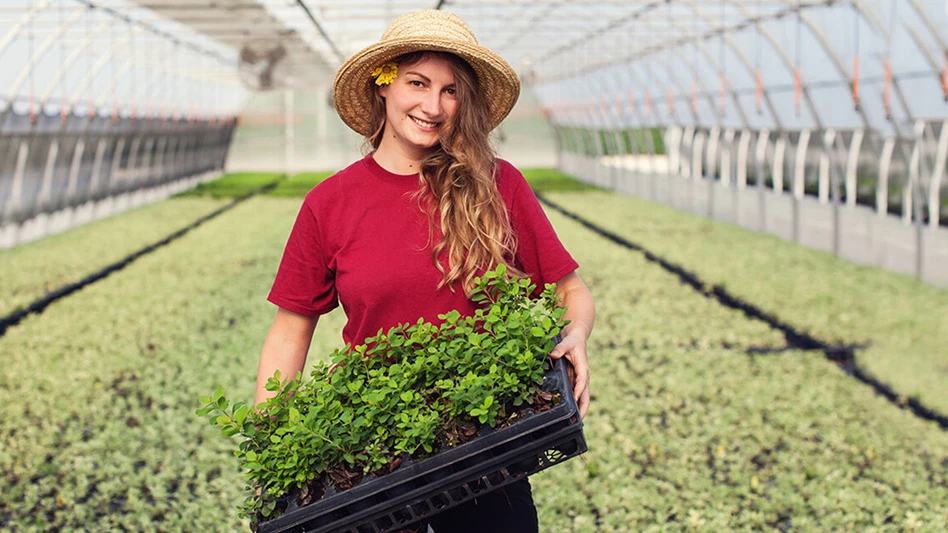
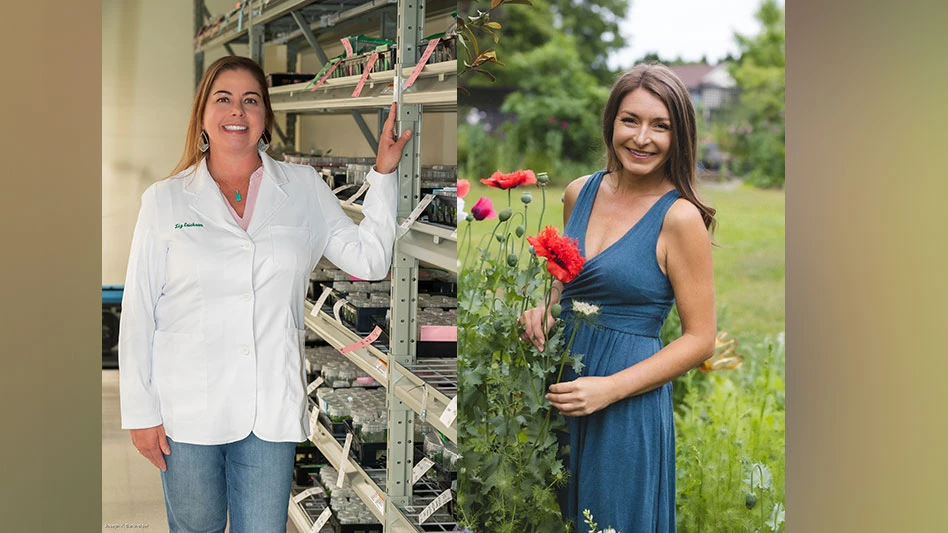
Shelby Jackson is an NCNLA certified plant professional and the head of sales and part-owner of Carolina Native Nursery, located in North Carolina. Her experience besides sales includes horticultural research in the field and in the laboratory, landscape design consulting, and let’s not leave out, she’s a native plant enthusiast.
Katie McDaniel: Can you share the first moment you realized you loved plants and that this could be a career path?
Shelby Jackson: I was actually in college and a semester shy of becoming a sociologist. I took a job at a garden center in Atlanta, [Georgia], and I fell in love. I’m from the suburbs of DC, so horticulture was never on my radar — nothing ever came up about plants or plant sciences or anything like that. My mom was a gardener, but it was never a career option. I had no idea it existed. I don’t even think I knew the word horticulture until I was 21 years old. I dropped out of the school I was in, and I started at community college for a year. Then I transferred to the University of Tennessee in Knoxville, and I did three more years of college and got my plant sciences degree, specializing in native plants and public horticulture. I fell in love with it. I loved knowing the names of plants. I grew my first tomatoes that summer, and I was blown away that you could plant a seed and something could come out of it and that you have this power over it. It brought a lot of joy to my life. I really enjoyed it, and I put two and two together and I was like, I want to do this. I want to work with plants. They just made me feel so good.
KM: How long have you been with Carolina Native Nursery?
SJ: I’ve been with Carolina Native [Nursery] for 15 years now. I was with a garden center here in Asheville, [North Carolina], and I was kind of done with the retail world, and I wanted to get more into the native niche. Bill [Jones] had an opening for a salesperson, and I applied, moved over here and moved to the wholesale side, which I really enjoy. So, I came on, and it’s been 15 years. Time flies when you’re having fun.
KM: As a nursery that specializes in native plants, what do you think is trending among your customers?
SJ: With the native plants, there’s two different ways. You’ve got your re-wholesalers and landscapers; then you have your garden centers. I think the needs and trends are different among those two folks. With garden centers, it’s flowering perennials. I think our perennial businesses really increased dramatically over the past few years because you can have a tiny little garden, and you can always find a spot for a native perennial. Homeowners are really catching on, so we’re seeing a lot more uptick in flowering perennials. For our landscapers, it’s large evergreen native rhododendron, mountain laurel and that kind of stuff. The high quality rhododendron for larger estates and for big landscape jobs in the Northeast is really a big trend. Then the flowering perennials for our garden centers and our more everyday folks, anything with a pretty flower that’s going to attract some butterflies, I think is pushing hard right now. Folks want to save the bees, the pollinators, butterflies and support the birds, so we’re seeing a hug trend just in that. The perennials are an easy push and they’re easy to sell because they’re so beautiful.
KM: What does the future of native plants look like in your opinion?
SJ: I think it’s going to keep growing. When Bill started this company in 2003, I remember when I came on, we were a quarter of the size that we are now, and I see it continuing to grow. I think the people out there are reading more, learning more, paying attention, global warming and more ecology based information is coming out, so I see it keep rockin’ and rollin’. You see the toughness of these plants and the support that they’re offering to our environment, our wildlife and our insect population, so I think it’s going to keep growing by leaps and bounds.
KM: To give our readers some background, the southeastern United States was ravaged this fall by back-to-back hurricanes, and in a matter of hours, an estimated four feet of devastating floodwaters from Hurricane Helene swept through Carolina Native Nursery, wiping out 90% of the inventory and causing significant damage to its infrastructure. What was it like experiencing that and how has recovery been?
SJ: It was pretty horrifying. Unless you’ve been through any type of natural disaster, it’s hard to explain the emotional trauma. For me, I’m a pretty sensitive soul. I’m a pretty emotional gal, so it was a really emotional time. The first couple days we had no cell service, so no one knew what was going on. We had no clue that so many people were lost and communities were just torn apart. I made it over to the nursery on Sunday. I think the storm was on Friday, and that was the first time I could get out of my neighborhood. The nursery was demolished. There were no plants. There were no plants left. About a mile and a half down the road before I got to the nursery, I was seeing pots on the side of the road, and I knew it was not going to be good. It was a few weeks of lots of tears and just not knowing what you’re going to do. Bill and I, and one of our employees, Lauren, just ran around like chickens with their heads cut off because you don’t know what to do first.
It was a journey to say the least, of just navigating through that. We’ve never had anything like that happen before, and you’re worried about your friends and your neighbors and your business and your employees. It was rough. It was tough. Our community is still rebuilding and getting it back together, and we’re still rebuilding and getting it back together. So, it’s definitely been a journey. I think we stopped crying after the first two weeks. The first two weeks were a lot of tears and a lot of not knowing what you’re doing. I think with a leader like Bill, if anyone knows Bill Jones, he is a man on a mission and a man with a plan. We just followed the plan, and we got back to work. Luckily, our industry is full of hardworking, generous, kind, thoughtful individuals. We know how to work hard. We’re not afraid of getting dirty. We’re not afraid to sweat it out, and that’s what we did for the last six months was get dirty and we accepted help. We asked for help, and it was amazing to see our horticulture community push around and come back and help us.
It is what it is. Mother Nature does what she wants. I can’t argue with her, so we just take it as it comes. Good news is we are on our way back. We’ve potted up over 60,000 three-gallon shrubs, and we’re starting on potting up our perennials next week. We’ve got about 40,000 perennials coming in next week, so we’re on our way. We have a little bit of more work to do with our propagation houses. We’ve got a lot of gravel to lay and a lot of ground cloth to put down, but we’re on our way. We’re working hard, and we’re trying to keep it behind us and keep moving forward. That’s the only way you get through stuff like this is one foot in front of the other and you just keep going. We’re not giving up, and we’re dealing with it. We’re helping, and we’re keeping our people employed. We’re paying the bills, and we’re learning from it and being grateful.
KM: When you’re not working, what do you enjoy doing for fun?
SJ: I love to travel. My husband and I try to take at least one big trip a year and go somewhere new. I have two really cute dogs at home, so I like to hang out with them. I love reading. I’m a big book nerd and bird nerd, so watching the birds and getting outdoors as much as possible. Right now it’s a little weird with the parks being closed because of the hurricane still, but just being outside, enjoying the native plants around me, being with my husband, my dogs, and then getting out of Dodge occasionally and seeing what else is out there in the world.