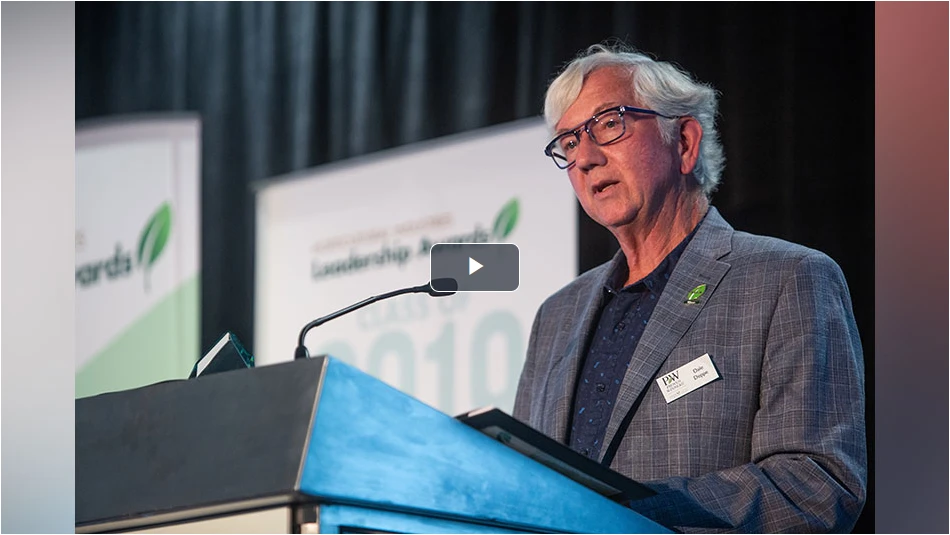
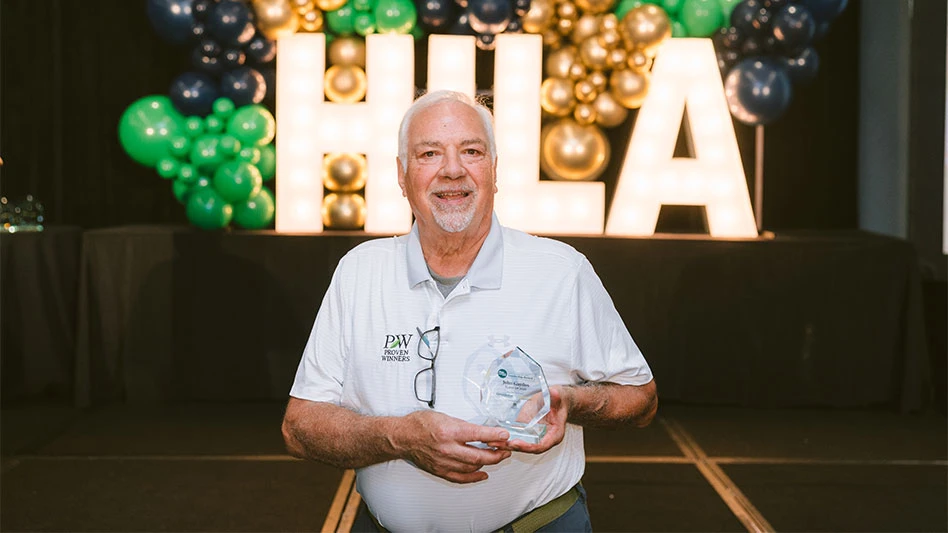
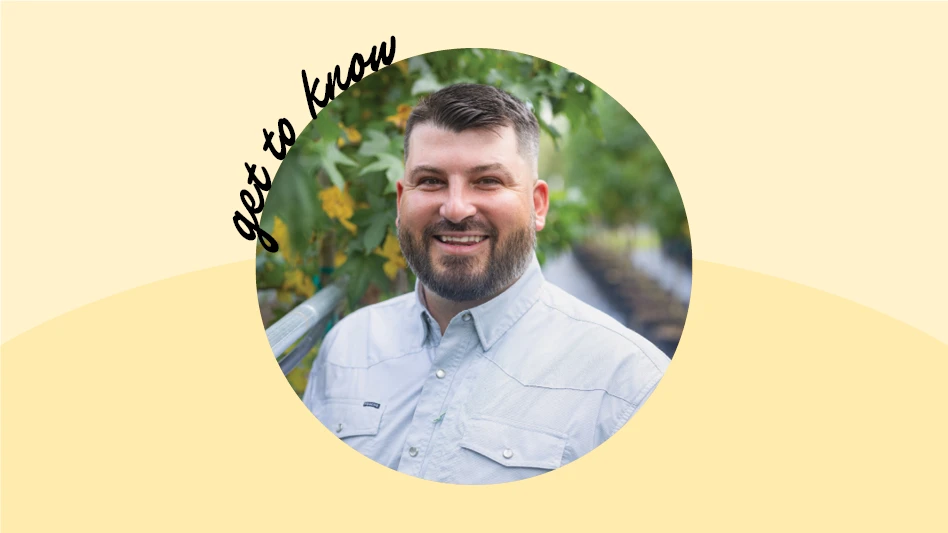
Brian Kemble, winner of the American Horticultural Society’s Liberty Hyde Bailey Award, shares his horticulture industry journey as the curator at The Ruth Bancroft Garden & Nursery, a botanical garden specializing in plants from arid climates.
Editor’s note: This transcribed interview was edited and shortened for the print edition. Watch the full video interview above.
With nearly half a century of experience at The Ruth Bancroft Garden & Nursery, curator Brian Kemble has played a vital role in transitioning the organization to a nonprofit while developing new hybrids, including a large aloe collection.
We caught up with Kemble to chat about his time as curator, his industry beginnings and more.
Katie McDaniel: You're wrapping up 45 years at Ruth Bancroft Garden and Nursery. What do you do as curator there?
Brian Kemble: As curator, it's my job to keep all the records for the plant collection and decide what new plants get brought into the garden. Then I decide where they should be planted and keep track of them.
I do hybridizing, too, so if you have, let's say, a large aloe collection, as we do at the Bancroft Garden, and you think, well, this one here is nice and hardy, but the flowers aren't that colorful, but this one over here isn't so hardy, but it has colorful flowers, what if I combine them and I could get something that had both traits that I want? So, I do lots of that sort of thing, and I've been doing that for many years. In addition to aloes, I hybridize agaves, some cacti, Gasterias and other things.
KM: How did you get into the horticulture industry?
BK: I did like plants when I was young. My mother's father was the green thumb in the family, and I always loved to watch him plant things. I remember as a child, the first time I took a cutting of a hibiscus and got it to grow and turn it into a plant, it seemed to me miraculous that just that little piece that I cut off could turn into a plant. But I didn't really think of that as a career.
When I finished college, I had a degree in philosophy. I didn't know what to do next, so I moved to San Francisco and just started taking odd jobs, and I had a neighbor who was a landscaper. He started hiring me to help him out on projects.
I got a job one day of the week working at the International Succulent Institute. I would work there propagating the plants and potting them. At that time, I was vice president of the Oakland branch of the Cactus and Succulent Society. Clive Innes, from England, had a nursery called Holly Gate Nursery, and they grew a lot of succulents there. When he came to visit, he said he had heard about a garden in Walnut Creek and would like to visit it. So, I took him out there, and it turned out to be Ruth Bancroft's garden. That was in 1979.
At that time, the garden was seven years old, because she started it in 1972. I was stunned by the size of it and how ambitious the project was. I told her that I'd love to work there if she needed help. So, she took my name and the next year, in 1980, she said yes. She needed somebody to take care of the greenhouse plants.
At that time, it was just Ruth's personal private garden, but in the '90s, Frank Cavett came to visit. He founded the Garden Conservancy, and Ruth Bancroft Garden was the very first garden that was sponsored when that organization was created. They helped us create a nonprofit, start a board and get the ball rolling on having the garden open to the public.
KM: Why did you decide to do research on succulents?
BK: I decided to do research on succulents because that's what I love. If you're going to do research on succulents, then you have to go to the places where the succulents grow.
There are two places I've visited a lot that are very rich in succulents, and one of those is Mexico. It has a varied topography, all kinds of different habitats. It is full of things like agaves and Echeverias that are prominently featured in the Ruth Bancroft Garden.
The other place I've been to a lot of times is South Africa. It is home to more species of succulents than any country in the world. I would say it’s maybe a fifth the size of the U.S., and yet it has almost as many species of succulents as the whole rest of the world put together.
Latest from Nursery Management
- Jackson & Perkins expands into Canadian market
- Green & Growin’ 26 brings together North Carolina’s green industry for education, connection and growth
- Marion Ag Service announces return of Doug Grott as chief operating officer
- The Garden Conservancy hosting Open Days 2026
- Registration open for 2026 Perennial Plant Association National Symposium
- Artificial intelligence applications and challenges
- Fred C. Gloeckner Foundation Research Fund calls for 2026 research proposals
- Harrell’s expands horticulture team with addition of Chad Keel