Photos by Rick Dahms
Editor's Note: This article originally appeared in the December 2025 print edition of Nursery Management under the headline “Earned loyalty.”
Ian Herrera, managing director of T&L Nursery, is fascinated by data about job tenure across generations. For the baby boomers, loyalty to their employer was expected. That’s not the case anymore. Today’s employers must earn it and keep earning it. The amount of years before job-jumping dwindles as you continue down the line from Generation X to millennials and Generation Z/alpha.
“We don’t expect anybody is going to be a part of our team until they retire,” Ian says. “We know that it is very common to change industries. And every day, our employees choose to come to work. They choose every single day that they want to be a part of the team. And that has to be at the top of our mind: how do we ensure that every day they’re going to continue to choose us?”
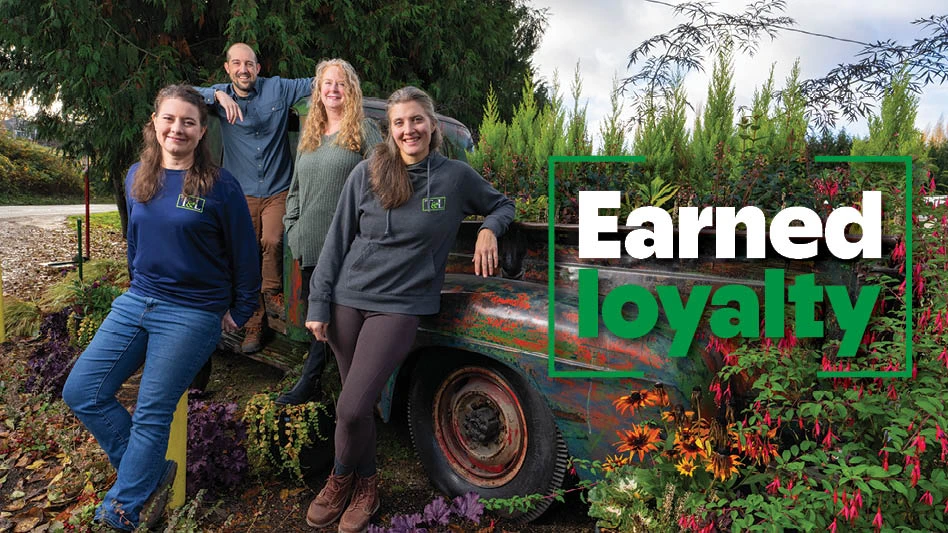
T&L Nursery in Redmond, Washington, has been named a Best Place to Work in Horticulture, after finishing third overall in a national survey conducted by Best Companies Group (see sidebar at the bottom of screen), and as the No. 1 wholesale nursery.
One of the main reasons T&L decided to participate in the survey was because the leadership team was looking for an objective way to find out what their employees think about being a part of T&L, and help them identify what they’re doing well and where they could improve.
“What we can see on a regular basis is plants, and how we stack up against our competition in stores,” Ian says. “Outside of that, it’s challenging to know how your culture stacks up in the industry.”
New leader, new ideas
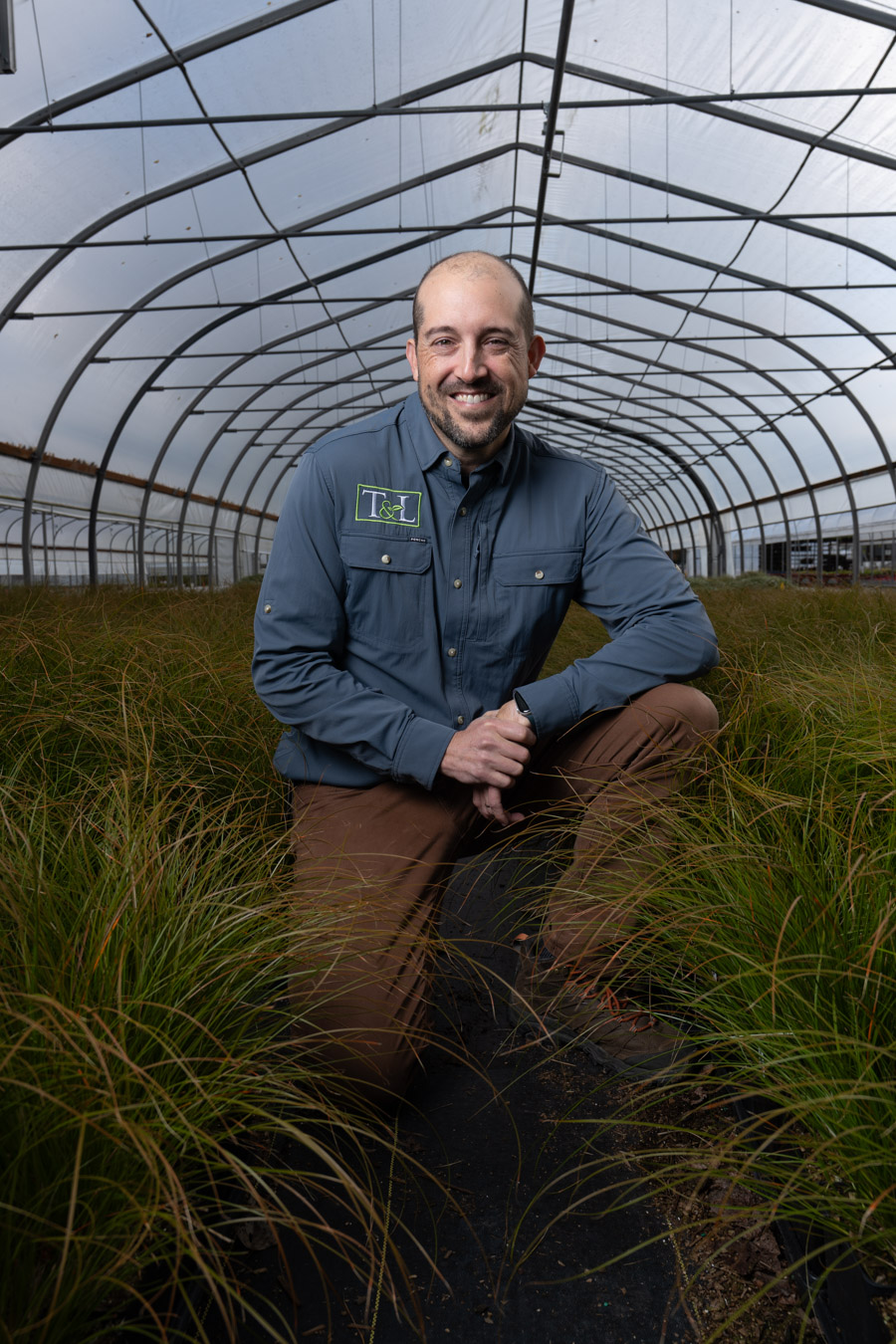
Ian has only been working at T&L for three years. His uncle Wolfgang Mueller founded the company 40 years ago. Almost 20 years ago the nursery moved out of the tissue and liner business and focused on finished plants. They kept the name.
Ian never thought he’d be in the horticulture business. He started his career in the hospitality industry, spent some time in the construction sector and transitioned into animal health. T&L’s long-time general manager, Andrej Suske, was ready to retire after 26 years with the company. Wolfgang had been retired for some time at this point, but he was actively involved in looking for a person to lead the nursery operations.
It was an exciting opportunity for Ian, but not one he wanted to jump into without knowing more about the business and the team. He also had to be sure the employees would be open to him joining because he brings valuable skills, not just because he’s the founder’s nephew.
“As an outsider coming into the business, there’s obviously the risk that I don’t have the skills and the knowledge to lead us forward successfully into the future,” Ian says. “So from my perspective, gaining the trust and leaning into the expertise of everybody else that’s already here is really, really important for our success.”
Whitney Bohlin, assistant sales manager at T&L, worked with Andrej and can vouch for his strength as a nurseryman. However, she says Ian’s leadership has expanded the team’s expectations for themselves and the company.
“Ian brought a level of corporate professionalism that wasn’t here before, but that nitty-gritty nursery vibe is still here,” she says.
His 2024 acquisition of Klem’s Greenhouse made T&L the only West Coast liner supplier for the popular Rieger begonia program. And when Skagit Horticulture closed in 2024, T&L moved quickly to grab some of the Pacific Northwest annual market share left behind.
Head grower Alison Burton says T&L has tripled its annual production in the last few years.
“It was obvious there would be a hole in the market in our area,” she says. “We thought we could make a dent in that.”
It was a savvy business move from the number-cruncher and a good example of what he brings to the table.
“I am not a plant horticulturalist,” Ian says. “If you’re going to look to me for pest management strategies, or the right fertilization standards, or right grow time environmental management techniques, that’s not my strength. That’s not where I excel. But what I do bring into the business is a lot of experience managing profit and loss of different corporations, of overseeing human resource policies, of understanding the importance of how teams work together and making sure that you have the right training and systems and processes in place so that every component of your business is delivering as one overall strong company output. My goal is not to be the plant expert, it’s to round out the team and to bring something different to the team so that the plant experts that we have can flourish and thrive.”
Upward mobility
Whitney Bohlin started at T&L as a landscape front office person, handling basic customer service. She moved up to a sales coordinator, managing orders, and is now assistant sales manager. She walks the nursery, has forecasting and planning meetings, and is an integral part of the decision-making process.
“The role has grown quite a bit from when I started nine years ago to where I’m at now,” she says. “How I’ve evolved within the nursery has been really, really incredible.”
Whitney says T&L is getting better at promoting from within. Employees have to seek out opportunities. Managers are willing to listen, and employees who are willing to advocate for themselves often have the first crack at a newly-open position.
A common occurrence at T&L is for someone to start at an entry-level position, then level up by developing new skills. As a manager, Whitney aids this process by listening to what her employees want to do with their work and where they want to go with their lives.
“T&L’s main mode is listening to folks and then slowly prodding them into the direction that would make them happier instead of listening to them get frustrated where they’re stagnant,” she says.
To smooth the process, Whitney and other managers recommend honing skills related to an employee’s interest. Even if their role doesn’t change, they can learn new skills and promotable abilities that could increase pay or allow more flexible scheduling.
Alison Burton is another example of someone promoted from within at T&L. She is head grower at T&L, and she manages an assistant head grower, two grower supervisors and eight growers. She did all those jobs on her way up the ladder, then moved into a different department for five years before the head grower opportunity opened. She appreciates the strong mentors she had at T&L who taught her how to be a leader.
“It’s a place where I know I can have a job forever,” she says. “I feel very secure and safe, but I also feel like I will always have opportunity to grow. I don’t feel like we’ll ever stagnate. I feel very free to voice my opinions and be heard, and I believe a lot of people feel that way.”
Keeping your team happy
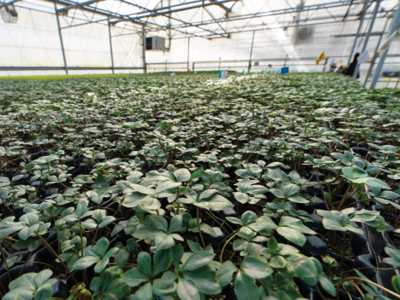
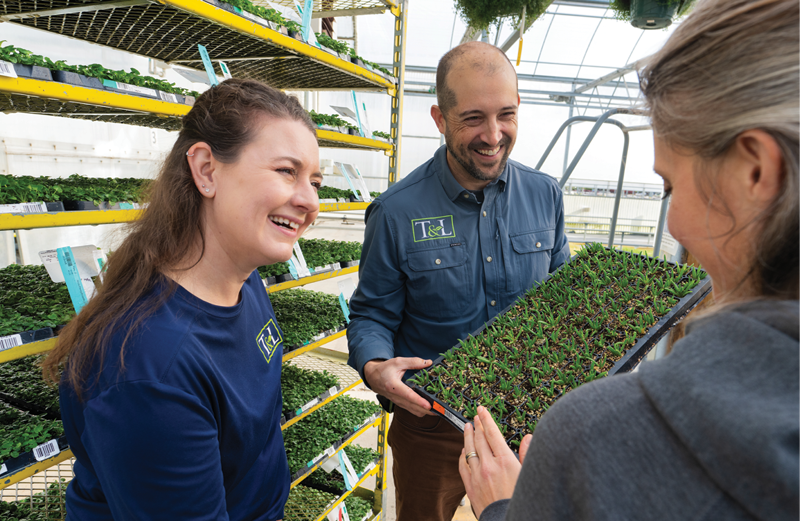
T&L grows over 4 million plants a year, 2,500 different varieties, and there are about 9,000 different production runs throughout the year.
“The number of steps that it takes from the moment that we decide to forecast a product to the moment that we get a plant on our customers’ shelves is really complex,” Ian says. “You do that 9,000 times, and there’s a lot of room for errors and for things to go wrong. The number one line of defense for us to prevent errors and also the number one resource for us to make sure that we are putting out an exceptional product is to have a team that is proud to be here and wants to do a good job.”
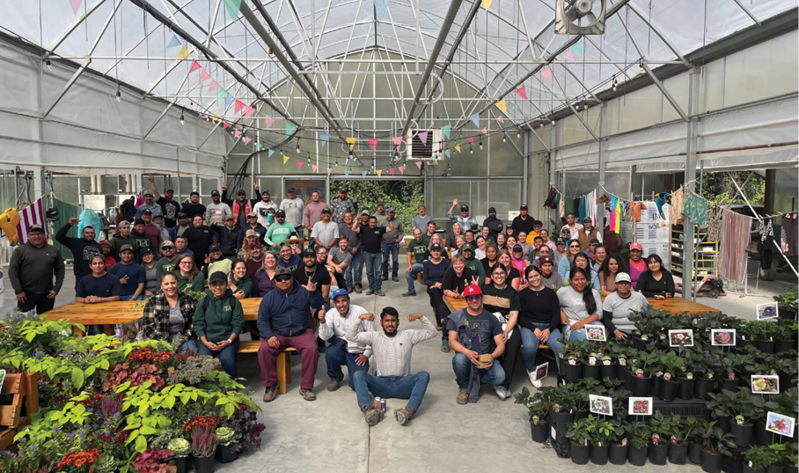
As T&L has grown, it’s become harder for Ian to personally have deep relationships with all the different employees. At peak season, T&L has a staff of 160.
For Ian, the most impressive score T&L received on its survey was 98% of T&L employees who took the survey didn’t have plans to make a change in the next year or two. Even with the caveat that not 100% of employees participated in the survey, that was 20% higher than the average company that took the survey.
Joanne Lillard is T&L’s senior finance manager. She joined T&L more than 20 years ago because it seemed like a vibrant, exciting place to work. She stays at T&L because of the relationships she’s built with the people there.
“I feel very protective of our employees, and I always want to strive to help them not only with their work at T&L, but also their lives outside of T&L,” she says.
In her position, she helps by making sure they have medical and dental benefits, life insurance and long-term care.
Joanne says she’s enjoyed watching the culture grow and change over the years. When she started with T&L, there was a sense of separation between Spanish-speaking and English-speaking employees.
All of T&L’s primary staff for payroll and HR and supervisors are bilingual. In the past 18 months, the company has paid for Duolingo and training to further improve the staff’s ability to communicate.
“Slowly but surely over the years, we’ve really managed to bring both sides together,” she says.
One big change that helped was having better representation on T&L’s executive committee. Diego Avilez, T&L’s field manager, was invited to join the committee. Now, the Spanish-speaking field workers see Diego on the same level with the company leaders and know there’s somebody looking out for their interests.
The team makes the effort to keep both sides happy at events like employee appreciation or Christmas parties. T&L has become more inclusive and transparent with its all-hands monthly state of the nursery meeting, discussing sales and dump numbers in English and Spanish.
T&L has a monthly safety committee meeting. Employees are encouraged to submit safety suggestions, either through a suggestion box or to their manager or a member of the safety committee. If their suggestion wins, the employee gets $100 and the satisfaction of making the nursery a safer place to work.
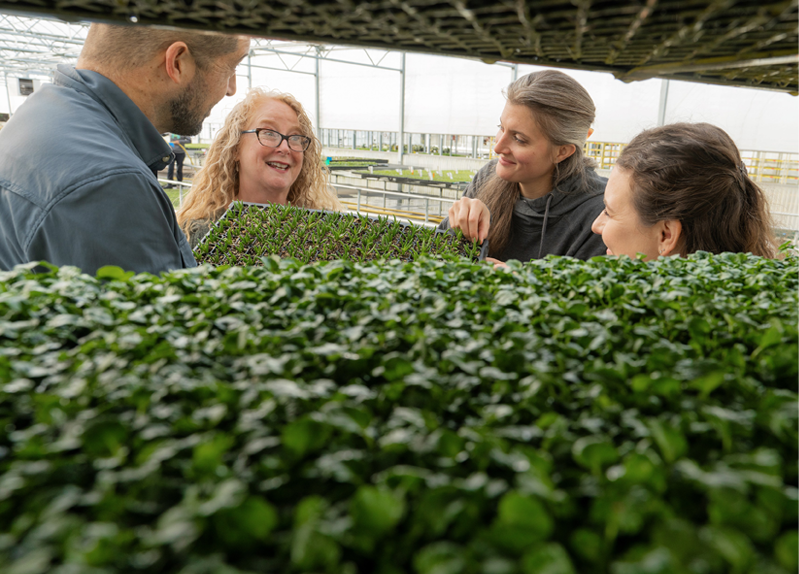
See a need, take the lead
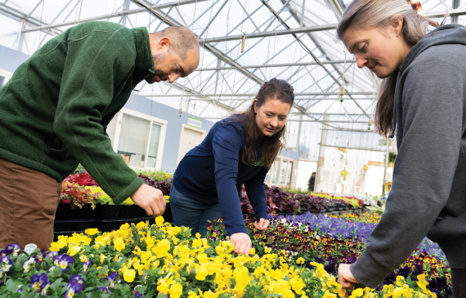
T&L invites innovation, participation and the sharing of ideas. The executive team encourages employees to take on tasks within their department that excite them.
“Not everybody is going to love every aspect of a job,” Ian says. “That’s the reality of the work environment. But you can find things in your sphere that really excite you. And if we can connect those aspects to the work that you’re doing, then you’re more likely to be engaged in the long term — to take a sense of ownership.”
Soil testing is part of the job for T&L’s 11 growers. One grower took an interest and developed a robust soil management program testing the EC on a regular basis.
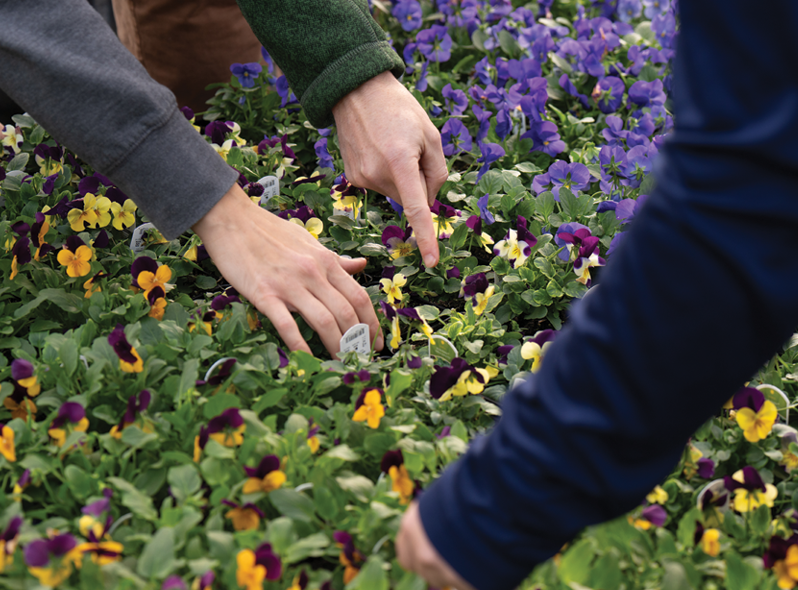
Another employee loves to experiment with different varieties and growing conditions. If a manager walked through one of the houses that grower maintained, they’d see small groups of plants tucked away with a sign on them, with notes like “Don’t touch! I’ve got a different fertilizer on these.”
Naturally, Ian says, the team put that grower in charge of all of T&L’s trial plants. Now the grower has the satisfaction of knowing that experimentation with new varieties is helping lead the company forward.
Hiring outside the box
Promoting deserving employees can be tough when there aren’t many rungs on the ladder. T&L is a very linear organization. For example, the nursery has a one-person HR department, one IPM specialist, one in-house IT specialist. There are a lot of highly-skilled roles, but only one or two people in those roles in the company.
That’s why building up depth and redundancy is a critical priority for Ian.
“It was one of the most important things that we identified when I joined,” he says. “And at the same time, for efficiency purposes, for a lot of roles, we’re at the size where one is the right number. And until we become 50% larger, there’s not a lot of room to add a second or third.”
In that way, its skilled specialists are both a strength and a risk for T&L.
However, you can’t rely on your existing staff to fill 100% of the vacancies that open. This is what Ian says is another key to T&L’s success: bringing in talent from outside the industry.
“I don’t require a horticulture background,” Ian says. “It’s the requirement of being excited about working in horticulture and having the right skill sets for the job.”
For example, T&L’s inventory team includes an employee who worked with Amazon for many years and knows inventory processes well. When she was hired, she certainly could not visually identify T&L’s plants. However, the move from being in a warehouse all day to being outdoors with nature was an uplifting change for her.
“She shows up to work with the biggest smile on her face, is so happy to be here every day, and is committed to doing a really good job,” Ian says. “She’s learning the plants along the way, and she’s bringing professional inventory system knowledge to us that we otherwise didn’t have. We’re both really winning in some of these scenarios where we have people who would ordinarily not necessarily come into horticulture that are making a big difference for us.”

Benchmarks
There are three variables T&L’s leadership focuses on tracking and analyzing.
The first benchmark is employee turnover. Ian says T&L’s turnover numbers have been acceptable at less than 10% per year.
The second benchmark T&L tracks is dump, or the amount of unsold product that is turned back into compost. This is a financial drag for all nurseries, because those plants incurred all the expenses of production. They made it to the finish line and then they didn’t sell.
So T&L digs into why the plants ended up being dumped. Was it pests or disease, forecasting, or a weather-related issue outside of their control? Was it a quality issue on their side? Once they know why it happened, they can take steps to prevent it.
The third benchmark T&L monitors is labor management. Unlike many other industries, growers need to spend 100% of their labor inputs before they receive any revenue from what they do. Knowing how much labor you’ll need and when you’ll need it has a direct impact on not only the financial success of your business, but on the well-being of your crews.
“A historical challenge with this industry is we are infamous for burning people out during spring,” Ian says. “In the spring months when we make the vast majority of our revenues and our profits, we often are up against a labor shortage, and that causes significant burnout when you’re asking your team to work 50, 60 or 70 hours a week for 12 weeks straight. We spend an entire year growing the plants at a predictable pace, but in the span of eight weeks, we’re going to sell 60% of the plants we produce in the whole year.”
The effort T&L puts into labor planning helps create a better work-life balance, even in the busy season. Alison says how the nursery handles spring crunch is one of the best parts of working at T&L.
“Most nurseries in spring, you’re working 50, 60 hours,” she says. “Not that we don’t work more hours in spring, but we really try to limit it by making sure we’re staffed up to handle it and not overload our employees.”
There are variables that are out of your control, like the weather, that can shift your busy season a few weeks in one direction or the other. But T&L knows how many plants they will plant every single week of the year. They know their material needs. But Ian still sees room for improvement.
“I’m three years in and I love what I’m doing more than I thought I could,” Ian says. “It has been more exciting and more engaging than I had ever imagined. So I’m really motivated to do a good job for the team. And then, to get an accolade like a Best Places to Work really is icing on the cake. Because my wildest hope is that the rest of the people who choose to come here every single day — because aside from myself, everybody else on the team makes the choice to show up every day. To know that day after day, the same people are choosing every single day that they want to be a part of this team is just an unbelievable accomplishment for us, and fills me with pride.”
For more: tandlnursery.com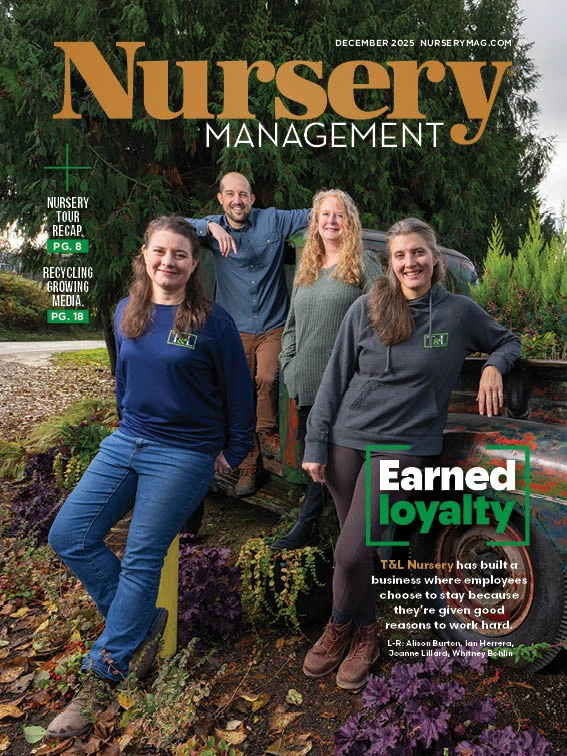
Explore the December 2025 Issue
Check out more from this issue and find your next story to read.