The larval stage of the spongy moth is a prolific feeder, ravaging more than 450 species of plants.
Published September 11, 2023
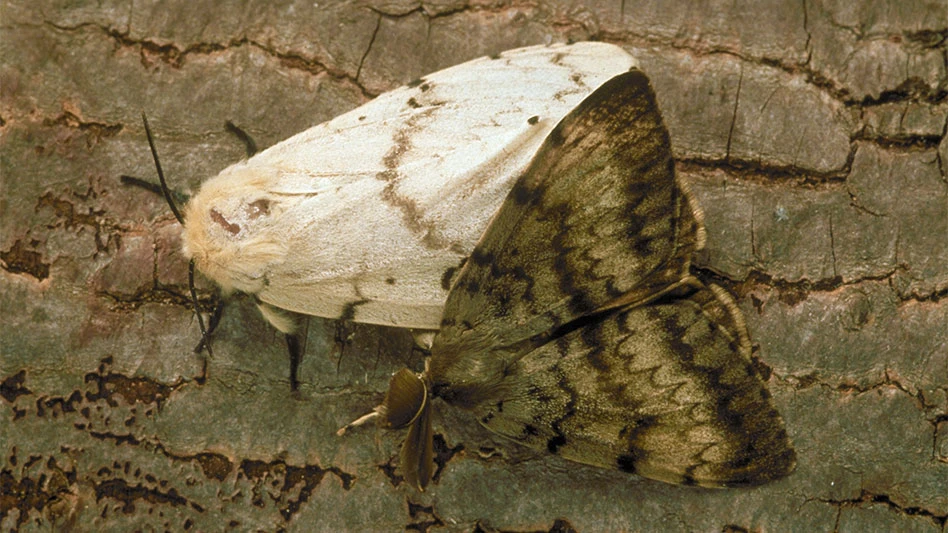
Male (bottom ) and female (left) spongy moth adults
Scott Bauer, USDA ARS (caterpillar with leaf), USDA APHIS-PPQ (Adults), Bugwood.org
The spongy moth, Lymantria dispar (formerly known as the gypsy moth), was introduced to the U.S. in 1869 and has since become a serious pest of shade trees in the Northeast and Midwest. In some areas, it has changed the ecology of native forests, defoliating more than 13 million acres of woodlands in one season.
They are generalist feeders, happily devouring more than 450 species of plants. Oaks are the preferred host, but they also feed on alder, apple, aspen, beech, birch, black gum, cherry, hawthorn, hemlock, hornbeam, larch, linden, maple, pine, sassafras and spruce. Trees showing the most resistance include ash, balsam fir, butternut, black walnut, catalpa, red cedar, dogwood, holly, locust, sycamore and tulip tree.
The young, tiny larvae (caterpillars) do most of the damage. The caterpillars spin a silken thread suspended from a leaf, where winds disperse the larvae several hundred feet, spreading the population.