Proper disease control is an absolute must for nursery growers, particularly in the humid Gulf Coast.
Container crops finished and ready for delivery can quickly become unsalable by any number of fungal problems if environmental conditions are optimum.
Windmill Nursery trains its employees on proper plant culture to reduce disease pressure, and has a number of disease-control products on hand to keep problems at bay.
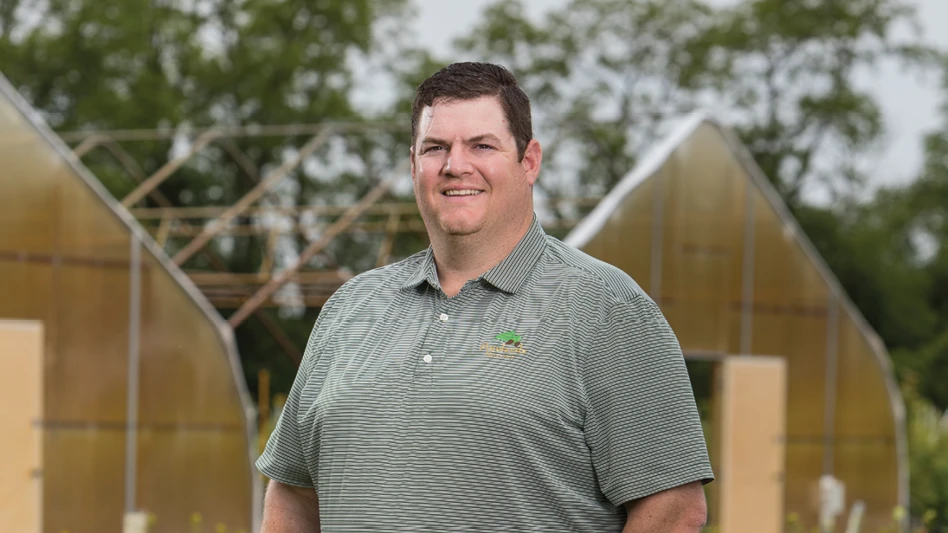
“I’ve always said that disease control is 70 percent cultural, 30 percent chemical,” said grower supervisor Michael Roe. “The biggest problem is overwatering plants. Most employees think it’s necessary to water, water, water. You have to train them to irrigate properly, and you’ll eliminate a lot of your problems.”
Proper spacing of plant material is also critical. If containers are placed to tightly, also critical. If containers are placed too tightly, airflow is restricted, increasing disease pressure.
The bigger foliar diseases Windmill combats are downy mildew, cercospora and rhizoctonia. They’re most commonly treated with mancozeb and phosphous acid products. The company also uses Medallion on foliar diseases.
For soilborne diseases, including pythium and phytophthora, Roe uses primarily Milstop (a potassium bicarbonate product) and RootShield (a formulation of the beneficial microbe Trichoderma harzianum).
He will also tank mix RootShield with RootMate, a biological inoculant that contains a different strain of trichoderma, but is not a registered pesticide.
For more: Windmill Nursery, (800) 535-1887; www.windmillnurseryllc.com.
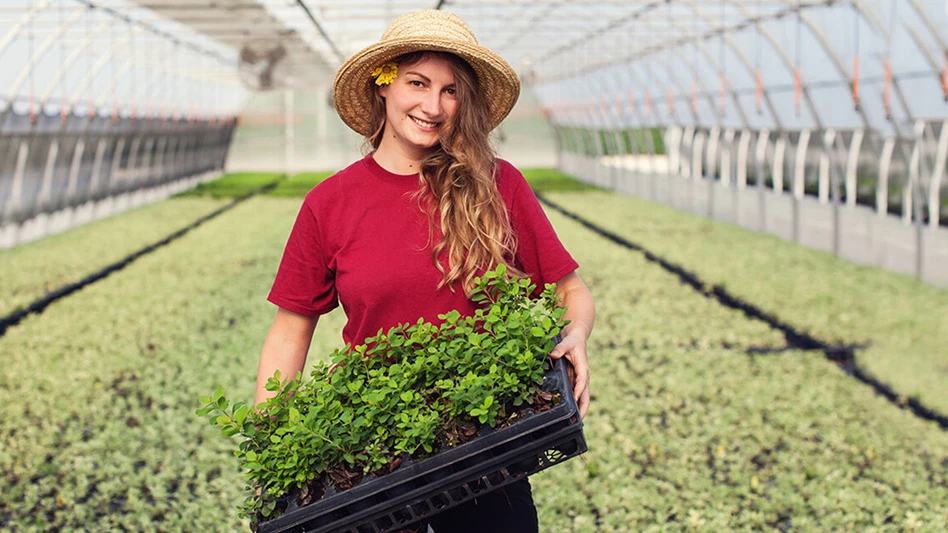
 Employees are trained about when to irrigate disease-sensitive crops such as roses.
Explore the November 2010 Issue
Check out more from this issue and find your next story to read.
Latest from Nursery Management
- [SNEAK PEAK] Leading Women of Horticulture: Louise Schaefer and Susan Tantsits
- The Growth Industry Episode 10: State of the Horticulture Industry
- Tennessee Green Industry Field Day scheduled for June 11
- UTIA and UT Knoxville research teams will develop automated compost monitoring system
- Ken and Deena Altman receive American Floral Endowment Ambassador Award
- [SNEAK PEEK] Leading Women of Horticulture: Becky Thomas
- [SNEAK PEEK] Leading Women of Horticulture: Angela Burke
- [SNEAK PEEK] Leading Women of Horticulture: Alexa Patti