Photos by Mark Dwyer
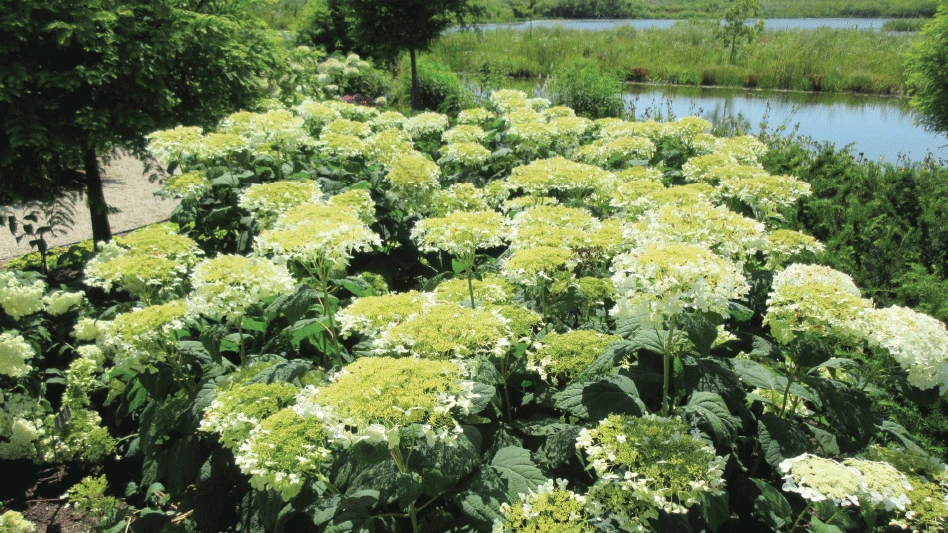
In my 30+ years of landscape design, I’ve suggested the use of a wide range of smooth hydrangeas (H. arborescens) for many situations and circumstances due to its solid performance. I’ve dabbled with all of the varieties including the significant range of recent introductions developed for flower color, reduced stature and durability. Among all of those selections, ‘Haas’ Halo’ stands apart. The palpable buzz and excitement around this variety was ignited by the Mt. Cuba Center (Delaware) trials that gave ‘Haas’ Halo’ a perfect score of 5.0 with the comment that this plant is “where style meets substance” and it further demonstrated “the perfect combination of horticultural excellence and pollinator value.” ‘Haas’ Halo’ also won a gold medal from the Pennsylvania Horticultural Society (PHS) in 2020. Those are gold star endorsements for a plant that I already thought demonstrated consistent high performance.
_dwyer_(4)_fmt.png)
Selected by Frederick Ray, plantsman and former horticulture professor at Delaware Valley College (Pennsylvania), from the garden of Joan Haas in Pennsylvania, this selection has strong, upright growth with sturdy stems supporting oversized, white, lacecap flower heads that are 8-14 inches in diameter. Reaching a height and width, on average, of around 5 feet, this selection will tolerate full sun with ample moisture and still performs well in part and full shade (albeit with decreasing flowering). Tolerant of heat, humidity and dry spells, ‘Haas’ Halo’ also features leathery, blue-green foliage which is a wonderful backdrop for the summer flowers that provide interest into fall and winter. These large, open, lacecap inflorescences, feature mostly fertile flowers with the sterile flowers along the outer, cluster margins. The flowers are notably excellent in both fresh and dried arrangements.
‘Haas’ Halo’ is extremely easy to grow and after establishment, can be cut back severely in late winter to encourage new, uniform, mounded growth with strong flowering (blooming on both old and new wood). While I’ve seen many smooth hydrangeas become floppy, this “non-drooping” variety keeps amazing posture. With tolerance to black walnut toxicity and salt, this “pollinator magnet” seems to have it all… with the exception of broad availability.
Why grow Hydrangea arborescens ‘Haas’ Halo’?
- Large and long lasting, white lacecap flowers
- Sturdy, non-drooping stems
- Very significant pollinator interest
- Heat and humidity tolerant
- Widely adaptable
Explore the May 2024 Issue
Check out more from this issue and find your next story to read.