OHP
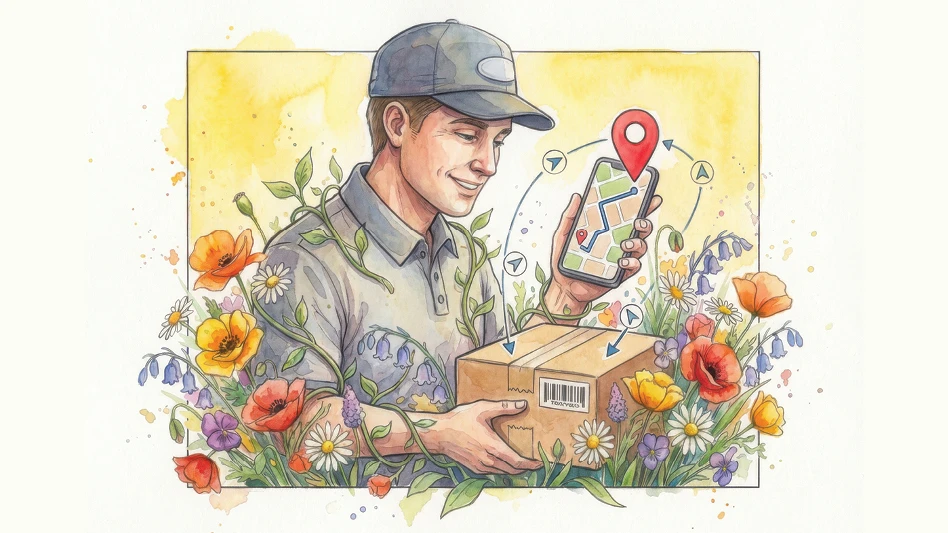
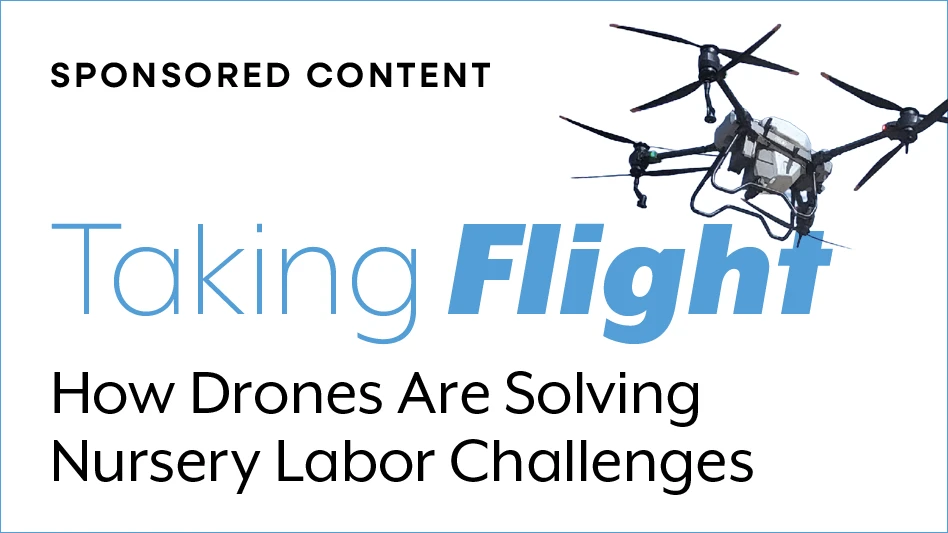
Sam Drahn, director of technical services at OHP, says reducing labor costs may have been the primary driver for early adopters of drones a few short years ago, but as growers are becoming more comfortable with the technology, they are discovering benefits beyond just cost reductions.
“Worker safety is significantly improved,” Drahn says. Exposure is limited to preparation, and tank filling and cleaning. Applications themselves are done remotely, and with reduced application times.
“What once was a 30-minute to one-hour application via ground now becomes a 3- to 4-minute job via drone,” says Drahn. “REI’s (re-entry interval) expire more quickly from start to finish, allowing workers to return and resume tasks sooner.” These efficiencies compound through the operation.
Another advantage of drones is that they can navigate terrain that may take more time via ground equipment.
“This is especially important in areas with challenging terrain or geography,” adds Jeremy Sanderson, technical sales manager for OHP’s Northeast region. “The landscape challenges that would require significant labor or specialized equipment become much more manageable.”

Drones can also deliver more consistent, precise applications. The downward air movement created from their rotors aids in product distribution and improves coverage compared to traditional ground equipment or manned aircraft applications.
While the benefits are significant, Drahn and Sanderson emphasize several critical factors for successful drone applications:
1. Always read the label. Not all products are suitable for drones, Drahn says. When using liquid formulations, make sure the product is labeled for low-volume, aerial applications.
“BotaniGard® ES is specifically labeled for aerial applications, where some other Beauveria products on the market are not,” Sanderson says of the broad-spectrum OHP product. “We all know the label is the law, and you want to be sure to follow it.”
2. Liquid or granular? Drones can apply both liquid and granular formulations but require appropriate equipment configurations, Drahn says. Research your needs carefully and ensure the drone system matches your current and possibly future application requirements.

3. Consider tank size and flight time. While drones can save time, they are limited in their tank size and flight time.
“Today’s horticultural drone tank capacities top out around 13 gallons,” Drahn says. “Though as technology advances I expect to see larger capacities in the near future.”
4. Factor in licensing and training. The Federal Aviation Administration requires commercial drone operators to obtain a license (Part 107) and register their equipment. Factor in proper training if you decide to purchase versus contracting. Ensuring multiple team members are licensed maintains operational continuity.
5. Seek out technical resources. Connect with university extension specialists, researchers, and industry resources to stay current with evolving drone technology and application techniques, Drahn says. “OHP attends drone conferences and works directly with growers implementing these systems to stay informed on best practices and emerging developments.”
Drahn predicts that drone use will be as ubiquitous as ground and more traditional aerial applications someday.
“Labor challenges and the difficulty of attracting and retaining qualified applicators are not going away,” he says. “Drone technology addresses some of these fundamental issues while improving worker safety and efficiency.” OHP is investing time and resources to understand this technology and support our growers as they adopt these new systems.

Explore the February 2026 Issue
Check out more from this issue and find your next story to read.