Photo: BASF
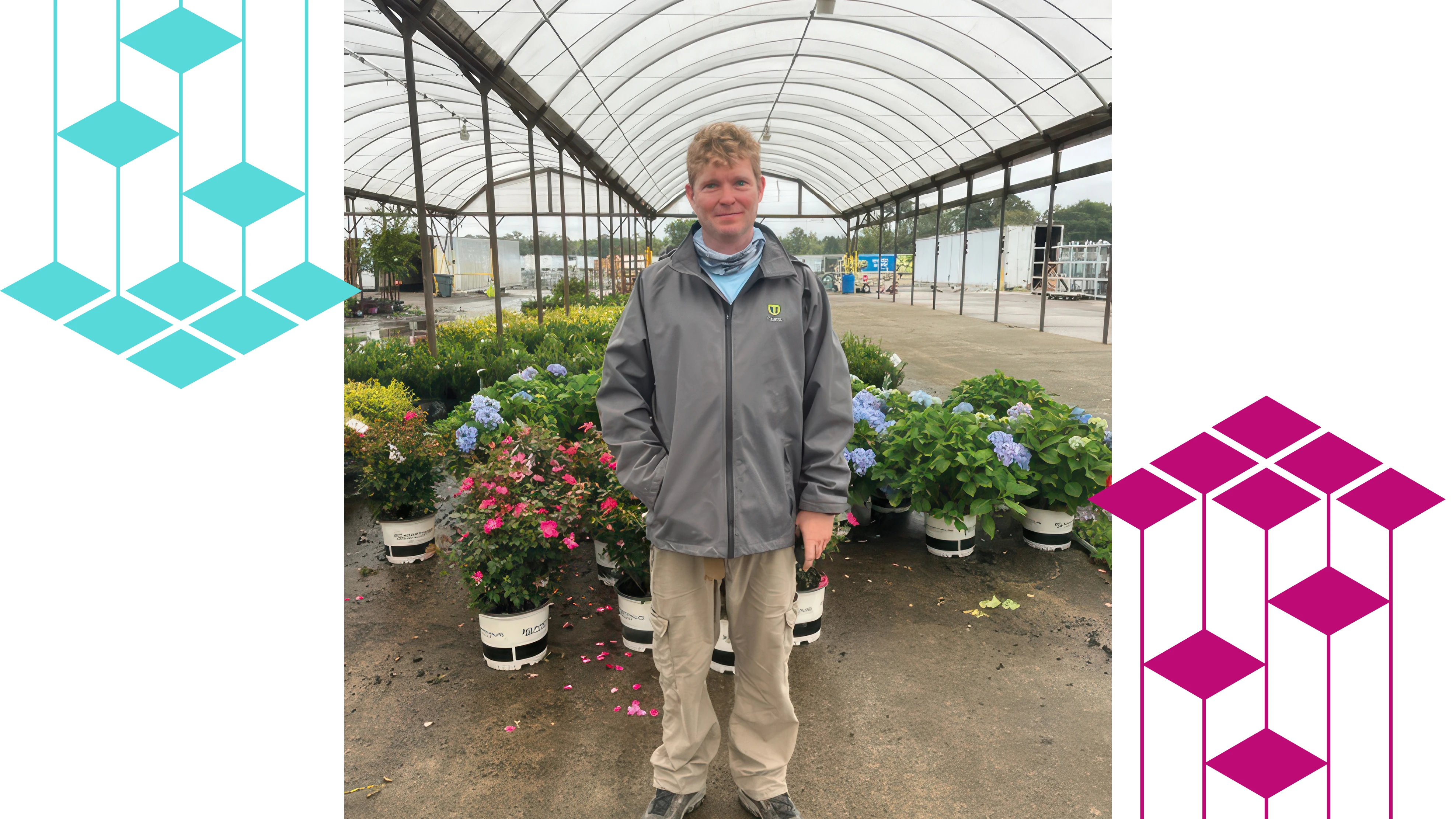
Scott Milliman serves as the technical services supervisor at Greenleaf Nursery Co.’s Tarboro, North Carolina, location, where his dedication to integrated pest management plays a pivotal role in both the daily operations and the long-term success of the business. With nearly a decade of experience at Greenleaf and a 20-plus-year career that spans several prominent horticultural employers, Scott has honed his hands-on expertise in plant health, crop protection and innovative solutions for nursery production.
At Greenleaf, Scott oversees irrigation systems, herbicide, pesticide and fertilizer applications, soil management and overall plant health.
Greenleaf’s North Carolina location encompasses about 295 acres with 120 acres currently under production. Founded in 1997, it serves the company's eastern customers and supports its two larger locations in Oklahoma and Texas. The North Carolina location sells to independent garden centers and landscape contractors, producing primarily evergreen and deciduous shrubs, arborvitaes and roses that range from quarts up to 15 gallons. Recently, the nursery added tree production, including redbuds and Japanese maples.
“We move a lot of quarts — about $300,000 in sales — and that program started three or four years ago in earnest,” he says. “We mostly sell 3s, 5s, 7s and 15s at this location.”
Scott helps manage a production team that utilizes advanced irrigation and water recycling systems. There are currently three ponds on the property and much of the nursery’s water is recaptured.
He’s thankful for a plentiful water source with a consistently low alkalinity.
“Our EC (electrical conductivity) sits right about 0.2 and our pH is around 7.2 year-round,” he explains.
Scott joined Greenleaf a few months prior to Hurricane Matthew in 2016, which made his first few months there quite the learning experience, he recalls. While no business is fully prepared for something like a major weather event, Greenleaf’s North Carolina crew took the opportunity to redesign some of the infrastructure.
“It was good timing, as the nursery has grown steadily since the storm. It’s a different farm than it was when I started and all for the better,” Scott explains.
Building blocks of IPM
In addition to infrastructure enhancements, Scott has fortified his crop yield through an intentional, integrated pest management program. In order to maintain a strong program, he emphasizes the importance of scouting and keeping weed and disease pressures in check. He notes that by fine-tuning product choices and application timing, he’s able to achieve efficiency and cost-savings.
There’s a full-time scout on his team, and she scouts the crops a day ahead of the rest of the production crew.
“She’s looking for things like mites, aphids, weed pressures, root issues and uniformity issues,” he adds.
His team also includes someone who runs soil samples each day, which has a tremendous impact on plant health.
“It’s really important to know the EC and the pH of your soils, especially when you’re working with a new fertilizer or when you’re dealing with really dry conditions,” he explains.
Collaboration with the team’s scout, the soil health specialist and the rest of his crew helps Scott make data-driven decisions for fertilizer and herbicide applications.
Besides scouting, rotation is a major pillar of Scott's IPM program, making effective, reliable chemistries vital to his program. He strategically rotates BASF products to maximize efficacy and minimize resistance — using contacts in cooler months and systemics during peak disease windows.
Building blocks of successful partnerships
Scott began his journey in the green industry after pursuing degrees in conservation and horticulture, which led to positions at respected organizations such as Worthington Farms, Green Circle Growers and Carolina Nurseries. He brings a well-rounded perspective from working with large-scale operations and coping with industry changes.
Something that makes his leadership unique, however, is his collaborative and team-based approach. He notes that several of the nursery’s plant health programs were developed with the help of Mindy Money, Scott’s BASF sales representative.
“We’ve worked together in the industry for a long time,” Scott explains. “All I have to do is shoot her a text and she’ll get right back to me.”
Scott says he can rely on Mindy to share information from the BASF technical team and from other growers. He appreciates the tailored support BASF provides through on-site visits, technical consultation and rebate programs that help ease budget constraints.
“She’s not someone who just comes by to drop off some pamphlets and disappears. It really is back-and-forth communication. And, it’s an important relationship. She doesn’t come out for a 15-minute talk, she’s here for at least half a day.”
Foundational products for a healthy nursery
Scott has extensive familiarity with BASF herbicides, including products such as FreeHand® herbicide, Finale® XL T&O herbicide, Tower® herbicide and Pendulum® AquaCap herbicide, as well as BASF fungicides such as Pageant® Intrinsic® brand fungicide and Orkestra® Intrinsic brand fungicide.
This proficiency in leveraging the right chemistries is a priority for him, as keeping the nursery clean and controlling weeds is a critical part of the overall plant health program. Specifically, he notes that bittercress is one of the weeds he and his crew battle often.
“It’s not just a winter or spring weed here. It’s a year-round weed,” he explains. “That’s where Tower works best for us. We can pull dogfennel if it gets in a block — that’s 10 minutes’ worth of work. But if you get bittercress in a block, that could be hours of hand pulling.”
Greenleaf’s North Carolina location backs up to farmland, so among the BASF herbicides he uses throughout the nursery, Finale XL T&O herbicide is vital in his toolbox. He rotates it with Roundup to avoid Roundup-resistant weeds.
“I start using Finale when it’s 65° or lower. It works great at those lower temperatures,” he explains.
He also favors Freehand for its safety and reliability, especially on crops like Knockout Roses and other sensitive varieties.
“I’ve been a fan of Freehand for years, especially because it’s non-volatile,” he says. “I really became a fan when I discovered it doesn’t burn Knockout Roses. More recently we’ve seen some issues with butterfly bush, which can be touchy with herbicides. Freehand is a great choice for that crop.”
Keeping diseases in check throughout the year also requires reliable fungicide applications. Scott values the reliability of Pageant, especially when it comes to overwintering crops, and the flexibility provided by a broad arsenal of BASF solutions.
“You can get into trouble quickly during the winter,” he explains. “If you aren’t walking those houses regularly, you’ll miss something that could turn into a big problem. Your opportunities to spray in the winter are minimal, so I rely on Pageant during those short windows of applications.”
Boxwood is an important crop for Greenleaf, and Scott has tweaked the production plan for it over the years. He rotates Pageant Intrinsic brand fungicide and Avelyo® fungicide for this valuable crop.
His team scouts for dieback, caused by Colletotrichum theobromicola. Some varieties of boxwood are susceptible to the fungal pathogen, or it can become a problem during certain weather conditions like high humidity.
“It’s hit or miss some years. It can also be a problem on the plants that are can tight and we saw it ramp up in August with all the humidity and rain we had,” he says.
He found Avelyo fungicide also helped with anthracnose on boxwoods.
“About five years ago, a lot of growers in the south stopped growing boxwoods, but we kept them. We learned a lot and switched up some cultural practices, too,” he adds. “I’ll also use Avelyo as my go-to for anthracnose when plants are flushing hard. And I’ll save some Pageant for roses and other crops in spring when downy mildew creeps in on the front end until the plants really get established.”
Scott’s IPM strategies and his adaptive use of BASF products have contributed to Greenleaf’s bottom line and strengthened the nursery’s plant quality and crop health. His commitment to education, openness to trying new techniques and collaborative networking have helped Greenleaf retain its stellar reputation in the nursery industry.
Explore the November 2025 Issue
Check out more from this issue and find your next story to read.