Photos by W. Garrett Owen
Editor's Note: This article originally appeared in the July 2025 print edition of Nursery Management under the headline “Drip irrigation essentials: A guide to placement and maintenance.”
Drip irrigation stands out as an efficient method for delivering water and nutrients directly to nursery crops. Nursery growers employ a range of drip systems, from drip tape to microtubing with metal or plastic weighted emitters or plastic drip or spray stakes. Strategic placement of emitters or stakes is key to consistent irrigation and optimal root zone conditions. Incorrect placement, such as centering the emitter or placing it too far from the plant, can lead to uneven water and nutrient distribution. That can cause overly wet or drought-stressed areas within the same container. With years of observing drip irrigation successes and challenges across various growing operations, here are some essential considerations for effective emitter placement.
Emitter placement strategies
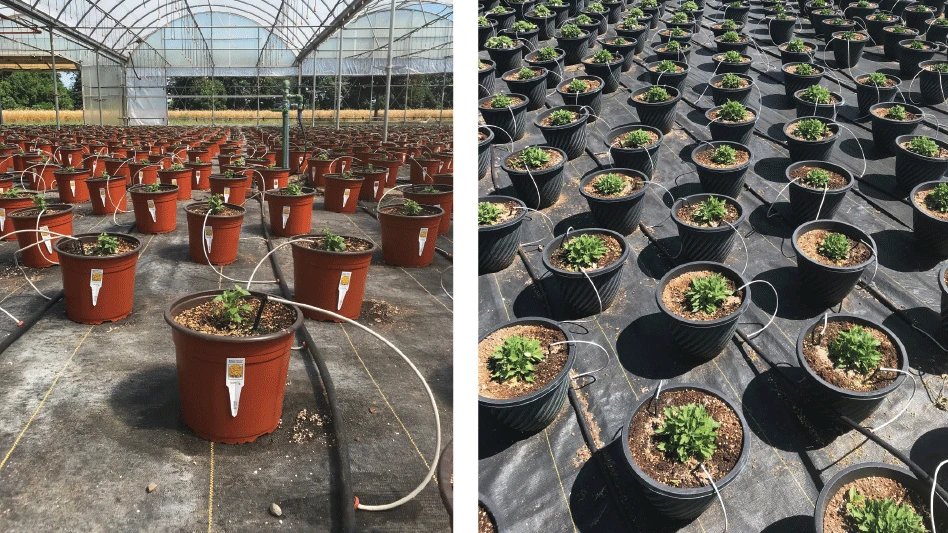
When irrigating crops using a drip system, optimal emitter placement is not a one-size-fits-all approach but rather a tailored strategy that considers plant type, container size and growth stage. For most container-grown crops, emitters should be placed approximately 2 to 3 inches from the container’s edge, slightly off-center. This encourages roots to grow outward, utilizing the entire substrate volume and promoting stability and balanced growth. When using drip stakes, especially for newly planted seedlings or cuttings, angle them toward the center of the plant to encourage initial root establishment directly beneath the plant. This approach ensures that the root ball receives adequate moisture, promoting strong early growth.
Consider the benefits of utilizing multiple lower-flow emitters per container rather than a single high-flow emitter, especially for larger containers or crops with extensive root systems. Distributing water through multiple points promotes more uniform moisture distribution and helps maintain consistent root zone temperatures throughout the container. This approach minimizes the risk of localized overwatering or underwatering, which can lead to root diseases or nutrient deficiencies.
Regularly adjust emitter positions as plants grow and their canopies expand to ensure the developing root system receives adequate water. As plants mature, their water and nutrient demands increase, and their root systems extend farther into the substrate. Periodically move emitters slightly outward to accommodate this growth, ensuring that water is delivered to the actively growing parts of the root system.
Maintenance and monitoring
Regular maintenance is crucial for drip irrigation systems to ensure they operate efficiently and effectively over the crop cycle. Inspect lines, connections and emitters regularly for any signs of damage, wear or clogging. Look for kinked or disconnected lines that can restrict water flow and replace them as needed. Check emitters for clogs or mineral buildup, which can reduce their output or cause them to malfunction. Clean or replace clogged emitters to maintain consistent water delivery. Ensure all connections are secure to prevent leaks that waste water or nutrient solution and create uneven moisture distribution.
Be mindful of wildlife, like rabbits, deer and geese, that can damage the system by chewing on microtubing or dislodging emitters from containers. Take steps to protect your drip irrigation system from wildlife damage, such as using physical barriers or repellents. Routinely check that emitters are delivering water and/or nutrient solution to each plant. This is especially important during hot weather or periods of rapid growth, when plants’ water demands are highest.
Beyond strategic emitter placement, regular monitoring of substrate moisture levels is essential for maintaining optimal growing conditions. Relying solely on a fixed irrigation schedule can lead to overwatering or underwatering because plants’ water demands vary depending on weather conditions, growth stage and other factors. Instead, irrigate based on plant growth, development and weather conditions, using a combination of visual inspection and substrate moisture monitoring techniques.
Regularly lift containers to assess their weight. Check the substrate moisture with your finger or use sensors to measure the water content. These techniques provide valuable insights into the moisture status of the substrate and allow you to adjust your irrigation schedule accordingly.

Collecting and measuring the nutrient solution supplied to the crop is helpful for fine-tuning irrigation frequency and duration and striving to maintain a 10% to 20% leaching fraction. This practice helps prevent the buildup of excess fertilizer salts, measured as electronic conductivity or EC, in the substrate and ensures plants receive an adequate supply of nutrients. Root balls with consistently wet areas are more susceptible to pathogen infections and often have cooler temperatures. This temperature variation can affect nutrient uptake and root development. To mitigate this issue, consider using multiple lower-flow emitters per container to promote more uniform moisture distribution and help maintain a more consistent root zone environment.
For growers using controlled-release fertilizers, remember that nutrient release is temperature-dependent, with faster release above 70 °F (21 °C). Frequent irrigation or rainfall can increase nutrient leaching, so adjust your irrigation schedule accordingly to minimize nutrient losses.
Monitor EC in the substrate and nutrient solution to prevent nutrient imbalances, especially during warm periods, when excess soluble salts can accumulate. Performing in-house PourThru tests will help determine substrate pH and EC. Submitting samples to a diagnostic laboratory will provide a comprehensive nutritional status assessment. By monitoring these parameters, you can identify potential nutrient deficiencies or toxicities early on and take corrective action to ensure optimal plant health.
By implementing these strategies and selecting the right emitter for your specific crop and growing conditions, growers can optimize irrigation and fertilization, promoting healthier plants and long-term sustainability. A well-maintained drip irrigation system, with attention to detail in emitter placement and monitoring, remains an invaluable asset for any operation — enhancing ornamental quality, reducing water waste and improving plant health.

Explore the July 2025 Issue
Check out more from this issue and find your next story to read.