MARK LEICHTY
Editor's Note: This article originally appeared in the March 2026 print edition of Nursery Management under the headline “Curcuma caesia.”

I was a huge fan of “Gilligan’s Island” when I was young. It was my favorite thing to watch every afternoon when I got home from school, and I still know the theme song by heart — much to the occasional embarrassment of anyone riding in the car with me. The show had its charms: Gilligan’s antics, the Professor’s brilliance and the eternal question of rescue. But the real reason every other guy and I tuned in can be summed up in one word: Ginger. Ginger Grant, played by Tina Louise, was perhaps my first crush.
Today, I still have a crush on Ginger, but she goes by other names. One of my favorites in the ginger family, Zingiberaceae, is actually a turmeric, Curcuma caesia. Commonly called black turmeric, this beautiful plant has wonderful ornamental qualities. It is also a culinary staple, and clinical trials are underway hoping to demonstrate a variety of health benefits from compounds derived from black turmeric.
Curcuma caesia is a beautiful ornamental plant. The contrast between the dark central stripe and the surrounding green gives the foliage a depth that feels intentional, even theatrical. With leaves like this, flowers are almost incidental, though the soft lavender blooms that appear in summer are a refined and welcome bonus.
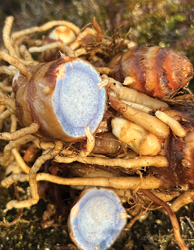
Native to northeastern India, C. caesia grows from dark, nearly black rhizomes. When I first saw the tubers, I was reminded of the great AC/DC song Back in Black. In cultivation, it is easy to grow. Given warmth, consistent moisture and excellent drainage, it grows quickly into a bold, architectural specimen, typically reaching 2 to 3 feet tall. It performs best in bright shade or filtered sun and excels in containers, where its foliage can be admired up close and its growth easily managed. The leaves are stunning when the plants are backlit by sunlight.
Cold tolerance is limited. C. caesia will not survive frost, and growth slows noticeably when night temperatures fall below 50°F. Outdoors, it is reliably perennial only in USDA Zones 9-12, so yes, it would do great on Gilligan’s Island. Gardeners in cooler regions will want to grow it in containers and move it under protection for winter, but trust me, it will be worth it.

Explore the March 2026 Issue
Check out more from this issue and find your next story to read.