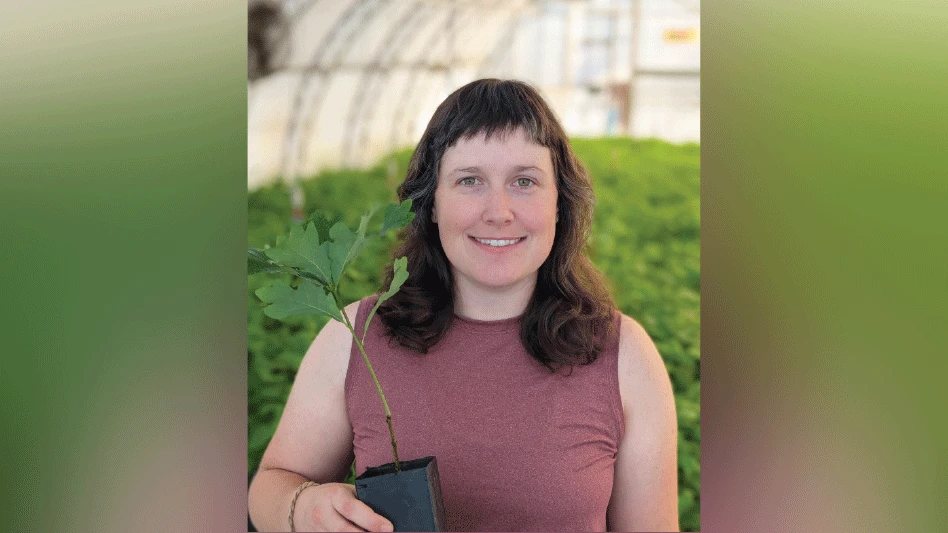
Photo: Claire Zuidervliet
Editor's Note: This article originally appeared in the August 2025 print edition of Nursery Management under the headline “Q&A with Claire Zuidervliet.”
Claire Zuidervliet has had a passion for horticulture ever since she was a child working on her family’s farm. Today, as co-owner and grower at Octoraro Native Plant Nursery, she gets to turn that passion into her life’s work.
Lauren Cohen: Tell me about when and how you discovered a passion for horticulture.
Claire Zuidervliet: I grew up in Middletown, Connecticut. When I was 8 years old, my family decided to start growing garden mums, pumpkins and gourds. So, I have some pretty distinct memories of helping out with growing these plants when I was little. I didn’t know at the time that it was developing into a passion.
I decided to study plant science in my school’s agriculture science program, joined FFA and went on to get my degree in floriculture and nursery production at Delaware Valley University.
I settled in Pennsylvania after that. I’ve worked in greenhouses, public horticulture, the private sector — I’ve developed a passion for several paths in horticulture, but I’m glad I settled into the private sector.
LC: Tell me about Octoraro Native Plant Nursery.
CZ: The company was started in 1990 in efforts to increase the availability of native plants for the restoration community. That’s how Octoraro started, actually as an aquatic and wet-loving herbaceous plant nursery. But then a couple years later, the demand seemed to shift to trees and shrubs that are native to the Mid-Atlantic region. My husband and I are majority owners of the business at this time, and the two original owners are minority owners, so they’re staying on to help us learn how to run the business, which we’re super grateful for.
LC: What part of the job do you love the most?
CZ: Internally, I’m doing most of the management of propagation, and that’s the part of the job that I hold near and dear to my heart. I manage our seeds, buying, sowing, timing, things like that. And my husband — he started working here in 2021 — is also involved in the propagation.
The other half of my current job as new owner is witnessing everything that goes into running a nursery. So, right now, we’re both in this phase of extreme learning and trying to soak up everything that we can while the original owners are still here to teach us. But really, we both do everything.
LC: What types of plants do you grow and propagate?
CZ: We are a straight species, woody, native plant nursery. We grow trees and shrubs, and we traditionally specialize in wet-loving species. Ever since Kevin, my husband, started here, he has been playing around with adding some more diversity to our species offerings, still native plants to the Mid-Atlantic region, but ones with more ornamental value.
We propagate by seed 99% of the time. There’s a handful of species that are nearly impossible to grow from seed and we’ll do from cuttings. But, we really value the genetic diversity that comes from growing by seed.
LC: What do you enjoy doing when you’re not in the garden or greenhouse?
CZ: Well, as you can imagine, because my husband and I own a business together, we are often just talking about the business — that’s our dinner conversation. But when we’re not talking about that, we’re hanging out with our four cats. Otherwise, we like to go on hikes and find the native plants that we grow in the wild.
LC: What advice would you give to someone who’s just getting started in the industry?
CZ: You shouldn’t underestimate the power of networking and making connections — putting yourself out there is probably the best thing you can do. Don’t assume anything because you never know what someone might see in you. I think going for those opportunities that may seem far-fetched is really important if you want to have a foot in the door and develop your career in horticulture.
Explore the August 2025 Issue
Check out more from this issue and find your next story to read.