_fmt.png)
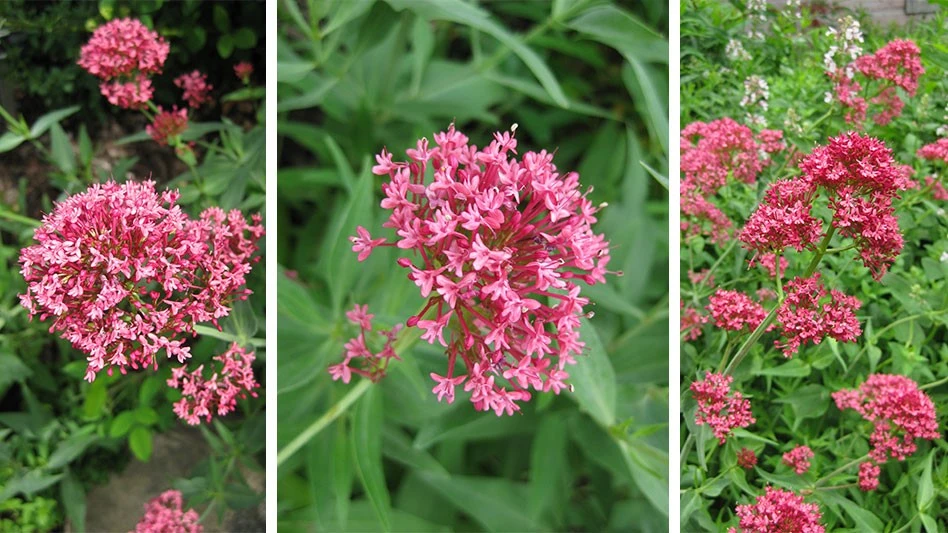
If you’re looking for a foolproof perennial, Jupiter’s beard is an excellent candidate for its durability and is a good choice for beginners. Whenever I run across this beautiful perennial, I’m reminded of its long history in gardens, particularly in hot, dry sites where it thrives in full sun or very light shade. The stemless, fleshy, blue-green leaves are ornamental in my opinion and this bushy, well-branched, clump-forming plant reaches about 36 inches tall when flowering. There are also some more compact varieties available and leaner soils produce shorter stature. Jupiter’s beard is actually a short-lived perennial but does reseed with some vigor, particularly in suitable situations.
Native to the Mediterranean region, this plant is in the Caprifoliaceae (honeysuckle) family. Where happy, it has naturalized in Britain and is considered a weed in parts of Australia and New Zealand. In portions of the western United States, it has been found growing wild in disturbed, rocky locations. Tolerating very alkaline conditions, lean soils and drought, this plant may become a bit floppy and require staking in overly rich soils. Jupiter’s beard has very few insect and disease problems and is ignored by deer. This perennial is not fussy.
The long-lasting flowers come in a range of reds, pinks, lavender and white. The star-shaped flowers, arranged in showy clusters, are frequently promoted as mildly fragrant. However, the scent has been subjectively described by some as rank or “perspiration-like”. I personally have never noticed the fragrance but the amazing flowers are excellent in cut arrangements. If reseeding is a concern, consider shearing the plant back before the dandelion-like seed tufts form and disperse seeds. This aggressive “dead heading” is an effective way of controlling spread and encouraging further blooms. The flowers, blooming longer in cooler climates, are pollinated by both bees and butterflies.
C. ruber var. coccineus (red) is a bit shorter than the straight species and very long blooming. ‘Albus’ (aka ‘Snowclowd’), while not as common as the red and pink forms, is a “clean white” and glows at dusk. Look for the most commonly offered variety ‘Pretty Betsy’ for a consistently deep, rose-red flower cluster.


Explore the September 2022 Issue
Check out more from this issue and find your next story to read.