_fmt.png)
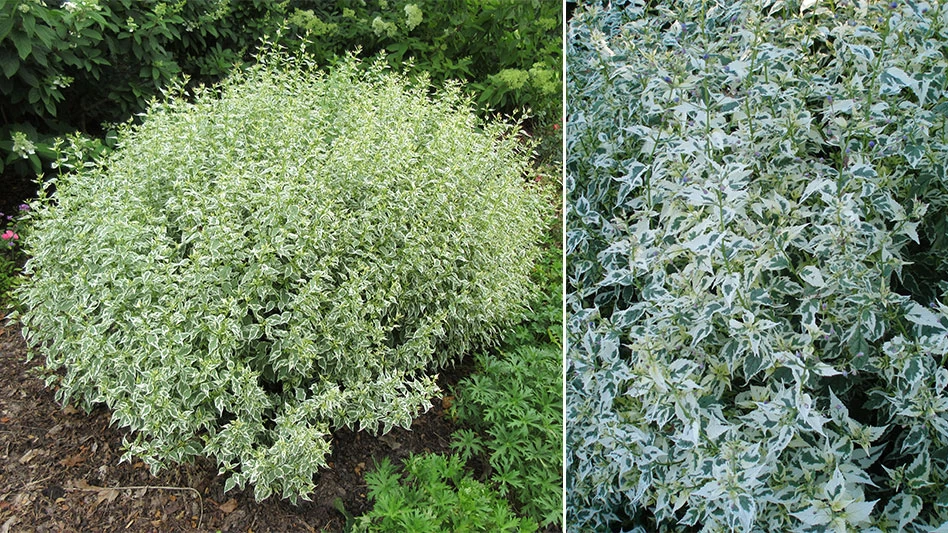
I’m a proud and admitted aficionado of plant variegation. When I first ran across the spherical and glowing form of ‘Snow Fairy’ blue spirea many years ago at Olbrich Botanical Gardens (Madison, Wisconsin), I was smitten and instantly hooked. I couldn’t tell what the plant was from a distance but the striking variegation on a fine textured, shrub-like plant was as exceptional as the cleanly mounded form. Upon closer inspection, I recognized it as a Caryopteris and then saw the sign indicating the species and variety of ‘Snow Fairy.’ This species is native to the Himalayan mountains although this selection is from Japan.
_fmt.png)
I am familiar with many of the variegated forms of other bluebeard (Caryopteris x clandonesis) selections like ‘White Surprise’ and ‘Summer Sorbet’ and appreciate both for their foliage and later summer flowers. In my Midwest climate, Caryopteris don’t always overwinter well (we don’t get overly attached) but I found that ‘Snow Fairy’ is considered herbaceous with entirely new growth emerging late every spring (not from old growth) but filling out with progressive summer heat. Reaching 36 inches tall and wide in one season, this light and airy plant is considered a “shrubby, soft-wooded” perennial and has proven hardy in Zone 5 in Madison, Wisconsin for decades. I see many references to a Zone 6 hardiness but have seen it throughout my Zone 5 travels and visits. This plant blooms very late in the season with lavender-blue flowers borne in loose clusters (cymes) at the end of the stems. Flowering goes into early fall and both bees and butterflies appreciate the show as well. Admittedly, the flowering is subtle but still noteworthy.
Ideally situated in full sun or part shade, the variegated foliage doesn’t burn. Brushing by the foliage will elicit one of the only drawbacks of the plant which is the unpleasantly aromatic nature of the leaves (described as a combination of dead fish and cat urine). This may be why the plant is avoided by both deer and rabbits. Heat and drought tolerant once established, ‘Snow Fairy’ is intolerant of wet and poorly drained soils but will tolerate clay. Crown rot is not uncommon in damp situations. This plant is commonly propagated by division or tip cuttings in spring. Occasional green shoots should be targeted and culled out.


Explore the October 2023 Issue
Check out more from this issue and find your next story to read.