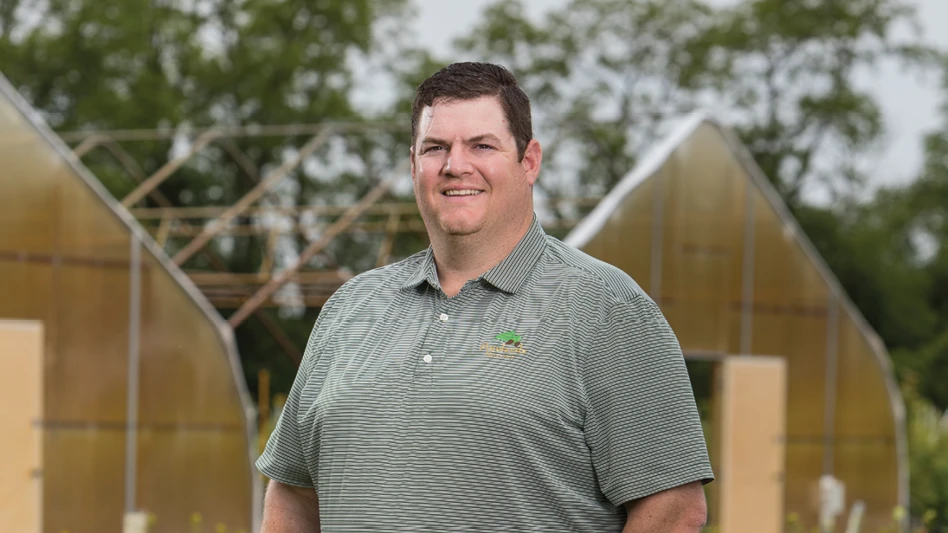
Jennifer Browning Jen Browning is a technical specialist working in field development for BASF’s Turf and Ornamentals division. She is a graduate of Oregon State University with a BS in Horticulture and MS in Entomology. She’s worked in landscape design as well as retail and wholesale nurseries, including Armstrong Garden Centers in Southern California and Monrovia Growers in Oregon. Based in the Pacific Northwest, Jen works closely with ornamental growers, golf course superintendents, and landscape managers to provide solutions and support for success with BASF’s line of crop protection products, from chemistry to biologicals. She also works with university and private research consultants to develop and steward crop protection products and their use in IPM programs. Contact her at jennifer.browning@basf.com.
When dealing with Millennials, be transparent and authentic. The green industry is experiencing a fascinating situation – many companies are home to representatives of three distinct generations. That could present a challenge to your sales and communication strategy. But Jennifer Browning, technical specialist, has some advice for developing business relationships with the millennial generation.
As a technical specialist, you have a special set of circumstances when dealing with customers. Please explain your role.
There are three technical specialists, and I cover the Western states for the Turf & Ornamental group. I provide technical training and support for BASF customers. I also work on product trials and research.
Although you’re not selling products to customers, there are several things about your role and experience that anyone in sales can learn from, correct?
Definitely. I must position myself as an objective technical expert. Our customers need to know they can trust me and feel like I’m a credible source. That’s no different than sales. I can also help distributor reps understand what their clients are facing, and understand pest pressures in the industry in general. I do technical training for distributor reps, and I attend distributor meetings and talk about general pest management, including product stewardship and resistance management.
Are you noticing more millennials entering the nursery and greenhouse industry?
I have seen some millennials in the industry. But I’ve noticed that some of the newer growers, which are a mixture of millennials and other generations, are different from the older, more traditional growers.
How do the newer growers differ from the traditional growers?
A lot of these new growers are more business people, not horticulturists, that have stepped into the grower role where they’re expected to be more strategic, know more about financial issues, and things like LEAN, for example. They have to be very efficient in their decision making. Because of this, it changes the new growers’ approach to growing, and plant health and pest management. For instance, in the past you could talk about conceptual ideas. But they’re much more likely to say something equivalent to ‘Don’t just sell me a product.’ And they’re not necessarily looking for the lowest price. They’re very results oriented. Your presentations and ideas can’t be vague. They need to be concrete.
What are some ways you’ve found that are effective for communicating with millennials and building relationships with them?
They’re seeking information about solutions prior to any conversation with a product representative. They also ask their peers for as much information and advice as possible. From a distributor standpoint, you have to do a lot of homework behind the scenes. They have a different approach to buying than what many are used to. You need to interact with them in regards to problems solving, not give a straight sales pitch. They’ll leverage different resources, but once you’re a trusted partner, they’ll go to you directly for help.
It requires a much more involved sales process from a distribution standpoint, but it also makes them a lot of fun to work with.
Any other advice?
Don’t forget about the basics — gauge where they are in their business, and offer help. Let them elaborate and keep asking questions. These new growers, including millennials, have a lot of care and concern for others. Although they have to make bottom-line decisions, they’re still thinking about the people side of it.
Latest from Nursery Management
- [SNEAK PEAK] Leading Women of Horticulture: Louise Schaefer and Susan Tantsits
- The Growth Industry Episode 10: State of the Horticulture Industry
- Tennessee Green Industry Field Day scheduled for June 11
- UTIA and UT Knoxville research teams will develop automated compost monitoring system
- Ken and Deena Altman receive American Floral Endowment Ambassador Award
- [SNEAK PEEK] Leading Women of Horticulture: Becky Thomas
- [SNEAK PEEK] Leading Women of Horticulture: Angela Burke
- [SNEAK PEEK] Leading Women of Horticulture: Alexa Patti