Why do so many B2B salespeople fail? A report I read stated that 37 percent of B2B salespeople turnover each year. Staggering. But why is it so difficult to find, hire and develop a successful salesperson? After extensive experience and research on this topic, we’ve discovered four main reasons why salespeople don’t perform as expected, and we offer some advice about how to increase your success.
They don’t understand pain and gain
Having good product knowledge is important but in and of itself falls short. Equally important is teaching your salespeople about how the product/service you sell solves a problem for your buyer. What problem and pain point does your product/service solve?
In our sales training classes, we drive home the point that buyers buy for two reasons and two reasons only… pain and gain. Your salespeople must understand clearly how your product/service solves “pain” and/or provides “gain.” Without this knowledge there’s just no way your salespeople will be able to properly communicate benefits to your buyers. They also must be confident that your product/service addresses the pain and gain.
If there’s uncertainty about your buyers’ pain points and what they value most from the products/services you sell, you should invest in some research to determine personas, value drivers and buyer behavior throughout the buying funnel.
Weak supervision
In many ways sales is a numbers game. You see enough qualified prospects, you connect with enough people, make enough proposals, you’ll make sales. Naturally you also have to have good sales skills, the right attitude (see below), and a good sales process – but you need to invest time to manage “the beast” that’s hopefully inside your salesperson.
The use of lead metrics is critical. After all, you cannot manage the outcomes, you can only manage the inputs. These inputs include:
- How many networking events were attended and how many quality people were met
- How many cold calls were made and how many appointments scheduled
- How many people were added to your marketing database and how often are they touched
Effective ongoing supervision of salespeople must be focused on managing the inputs – the lead activities that will result in sales. Since sales requires an ongoing stream of activity, a weekly review of sales inputs is very important. In some cases, when you are dealing with a new salesperson or someone not performing well, daily reviews of inputs are often necessary.
Sales process
Do you have a defined lead generation, lead nurturing and sales process? If you don’t, your salespeople will be far less productive. Your sales process should include the following.
Do you have a process to generate leads? You should have multiple streams of lead generating activities. These streams may include cold calling, inbound marketing with your website, email marketing, networking at events, participating in trade shows, etc.
Is there a defined way to get those leads into a CRM? You need to have a CRM, a place where you place all your leads and contacts, and can work with those leads to move them through the buying funnel. Are you disciplined about getting your leads into your CRM?
Do you have a lead nurturing routine? This could be as simple as touching base with the leads in your CRM. Using your CRM to do email marketing and lead nurturing is a common activity. More sophisticated activities include marketing automation in which workflows are set up to automatically nurture leads from point of contact through sale.
Once in front of a buyer, do you have a defined way to uncover pain and gain points, and align those with the products/services you sell? Is there a standard proposal process that is supported by marketing materials and sales sheets?
Finally, do you have a good proposal follow-up process? One of the biggest reasons sales aren’t closed is the salesperson doesn’t follow up well.
Without a defined sales process, a talented salesperson may get frustrated, and a marginal salesperson will fail.
Attitude – is sales in their DNA?
The age-old question, “are salespeople made or born” will be debated forever. You can succeed in sales without being a “natural born salesperson” but it’s likely you won’t be a high performer unless it’s in your DNA. What traits make up that “natural born salesperson” DNA? Based on experience and research, here are the traits you should seek to find your next successful salesperson:
- Social confidence – this is a combination of self-confidence, assertiveness and resilience
- Goal orientation – this is a combination of energy level, sense of urgency and maintaining focus toward achieving a goal
- Credibility – this is a combination of honesty, trustworthiness and commitment
You find someone who is confident, goal oriented, has a high level of energy, and is credible, this makes a good salesperson. One way to evaluate these and other characteristics that measure the “natural born salesperson DNA”, is testing. We use the Craft Personality Questionnaire (CPQ) to evaluate the extent to which a candidate is compatible to a sales position. There are other testing instruments out there as well, but we’ve found the CPQ to be remarkably accurate.
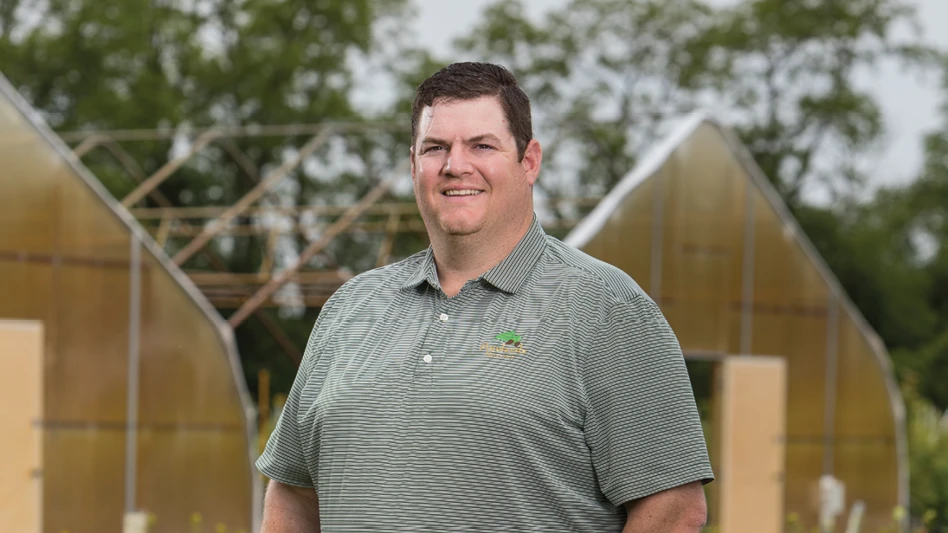
Neal Lappe is president of WebStrategies, a Virginia-based firm that helps businesses improve their sales and online marketing. Read more sales tips from Neal at www.webstrategiesinc.com/blog.
Latest from Nursery Management
- [SNEAK PEAK] Leading Women of Horticulture: Louise Schaefer and Susan Tantsits
- The Growth Industry Episode 10: State of the Horticulture Industry
- Tennessee Green Industry Field Day scheduled for June 11
- UTIA and UT Knoxville research teams will develop automated compost monitoring system
- Ken and Deena Altman receive American Floral Endowment Ambassador Award
- [SNEAK PEEK] Leading Women of Horticulture: Becky Thomas
- [SNEAK PEEK] Leading Women of Horticulture: Angela Burke
- [SNEAK PEEK] Leading Women of Horticulture: Alexa Patti