Photos © Patrick Alan Coleman
On June 18, the GIE Media Horticulture Group was at the Ball Horticultural headquarters in West Chicago for the annual festivities of Darwin Perennials Day. The event draws IGC owners, growers and media to tour The Gardens at Ball, planted with a variety of perennials in a kaleidoscope of colors and dynamic habits, many of which are new releases for 2026 and were not previewed at CAST in March.
Along with the flowers, the Ball gardens also feature exhibitor tents from partner brands and vendors. This year, tours included a simulated walk-through of the Darwin Colombia tissue culture lab, propagation and growing facilities.
Here are the plants and highlights that shined through the rain and thunderstorms on a hot and muggy West Chicago day.

Eight perennial varieties of note
The new variety beds in the trail gardens were full of blooms. But there were some plants that caught our eye, both for how they were showing (after a night of heavy Midwest thunderstorms) and their unique visual interest in the garden.
1. Echinacea Double Scoop Watermelon Deluxe
With a pinkish-red hue, these echinacea with double flowers were lighting up their corner of the trial garden with their mophead-style disk floret surrounded by a strong, slightly downturned ray floret. Watermelon Deluxe is first-year flowering, deer resistant and reaches 22 to 24 inches tall with no need for pinching at propagation or after transplant.
2. Veronica Moody Blues Mauve
Another first-year flowering perennial, Moody Blues Mauve is part of a compact series of first-year-flowering veronica. The relatively diminutive mauve flower spikes managed to look delicate and robust at the same time. With a nice tidy habit, each plant was filled with spikes, which continue to cycle and bloom all season until first frost. It was easy to see why Moody Blues Mauve was a Colorado State University Flower Trial Gardens Top Performer in 2021.
3. Delphinium Red Lark
A bright red beefy delphinium, Red Lark was standing strong in the trial gardens with towers of coral-hued flowers. Another award-winner for Darwin, Red Lark took home a Retailers’ Choice Award in 2023. Its flowers can be used as cuts or enjoyed in the garden, and it is a sterile hybrid that will not reseed. It is also deer resistant and frost tolerant and hardy from Zones 5a to 8b.
4. Kniphofia uvaria Glowstick
Glowstick is another wild perennial with unique, eye-popping, bright yellow flower spikes emanating from grass-like foliage. It’s easy to see why the plant got its name. Not only do the flowers have the signature chemical-yellow brightness, but they are also about as large as their namesake. Glowstick is available as an unrooted cutting. It attracts pollinators into the fall, and the grassy foliage adds appeal when not in bloom.
5. Achillea Milly Rock Rose
The compact, mounding habit of the dusty rose-colored A. millefolium created an incredible rolling texture through the trial beds. It’s a perfect garden-filling background for showier plants and can create visual interest from spring to fall. It’s also a survivor. Darwin notes that it is deer resistant, rabbit resistant and frost tolerant.
6. Gaillardia Guapa Flamenco Bicolor
The Guapa Flamenco Bicolor is another eye-popping option from Darwin. The flowers almost seem to burn like little suns in the garden with deep orange coloring the center of the petals and a perfectly contrasting fringe of yellow. Guapa Flamenco Bicolor blooms into October, making it an excellent choice to bring more interest to the mum-filled fall gardens. They are also heat tolerant and deer resistant.
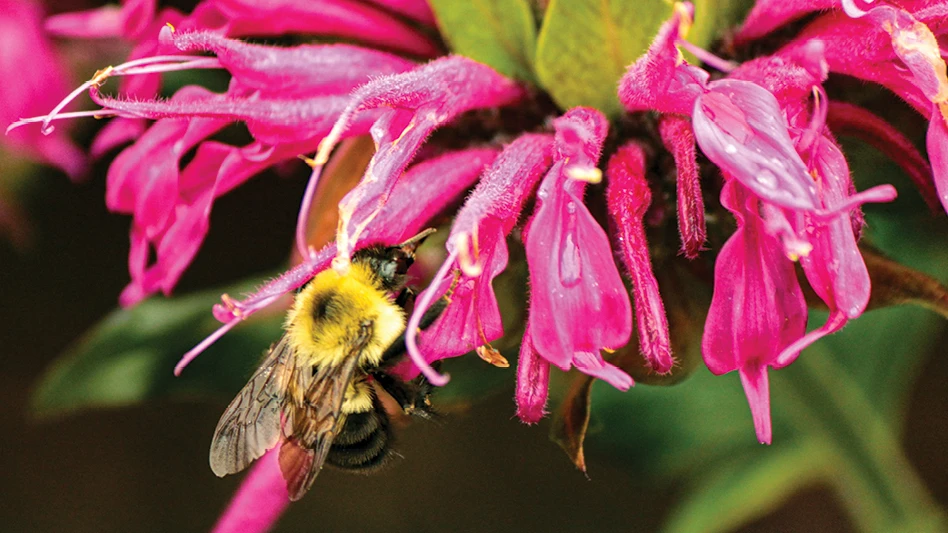
7. Monarda didyma BeeMine Purple
Known as bee balm to most gardeners, BeeMine Purple has a fantastic mop-like clump of bright purple flowers extending from the central calyx. And true to the name, they were attracting bees to their corner of the trial gardens. They are early to flower and offer high disease resistance to mildew, according to the Ball Horticultural team. They are also deer and rabbit resistant while attracting basically all the day-time pollinators.
8. Penstemon Mountain Treats Red
We’d seen Mountain Treats this year at CAST. But seeing them in situ at the trial gardens placed them in context and made a great case for making them a garden staple. The big blooms made them a magnet for garden browsers, and the medium habit kept them from overwhelming neighbors.
Garden Solutions’ super succulents
Among the vendors, Garden Solutions was premiering its new fall succulents rack program. The rack, available to order now for delivery through early October, features 209 retail-ready succulent pots with a variety of new fall-hued mixes.
The new mixes, exclusive to this program, were drawing a great deal of attention with their yellow, orange and gray tones with a variety of contrasting succulent shapes and textures. Garden Solutions told us that unlike many succulent mixes, the plants grow at the same rate, meaning they will thrive together, rather than having one eventually crowd out the rest of the pot.
The Garden Solutions program is only sold in racks to protect the small succulents in shipping.

Donahue’s clematis climax
Another vendor caught our eye with new varieties of these beautiful climbers. Donahue’s, a Minnesota grower-retailer and clematis specialist, premiered three new varieties of the flowing vines. Baroness Fookes is what the grower calls an “extremely free-flowering clematis.” It has almost bicolor purple on purple blooms featuring delicately ruffled edges. Elpis offers deep red round-shaped flowers with contrasting yellow anthers. Finally, the profusely flowering Ithemba features star-like flowers with a pink bar in the center of each ruffled white petal. Red filaments and anthers add additional interest and contrast. All are available to order now. For more information, visit donahuesclematis.com.
Almost like Colombia
To attempt to give Perennials Day visitors a feel for Colombia (as if the 90% humidity and high temps weren’t already doing that), Darwin repurposed portions of the Ball West Chicago headquarters to simulate the Darwin Colombia tissue culture lab and unrooted cutting growing operations.
Tour attendees stopped at three stations. Each station featured a video from Darwin Colombia featuring Carlos Martinez, director of research, development and propagation, who talked through the process from tissue culture to shipping. After the video, tour-goers were quizzed and given an opportunity to get hands-on with tissue culture samples and cuttings. Along the way, participants were reminded of Darwin Colombia’s commitment to a clean facility and a cold chain to protect the plants.
It wasn’t quite Colombia, but it was as close as we could get in the suburbs of the Windy City.
Seed tech
Ball also took Perennials Day as an opportunity to show off some new technology in the Ball Seed division as the headquarters are renovated and updated to be more functional. One of the biggest changes observed was construction of a new, massive seed vault to consolidate all the seeds scattered in smaller vaults tucked here and there around the Ball headquarters.
Also new was high-tech seed packaging automation Ball helped develop with the manufacturer. The seed packaging machines use high-tech imaging to ensure accurate seed counts at 1,500 seeds per second.
Adjacent to the seed packaging room, Ball showed off its three-story robotic warehouse and shipping unit. The massive, towering rectangular robot automates the company’s seed storage and shipping, cutting down on both labor and space. It features four bays (two on either side of the robot) that allow four different employees to retrieve totes that are stored among the stacks. Once totes are ordered at the interface, they are delivered at high speeds to the employee, who either loads the totes with seed packages to be warehoused or removes packages to fulfill orders for clients. The process is wildly fast and mesmerizing to watch — one of the day’s non-flower highlights to be sure.

Explore the September 2025 Issue
Check out more from this issue and find your next story to read.